Products › Pressure instruments › SI-520 Digital Pressure Sensor
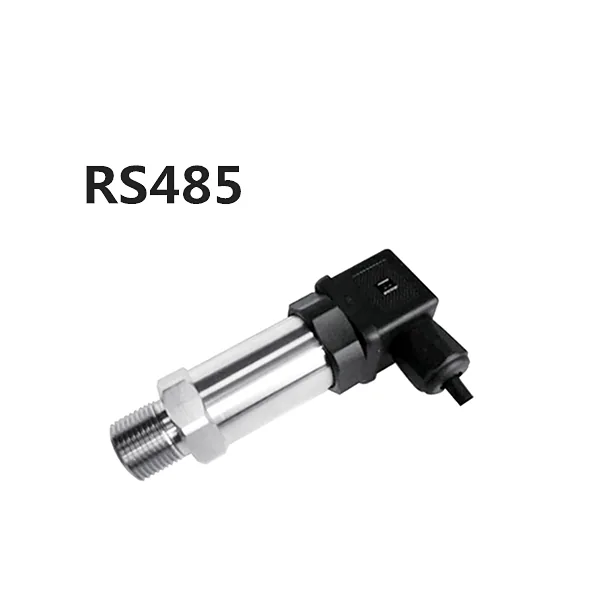
SI-520 Digital Pressure Sensor
An RS485 Modbus digital pressure sensor that talks straight to a PLC or computer. Welded 304 stainless body, temperature-compensated digital circuit, and a multidrop digital reading with no analog loop to scale.
- Ranges: -0.1 MPa up to 100 MPa
- Accuracy: 0.1%, 0.25% or 0.5% FS
- Output: RS485 half-duplex, Modbus RTU
- Sampling: 10 readings/second
- Sealing: IP65 / IP68
Overview
The SI-520 is a digital pressure sensor that outputs pressure as a Modbus reading over RS485, not a 4-20 mA loop. That suits computer-controlled systems and test rigs where the controller already polls a serial bus: you read a calibrated number directly, skip the analog-to-digital conversion and loop scaling, and put several sensors on one twisted pair by address. The body is welded 304 stainless and compact, so it mounts where a transmitter with a display would not.
If your system still needs a 4-20 mA or HART signal, the capacitive gauge pressure transmitter covers analog and HART work; the SI-520 is the choice when the line is digital end to end.
Working principle
A piezoresistive cell senses pressure and a high-reliability digital circuit with precision temperature compensation converts it to a Modbus value. Because compensation and the analog-to-digital step happen inside the sensor, the reading the controller receives is already corrected; there is no loop calibration and no drift from a long analog run. The protocol follows Modbus RTU (a subset of RMOD), so it drops into standard SCADA and PLC polling.
Technical specifications
| Parameter | Specification |
|---|---|
| Measuring range | -0.1 to 0 MPa, and 0 to 1 / 6 / 10 up to 100 MPa |
| Accuracy | 0.1%, 0.25% or 0.5% FS |
| Output signal | RS485 half-duplex, Modbus RTU |
| Communication | 9600 bps, no parity, 8 data bits, 1 stop bit (configurable) |
| Sampling rate | 10 readings per second |
| Supply voltage | 24 VDC (10 to 36 VDC) |
| Medium temperature | -20 to 85 C (105 C option, confirm per build) |
| Ambient temperature | -20 to 85 C |
| Overload | 150% of full scale |
| Long-term stability | 0.15% FS per year |
| Sealing | IP65 / IP68 |
| Process connection | M20 x 1.5; other threads custom |
| Electrical interface | Stainless steel waterproof sealed terminal |
| Wetted parts | Welded 304 stainless steel |
Representative specifications, at room temperature and rated supply unless stated. Values typical; confirm the exact build per datasheet.
Digital output and Modbus
The SI-520 answers Modbus RTU queries on an RS485 half-duplex bus at 9600 bps (8N1) by default, sampling ten times a second. Each sensor carries an address, so a single twisted pair can carry a string of sensors back to one controller port, with none of the per-channel wiring an analog loop needs. Because the reading is already a compensated digital value, there is no loop calibration, no 250-ohm sense resistor, and no analog noise pickup over the run. Confirm the register map and default address with us so it matches your poll list.
Models and ordering
Quote checklist: send these five points and we configure one unit, not a shelf part.
- Pressure range and reference (gauge, or compound down to -0.1 MPa)
- Accuracy class: 0.1%, 0.25% or 0.5% FS
- Bus details: baud rate, address, and how many sensors share the line
- Process connection: M20 x 1.5 or your thread
- Medium and temperature, and IP65 or IP68 sealing
Ordering example: SI-520, 0 to 10 MPa gauge, RS485 Modbus at 9600 bps address 1, 0.25% FS, M20 x 1.5 for a test-bench data logger.
Applications
- Computer-controlled test rigs and data acquisition
- Hydraulic and pneumatic system monitoring over a serial bus
- Multidrop pressure networks on one RS485 pair
- Water treatment and pump-station SCADA
- OEM equipment with a Modbus controller
Application example
Water-treatment SCADA. A water-treatment integrator wanted process-pressure readings on the same RS485 line as the rest of the plant instruments, rather than running new analog loops to the control room. A Modbus pressure sensor dropped onto the existing bus by address and reused the installed wiring, so the reading reached the controller without a new home run.
Related products
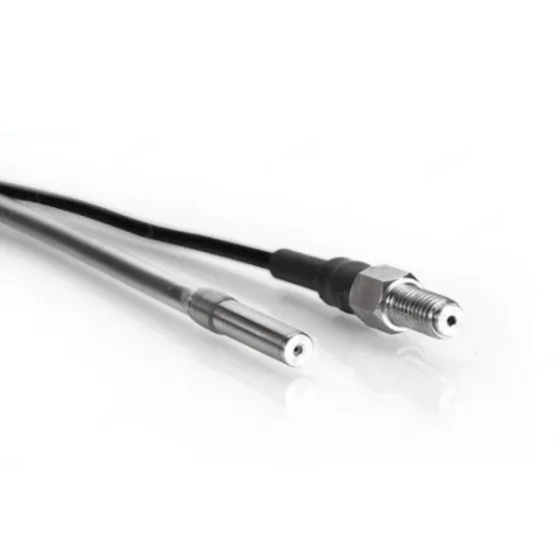 Miniature Pressure Sensors
MEMS sensor in an M6-M10 package for OEM and tight spaces.
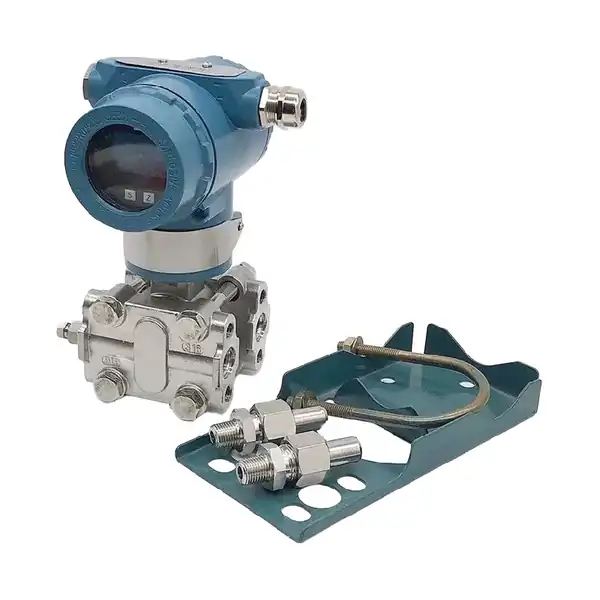 Gauge Pressure Transmitters
Capacitive 1151-pattern transmitter with 4-20 mA and HART output.
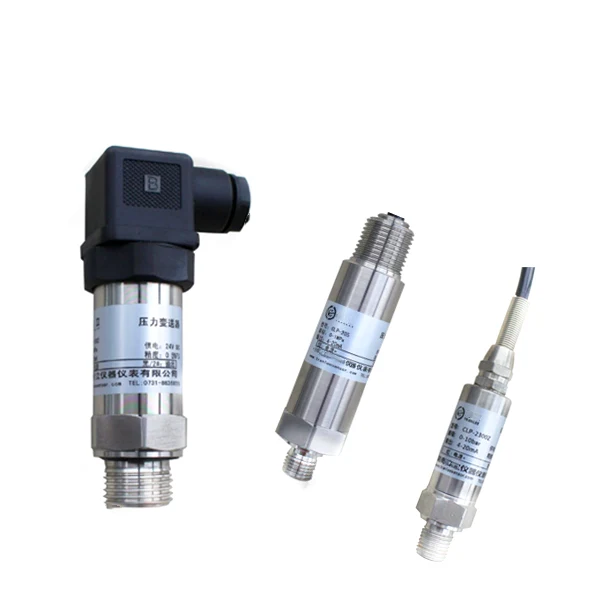 Pressure Transmitters
General-purpose gauge, absolute and differential transmitters.
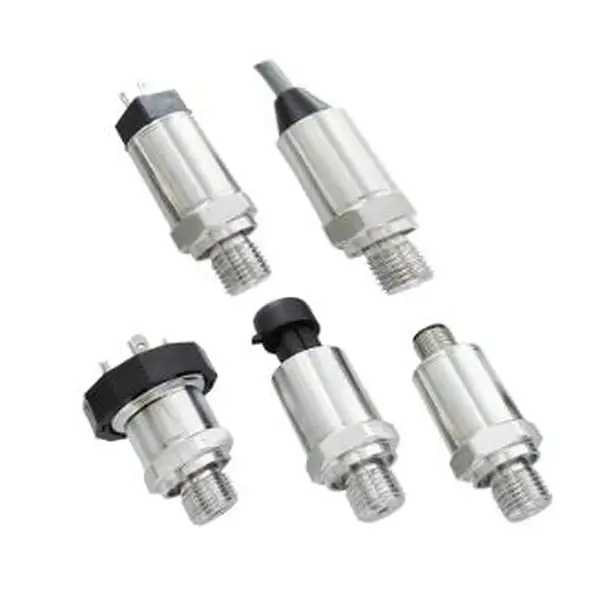 Industrial Pressure Transducers
OEM transducers with factory-locked zero and span.
Browse all pressure instruments →
FAQ
What does a pressure sensor do?
It converts pressure into a signal. A digital pressure sensor adds on-board processing and a digital output, such as RS-485 / Modbus or a local display, so it reports a calibrated value directly rather than only a raw analog current.
What happens if a pressure sensor is bad?
It drifts, sticks at a value, or loses output. A digital sensor helps here: on-board diagnostics can flag a fault, and the digital value is immune to the cable voltage drop that can shift an analog reading over distance.
What are the types of pressure sensors?
By sensing technology: piezoresistive (diffused silicon), capacitive, ceramic, strain gauge, and piezoelectric. By output: analog (4–20 mA or voltage) and digital (RS-485 / Modbus). This is the digital-output type.
Where is a pressure sensor located?
At the process tapping point: it mounts on the pipe, tank, or manifold through its process connection so the diaphragm sees the medium directly.
Request a quote
Send the five points in the checklist above and our application engineers will configure an SI-520 for your range, bus and connection. Reach our application engineers.