Home › Products › Pressure Instruments › Flush Diaphragm Pressure Sensors
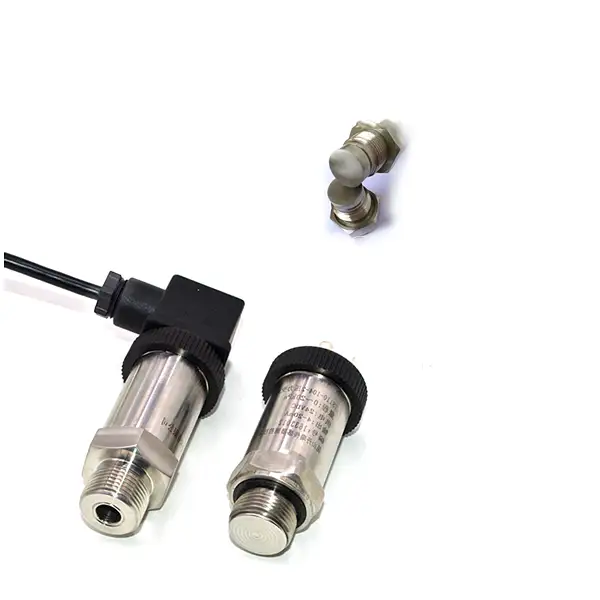
SI-703 Flush Diaphragm Pressure Sensors
Paint, mud, asphalt and crude oil all do the same thing to a standard pressure port: they pack the pressure hole solid, and the reading dies slowly while everything looks fine from outside. The SI-703 series has no pressure hole at all. The flat diaphragm sits flush with the process connection, the medium pushes directly on it, and there is nothing to pack, wax over or scale up. Behind the face, a diffused-silicon strain gage bridge does the measuring.
- Series ranges: 0–1.5 kPa micro spans up to 0–200 MPa
- Accuracy: 0.1 / 0.2 / 0.5% FS, model dependent
- Outputs: 4–20 mA, 0–5 / 1–5 / 0–10 V; mV/V OEM cores
- Seven variants: standard, waterproof, OEM core, two micro-pressure, two WIKA-pattern
- Stability: 0.1% FS per year; IP65
Reach for a flush connection in two situations. The first is cleanliness: pharmaceutical, food and beverage points where a recessed bore cannot be rinsed residue-free; the clamp-fitted version of this idea is our SI-350 sanitary pressure transmitter. The second is media that defeats a normal port: high-viscosity liquids, pastes, crystallizing products and slurries that clog the channel, or media that hardens as the process cools. If the medium would also damage or contaminate the instrument itself, step up to a diaphragm seal pressure transmitter with a remote capillary instead.
Models at a glance
| Model | Range | Accuracy | Output | Media temp | Connection | Notes |
|---|---|---|---|---|---|---|
| SI-703 | 0–0.6 to 0–200 MPa | 0.1 / 0.2 / 0.5% FS | 4–20 mA; 0–5 / 1–5 / 0–10 V | −20 to 75 °C | M20 × 1.5, G1/2-14 | Base model; metal sealed terminal or 4-core aviation connector |
| SI-703F | 0–1 to 0–200 MPa | 0.2 / 0.5 / 1.0% FS | 4–20 mA; 0–5 / 1–5 / 0–10 V | −20 to 75 °C | M20 × 1.5, G1/2-14 | Waterproof cable outlet |
| SI-703K | Spans to 0–100 MPa | 0.1 / 0.2 / 0.5% FS | 1–1.5 mV/V, 10 VDC | −20 to 85 °C | Φ19 standard core | Bare OEM core, direct leads, for transmitter builders |
| SI-703W | 0–1.5 kPa to 0–500 kPa; 1–60 MPa | 0.25 / 0.5% FS | 4–20 mA; voltage options | −20 to 65 °C | M24 / M25 × 1.5, M27 × 2 | Micro-pressure spans; Hirschmann connector |
| SI-703C | 0–10 to 0–500 kPa; 1–7 MPa | 0.1 / 0.2 / 0.5% FS | 4–20 mA; voltage options | −20 to 65 °C | M20 × 1.5, G1/2-14 | Micro-pressure, compact |
| SI-703G | 0–5 to 0–500 kPa; 1–7 MPa | 0.1 / 0.2 / 0.5% FS | 4–20 mA; voltage options | −20 to 65 °C | M20 × 1.5, G1/2-14 | Built as an alternative to common imported flush sensors |
| SI-703GB | 0–5 kPa to 1 MPa; 2 / 3 / 10 MPa | 0.1 / 0.2 / 0.5% FS | 4–20 mA; voltage options | −20 to 65 °C | G1 | Large G1 face for the lowest spans; imported-pattern port |
Technical specifications
| Parameter | Specification |
|---|---|
| Power supply | 24 VDC (10–30 VDC); SI-703K core runs on 10 VDC |
| Load resistance | Current output: 800 Ω max; voltage output: greater than 50 kΩ; 703K: 1500 Ω |
| Insulation resistance | Greater than 2000 MΩ at 100 VDC |
| Long-term stability | 0.1% FS per year |
| Vibration effect | Less than 0.1% FS over 20–1000 Hz |
| Overload structure | Elastomer and fitting in fully sealed or one-piece construction; impact pressure capability to 100 MPa, model dependent |
| Sensing element | Diffused-silicon strain gage bridge behind a flush stainless steel membrane |
| Electrical interface | Metal sealed terminal, 4-core aviation connector, Hirschmann connector or waterproof outlet, by model |
| Protection | IP65 |
| Custom threads | Other process threads designed to order |
Specifications apply at room temperature and rated supply unless stated. Per-variant figures are in the table above; confirm the exact figure for your model and range on the order sheet.
Working principle
Resistors are diffused or ion-implanted into a silicon die and wired as a Wheatstone bridge under a micro-machined pressure diaphragm. Pressure deflects the diaphragm, the bridge resistance shifts, and the output is a linear signal proportional to pressure; the conversion electronics turn it into two-wire 4–20 mA or a voltage. The flush face in front of that bridge solves clogging. It does not solve chemistry.
From the case file: a battery-materials plant in the US needed pressure on a caustic slurry at pH 14, 0–30 psi at 20 to 90 °C. Clogging was only half the problem there; pH 14 attacks stainless steel, so that job went to a ceramic diaphragm with a PTFE fitting at 0.25% FS. The selection lesson carries over to every flush-diaphragm inquiry: check the diaphragm material against the medium before you check the span.
OEM cores
The SI-703K is the series stripped to its core: a Φ19 flush-diaphragm cell with direct leads and a 1–1.5 mV/V raw output, made for manufacturers who package their own electronics. It is priced and toleranced for volume production. Custom builds are routine here; a test-equipment maker in the UK ordered sensors carrying their own logo and custom threads, and that order shipped as a standard job, not an exception.
Ordering information
No SI-703 is a stock item. Variant first, span second; the variant table above settles most inquiries in one pass.
Quote checklist: five things to put in your inquiry
- The medium and its temperature: viscosity, solids, whether it crystallizes or hardens, and any chemistry that attacks stainless steel
- Working pressure and the span you want (we size for 60–80% FS at working pressure)
- Process thread (M20 × 1.5, G1/2-14, G1, micro-thread sizes, or custom)
- Output signal: 4–20 mA, a voltage option, or a raw mV/V core for OEM builds
- Electrical interface and environment: connector type, waterproof outlet, washdown exposure
Ordering example: SI-703C, 0–300 kPa gauge, G1/2-14 thread, 4–20 mA, Hirschmann connector, for a coatings line running at 30 psi (207 kPa). The working point sits at 69% of full scale.
Applications
Viscous and clogging media
- Chemical coatings, paints and adhesives
- Muds, asphalts and crude oil at low pressure
- Paper industry stock and sewage measurement
- Pipeline and beverage tank level service
Hygienic and OEM
- Food, brewing and pharmaceutical process points
- Biological products processing
- OEM cores for pressure transmitter manufacturers
- Custom-branded and custom-threaded production runs
Related products
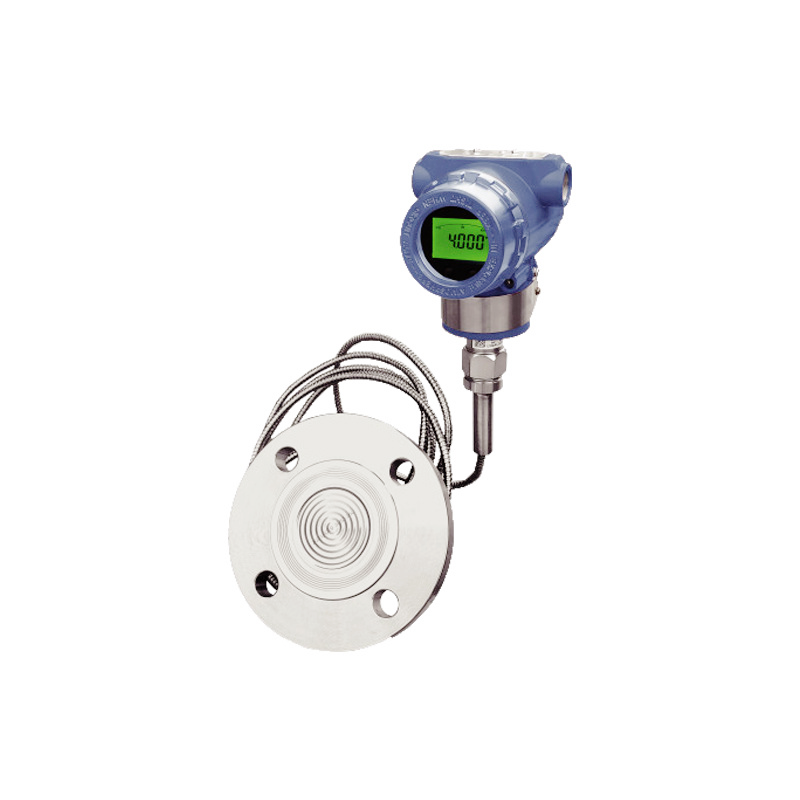 Diaphragm Seal Pressure Transmitters
When the medium must not reach the instrument at all: remote seals and capillaries.
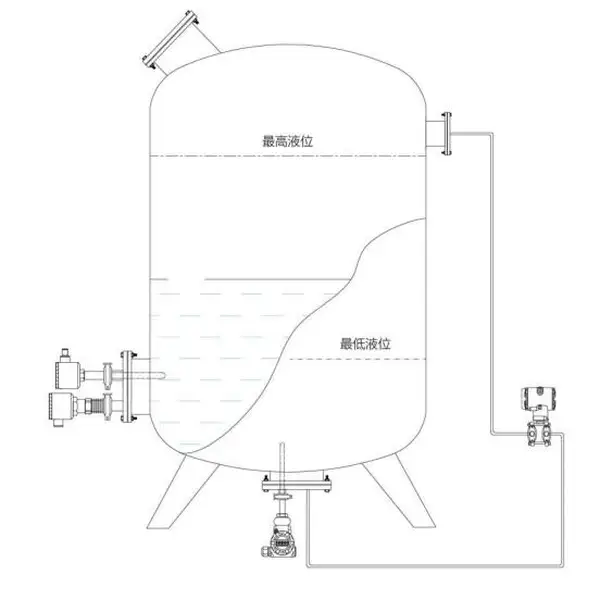 Sanitary Pressure Transmitters
The clamp-fitted flush diaphragm for food, beverage and pharma lines.
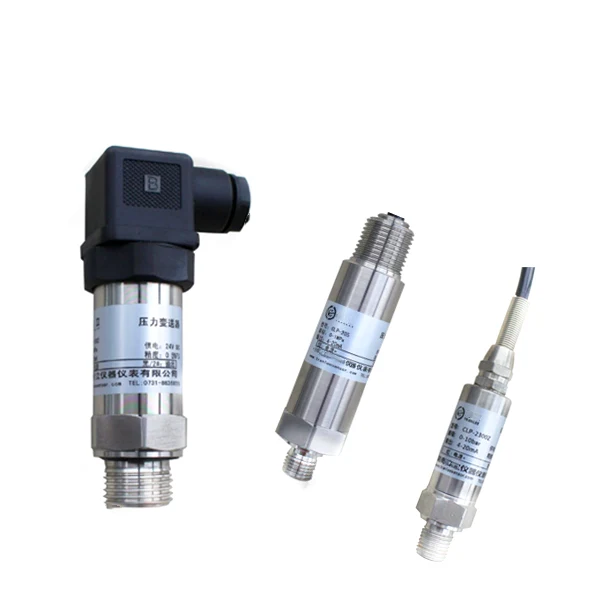 Pressure Transmitters
For clean media on standard ports. The general-purpose line.
FAQ
What is the flushing ring on a pressure transmitter?
A flushing ring is a separate accessory: a metal ring fitted between the process flange and a diaphragm-seal transmitter, with side ports you can open to rinse or vent the diaphragm face without removing the instrument. It is not the same as a flush diaphragm. A flush (flat) diaphragm transmitter has its sensing diaphragm level with the process connection so nothing collects in front of it, which is what the SI-703 uses for viscous and crystallising media; a flushing ring is an add-on for cleaning a recessed seal in place.
What is the diaphragm in a pressure transmitter?
The diaphragm is the thin metal or ceramic membrane that the process pressure pushes against; its deflection is what the sensing element turns into a signal. In a flush-diaphragm transmitter the membrane sits flat at the process connection, welded to the cell or backed by a stable fill fluid, so it transmits pressure cleanly while keeping the medium out of any pocket where it could clog or harden.
How does a diaphragm level transmitter work?
Mounted low on a tank, a flush-diaphragm transmitter reads the hydrostatic head, the pressure from the column of liquid above it, which is proportional to level. Because the diaphragm is flush, thick or sticky products do not build up in a cavity and skew the reading. You convert the measured pressure to height using the liquid density (P = density x g x height), which is why a clean, drift-free diaphragm matters for level service.
Request a quote
Tell us the medium, the working pressure, the thread and the output signal. We respond with a configured variant, lead time and price, usually within one working day.