Flow Meters › Variable Area Flow Meters › Sanitary Rotameter
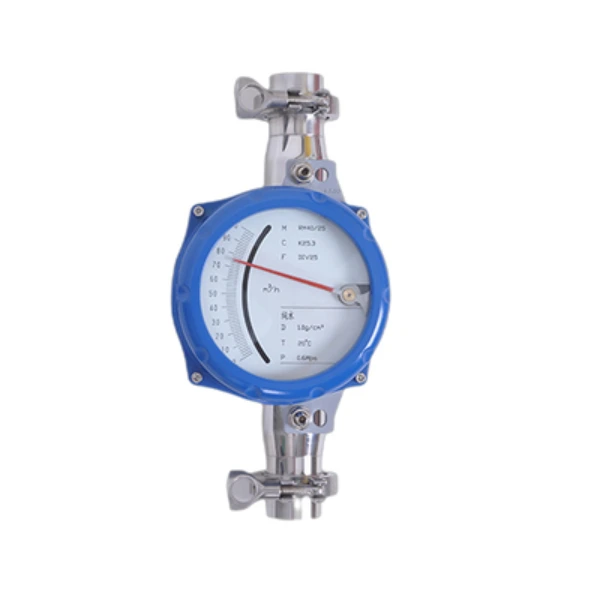
Sanitary Rotameter
An all-stainless metal tube variable area flow meter with tri-clamp connections for food, beverage, and pharmaceutical lines. The wetted parts are polished 304 or 316L with no crevice, so the meter cleans in place and reads flow on a dial with no power.
- Principle: Variable area, float in a tapered tube
- Connection: Tri-clamp (sanitary clamp)
- Size: DN15 to DN100
- Wetted parts: polished 304 or 316L stainless
- Output: local dial; optional 4-20 mA and HART; IP65
Overview
A sanitary rotameter is an all-stainless metal tube variable area flow meter built for hygienic lines. The tapered tube, the float, and the body are polished 304 or 316L, and the meter connects with a tri-clamp fitting that has no thread and no crevice for product to lodge in. A float rides in the tube and a magnet drives a dial, the same as a standard rotameter, so it reads liquid, gas, or saturated steam on the dial with no power and no sight glass.
It is the rotameter for food, beverage, and pharmaceutical process: purified and deionized water, milk and dairy, edible oil, juice, and beverage carbon dioxide. The tri-clamp connection lets the meter come apart by hand for cleaning, and the smooth wetted surface cleans in place. For a non-sanitary line, the metal tube rotameter in stainless is the base meter; for a small dosing line, see the low flow rotameter.
Features
Everything here follows from one idea: an all-stainless meter that takes apart and cleans in place.
Tri-clamp connection
A sanitary clamp with no thread comes apart by hand for cleaning and calibration.
Crevice-free, polished
Polished 304 or 316L wetted parts with no crevice, so product does not lodge and the surface cleans clean.
Magnetic dial, no power
A magnet in the float drives a pointer, so the flow reads locally with no power and no glass.
Liquid, gas, or steam
One meter reads sanitary liquid, gas, or saturated steam on a DN15 to DN100 line.
Dial or 4-20 mA, HART
A local dial, with an optional two-wire 4-20 mA output, HART, Ex protection, and limit alarms.
Little straight run
A variable area meter asks for almost no straight pipe, so it drops into a tight hygienic skid.
Working principle
Flow enters the bottom of a tapered tube and pushes up on a float. Its weight acts down, and buoyancy and flow drag act up. As the float rises in the tapering bore, the open area around it grows, so the drag falls, until the up forces balance the weight and the float settles at a height that tracks the flow. The tube, the float, and the body are stainless, and because a magnet in the float couples to a follower outside the tube, the read is by dial with no seal into the product. A transmitter can read the same position and send 4-20 mA or HART.
Technical specifications
| Parameter | Specification |
|---|---|
| Measurement principle | Variable area; float in a tapered tube, magnetic dial |
| Medium | Sanitary liquid, gas, and saturated steam |
| Accuracy | 1.0, 1.5, 2.5, or 4.0 grade (percent of full scale) |
| Flow range | Water 10 to 100000 L/h; air 0.5 to 1500 m3/h (at 20 C) |
| Size | DN15 to DN100 |
| Turndown | 10:1, or 20:1 |
| Wetted material | Polished 304 or 316L stainless tube and float |
| Medium temperature | -20 to +250 C standard; to +450 C high-temp build |
| Nominal pressure | To 4.0 MPa (special by agreement) |
| Connection | Tri-clamp (sanitary clamp); confirm clamp size at order |
| Output | Local dial; optional two-wire 4-20 mA, pulse, frequency, batch, OC or relay alarm |
| Communication | HART, Modbus, FF, or Profibus-PA (optional) |
| Power | 24 V DC, 220 V AC, or 3.6 V lithium battery for local display |
| Protection | IP65 |
| Explosion protection | Intrinsically safe Ex ia IIC T1-T6 Gb |
Representative specifications; confirm per datasheet for the medium, size, and connection you need.
Ordering example. Sanitary rotameter, DN25, purified water at ambient, 0 to 6 m3/h, 316L wetted parts, tri-clamp connection, dial plus 4-20 mA.
Hygienic design and CIP
What makes this a sanitary meter is the connection and the finish, and what those allow:
- Tri-clamp connection. A sanitary clamp has no thread and no dead leg, so it seals with a gasket and comes apart by hand. It installs and removes far faster than a bolted flange, which saves time on cleaning, maintenance, and calibration.
- Crevice-free, polished surface. The wetted parts are polished 304 or 316L with no crevice for product to lodge in, so the line cleans in place (CIP) and sterilizes in place (SIP) without taking the meter out.
- Confirm the standard you need. Sanitary fittings and polished surfaces suit hygienic process; if a formal 3-A or EHEDG certificate or a specific surface finish (Ra) is required, state it at order so the build and the paperwork match.
Applications
Sanitary rotameters suit hygienic process lines:
- Purified water, deionized water, and water-for-injection loops
- Milk, dairy, and beverage process
- Edible oil, juice, and syrup metering
- Beverage carbon dioxide and clean gas
- Pharmaceutical and biotech clean utilities
Application example
Purified water loop. A beverage plant needed a local flow read on a purified-water line that is cleaned in place between batches. A sanitary rotameter with 316L wetted parts and tri-clamp ends read the water on its dial, came apart by hand for inspection, and went back without a tool, so the CIP cycle ran without pulling the meter. Confirming the clamp size and the temperature against the CIP step was the one thing to settle at sizing.
Related products
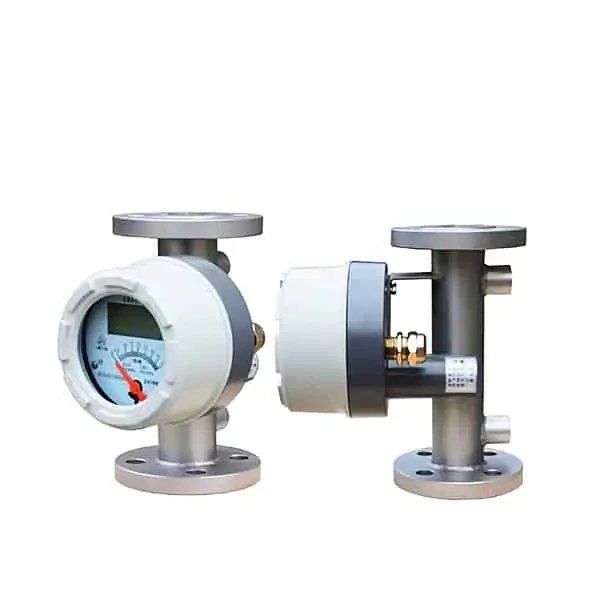 Metal Tube Rotameter
The standard stainless variable area meter for non-sanitary lines.
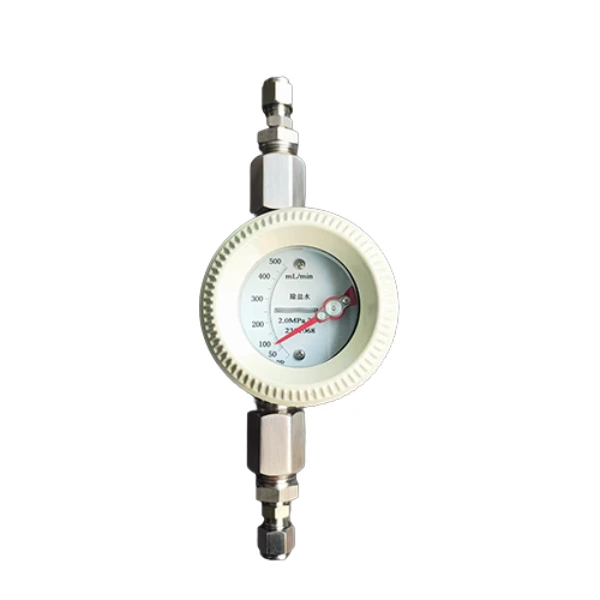 Low Flow Rotameter
For very small dosing and sampling lines, down to 0.1 L/h.
Browse all variable area flow meters →
Related applications: Sanitary.
FAQ
What is a sanitary rotameter?
It is an all-stainless metal tube variable area flow meter with tri-clamp connections, built for food, beverage, and pharmaceutical lines. The wetted parts are polished 304 or 316L with no crevice, so it cleans in place and reads liquid, gas, or saturated steam on a dial with no power.
What is a tri-clamp connection, and why use it?
A tri-clamp, or tri-clover, is a sanitary clamp fitting with no thread and a gasket seal. It has no dead leg for product to lodge in, and it comes apart by hand, so the meter installs, removes, and cleans far faster than a bolted flange. That is why it is standard in hygienic process.
What can it measure?
Sanitary liquid, gas, and saturated steam: purified and deionized water, milk and dairy, edible oil, juice, syrup, and beverage carbon dioxide, on a DN15 to DN100 line. Tell us the medium and the flow range and we set the size and the float.
Does it have to be mounted vertically?
Yes, the standard form mounts vertical with flow upward, so the float balances against gravity and reads true to the scale. Mount it plumb in a vertical run, and confirm the form at order.
Request a quote
Send us the sanitary medium, the size, the flow range, the temperature, and the clamp size, and we set the wetted parts, the float, and the output.