Flow Meters › Variable Area Flow Meters › High Pressure Rotameter
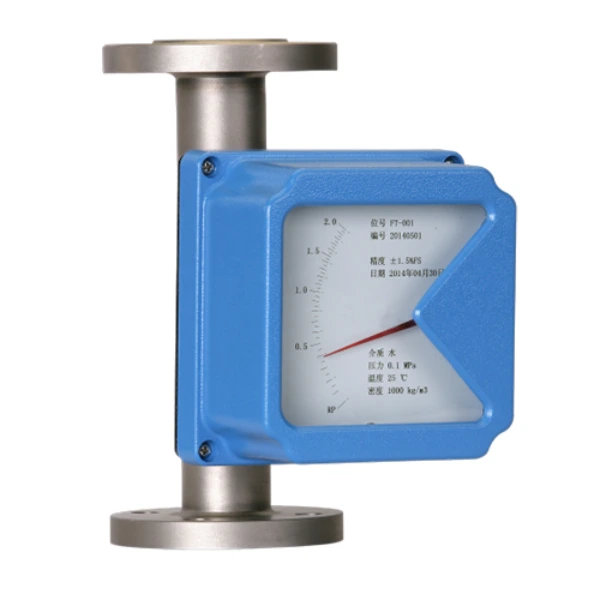
High Pressure Rotameter
A metal tube rotameter built for high pressure, to 25 MPa. The same variable area float and magnetic dial as a standard rotameter, in a heavy flanged body that holds the pressure, so it reads liquid and gas flow on a high-pressure line with no power.
- Principle: Variable area, float in a tapered tube
- Pressure: high pressure to 20 MPa, special to 25 MPa
- Size: DN15 to DN50
- Accuracy: 1.5 or 2.5 grade
- Output: local dial; optional 4-20 mA; IP65
Overview
A high pressure rotameter is a metal tube variable area meter rated for a high-pressure line. A float rides in a tapered tube and a magnet drives a dial, the same as a standard rotameter, but the body is built heavier so it holds pressure to 20 MPa, and to 25 MPa on a special build. It reads liquid and gas flow locally with no power, where a glass tube or a light body could not take the pressure.
It suits a hydraulic line, a high-pressure gas or injection line, or a high-pressure chemical feed, where you want a simple local read at pressure. For a standard process line to 4.0 MPa, the metal tube rotameter is the base meter; for a very small flow, the low flow rotameter reads from 0.1 l/h. This page is for the high-pressure build, where the pressure rating is the point.
Features
Everything here follows from one idea: a rotameter body that holds high pressure.
To 25 MPa
A heavy flanged body holds high pressure to 20 MPa, and to 25 MPa on a special build.
Magnetic dial, no power
A magnet in the float drives a pointer, so the flow reads at the line with no power and no glass.
Liquid and gas
One meter reads high-pressure liquid or gas, on a DN15 to DN50 line.
316L, Hastelloy, titanium
Wetted parts in 316L, Hastelloy C-276, or titanium, with a high-temperature build to 450 C.
4-20 mA, HART, alarms
A local dial, with an optional two-wire 4-20 mA output, HART, and limit alarms.
Little straight run
A variable area meter asks for almost no straight pipe, so it drops into a tight high-pressure run.
Working principle
Flow enters the bottom of a tapered tube and pushes up on a float. Its weight acts down, and buoyancy and flow drag act up. As the float rises in the tapering bore, the open area around it grows, so the drag falls, until the up forces balance the weight and the float settles at a height that tracks the flow. Because the tube is metal and heavy-walled, it holds high pressure, and a magnet in the float couples to a follower outside the tube that turns a dial pointer; a transmitter can read the same position and send 4-20 mA. The variable area principle needs almost no straight run.
Technical specifications
| Parameter | Specification |
|---|---|
| Measurement principle | Variable area; float in a tapered metal tube, magnetic dial |
| Medium | High-pressure liquid and gas |
| Size | DN15 to DN50 |
| Nominal pressure | Standard 4.0 MPa; high pressure to 20 MPa; special build to 25 MPa |
| Accuracy | 1.5 or 2.5 grade |
| Turndown | 10:1 (20:1 special) |
| Medium temperature | -30 to +120 C standard; high-temperature build to 450 C |
| Wetted material | 316L, 304, Hastelloy C-276, or titanium; PTFE lining on request |
| Output | Local dial; optional two-wire 4-20 mA with HART; pulse; limit alarms |
| Power | 24 V DC (12 to 36 V) or 220 V AC; battery for local display |
| Connection | Flange, GB/T 9119; cable entry M20 x 1.5 or 1/2 NPT |
| Protection | IP65 |
| Explosion protection | Intrinsically safe Ex ia IIC T6; flameproof Ex d IIC T6 |
Representative specifications; confirm per datasheet for the pressure, size, and medium you need.
Ordering example. High pressure rotameter, DN25, water 0 to 6 m3/h at 16 MPa, 316L, dial plus 4-20 mA, flange connection.
Pressure rating
A rotameter is set first by its pressure rating, so the body matches the line:
- Standard, to 4.0 MPa. The everyday metal tube rotameter for a process line at moderate pressure.
- High pressure, to 20 MPa. A heavier body and flanges for a hydraulic or high-pressure gas line, the usual high-pressure build.
- Special, to 25 MPa. The top rating, for the highest-pressure lines; confirm the build, the float, and the flange class at order.
Applications
High pressure rotameters suit lines where the pressure rules out a lighter meter:
- Hydraulic system flow and test rigs
- High-pressure gas and injection lines
- High-pressure chemical and reagent feed
- Reactor and autoclave feed at pressure
- Oil and gas process lines
Application example
High-pressure injection line. A plant needed to see a small chemical injection flow on a line running near 16 MPa, where a standard 4.0 MPa rotameter could not be used. A high-pressure rotameter with a 316L body and a flange to the line class read the injection flow on its dial and sent 4-20 mA to the control room. The variable area body needed almost no straight pipe, so it fitted the tight high-pressure manifold.
Related products
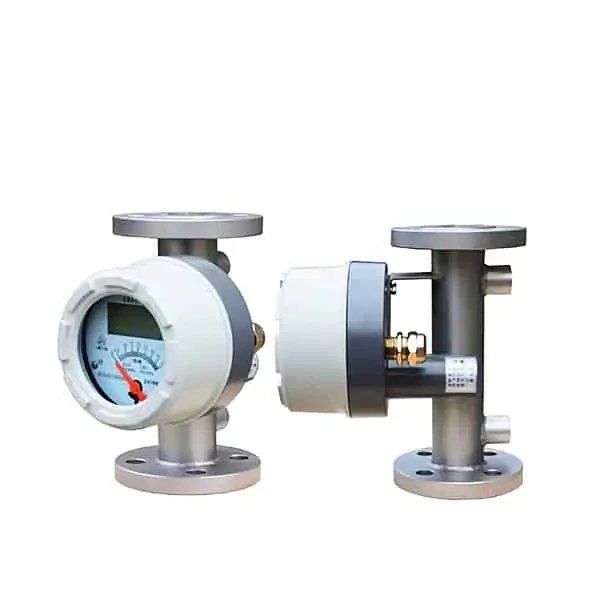 Metal Tube Rotameter
The standard variable area meter for process lines to 4.0 MPa.
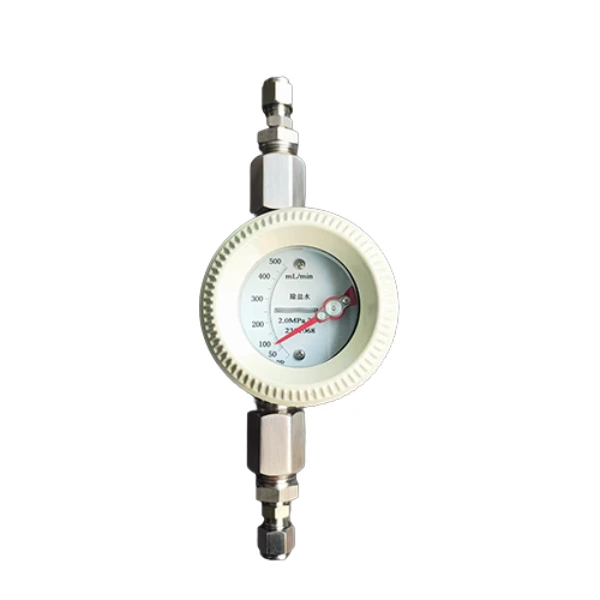 Low Flow Rotameter
A micro variable area meter that reads from 0.1 l/h.
Browse all variable area flow meters →
FAQ
What is a high pressure rotameter?
It is a metal tube variable area flow meter built for a high-pressure line. The float and magnetic dial are the same as a standard rotameter, but the body and flanges are heavier so it holds pressure to 20 MPa, and to 25 MPa on a special build, where a glass tube or a light body could not.
What is the maximum pressure of a rotameter?
A standard metal tube rotameter is rated to 4.0 MPa. A high pressure build holds to 20 MPa, and a special build to 25 MPa. Tell us the line pressure and we set the body, the float, and the flange class.
How does a high pressure rotameter work?
Flow lifts a float in a tapered tube to the height where buoyancy and drag balance its weight; that height tracks the flow. A magnet in the float drives a dial outside the heavy metal tube, so the meter reads at pressure with no power and no sight glass.
Can it read corrosive fluids at high pressure?
Yes. A choice of 316L, Hastelloy C-276, or titanium wetted parts, with a PTFE lining on request, handles corrosive fluids, and the metal tube takes the pressure that a lined glass tube could not.
Request a quote
Send us the line pressure, the medium, the size, and the flow range, and we set the body, the float, the material, and the output.