Home › Products › Flow Meters › Magnetic Flow Meters › Partially Filled Pipe Magnetic Flow Meter
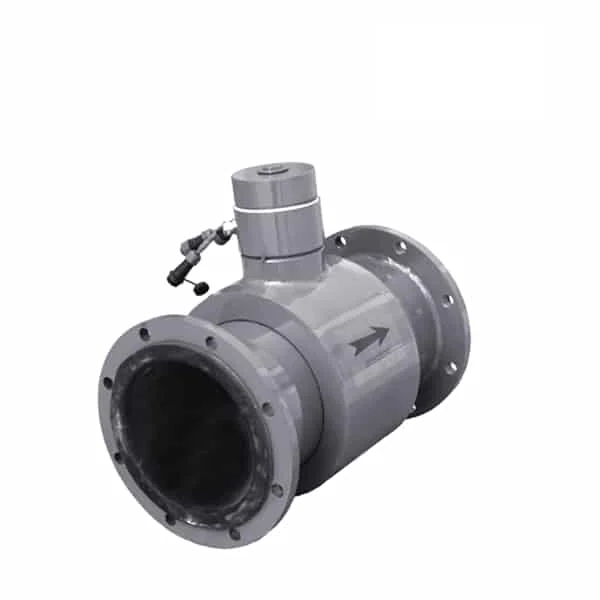
Partially Filled Pipe / Open Channel Magnetic Flow Meter
A magnetic flow meter that measures flow in a pipe or channel that is not full. It reads the water level and the velocity together, so it works in a sewer or open channel where a standard mag meter, which needs a full pipe, cannot.
- For: part-full pipes and open channels
- Size: circular DN300 to DN6000; rectangular to 6 m
- Accuracy: level plus or minus 2 mm; flow plus or minus 1%
- Output: 4-20 mA, pulse; RS485, GPRS
- Media: conductive sewage and water
Overview
A partially filled pipe magnetic flow meter measures flow where the pipe or channel does not run full, which is the normal state of a gravity sewer or a drainage channel. A standard magnetic flow meter needs a full pipe so the field and the electrodes see a known cross-section; this meter instead reads the water level and the velocity at the same time, and computes the flow from the wetted area and the velocity.
It covers circular pipes from DN300 to DN6000 and rectangular channels up to 6 m, reading the level to plus or minus 2 mm and the flow to plus or minus 1%. It outputs 4-20 mA and a pulse with RS485 and GPRS, so a remote sewer or channel reports to a control room without a flume or a weir.
Features
Why this meter suits a part-full sewer or channel:
Works part-full
Reads level and velocity together, so it meters a sewer that runs anywhere from a trickle to full.
No weir or flume
No structure to build in the channel, so it fits an existing sewer with no civil work.
Large pipes and channels
Circular to DN6000 and rectangular to 6 m, for trunk sewers and drainage channels.
Level to 2 mm
Reads the water level to plus or minus 2 mm and the flow to plus or minus 1%.
GPRS telemetry
4-20 mA and pulse with RS485 and GPRS, so a remote sewer reports to SCADA.
Low velocity
Reads from 0.05 m/s, so it catches the slow night flow as well as the storm peak.
Working principle
Flow is velocity times the wetted area. In a part-full pipe the wetted area changes with the water level, so the meter measures two things: the level, with a level sensor, and the velocity, with the electromagnetic sensor in the invert that sees the conductive water passing through its field. From the level it computes the wetted cross-section for the known pipe or channel shape, multiplies by the velocity and reports the flow.
Because the velocity sensor is electromagnetic, the water must conduct, above about 20 microsiemens per centimetre, which sewage and most surface water do. The meter handles the full range from a shallow night flow to a near-full storm, as long as the sensor stays wetted and the channel shape is entered correctly.
Technical specifications
| Parameter | Specification |
|---|---|
| Size | Circular DN300 to DN6000; rectangular up to 6 m wide |
| Accuracy | Water level plus or minus 2 mm; flow plus or minus 1% to 1.5% |
| Velocity range | 0.05 to 10 m/s |
| Medium / conductivity | Conductive sewage and water, above 20 uS/cm |
| Medium temperature | Up to 60 °C |
| Output | 4-20 mA (500 ohm load); pulse 1 to 2000 Hz |
| Communication | RS232 or RS485; GSM or GPRS option |
| Display | Backlit LCD; flow, velocity and total at once |
| Power supply | 220 V AC or 12/24 V DC |
Part-full measurement
The reason a standard mag meter cannot do this is that it assumes a full pipe: the field and the electrodes see the whole bore, so the cross-section is fixed and the meter only needs velocity. In a sewer the level rises and falls all day, so the cross-section changes, and a full-pipe meter would read the velocity but not know how much water it is moving. This meter adds the level measurement and the channel geometry, so it tracks the wetted area as the level changes. Enter the exact pipe diameter or channel shape, and keep the velocity sensor in the invert where the flow runs at all levels.
Installation
Mount the velocity sensor in the invert of the pipe or channel where water runs even at low flow, and the level sensor above the maximum level, on a straight run clear of bends, drops and the backwater from a downstream structure. Enter the exact circular diameter or rectangular dimensions so the wetted-area calculation is right, set the units, and confirm the reading against a known flow or a manual gauging. Seal the cable entries for a manhole or a wet location.
Applications
- Gravity sewers and trunk mains running part-full
- Stormwater and combined-sewer channels
- Open drainage and irrigation channels
- Treatment-works inlet and outfall metering
- Catchment and overflow monitoring on GPRS
Challenge: A utility needed flow on a large municipal sewer that ran part-full and varied through the day, where a full-pipe meter could not work and building a flume was not an option.
Solution: A partially filled pipe magnetic flow meter with the velocity sensor in the invert and the level sensor above, set to the channel size, reporting flow over GPRS.
Result: Continuous flow through the daily level swing, from night minimum to storm peak, with no civil work in the channel.
Related products
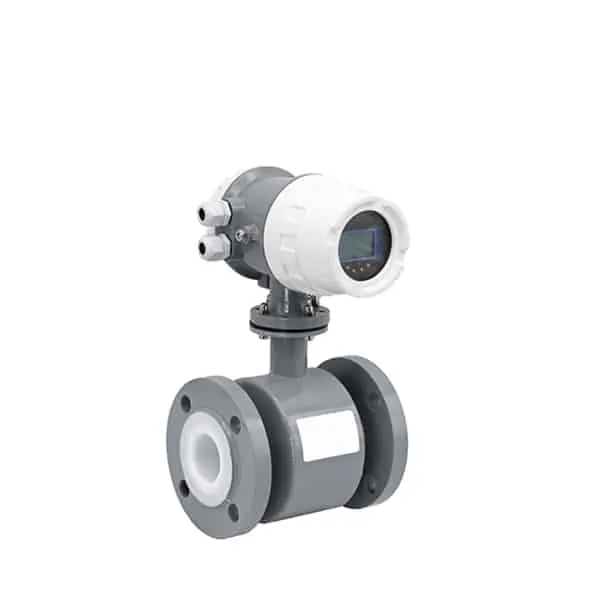 Magnetic Flow Meter
Full-bore mag meter for a pipe that runs full, water, slurry and chemicals.
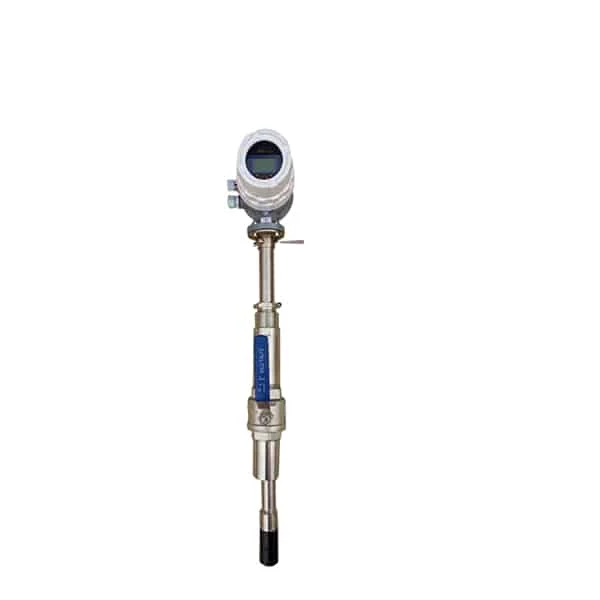 Insertion Magnetic Flow Meter
Low-cost probe for large full pipes, DN300 to DN3000, ball-valve fit.
Browse all magnetic flow meters →
Related applications: Wastewater.
FAQ
How do you measure flow in a partially filled pipe?
You measure two things and combine them: the water level, to find the wetted cross-section for the pipe or channel shape, and the velocity. Flow is the wetted area times the velocity. This meter reads both at once and computes the flow as the level changes.
Can a magnetic flow meter measure a partially full pipe?
A standard mag meter cannot, because it assumes a full pipe with a fixed cross-section. This version adds a level sensor and the channel geometry, so the electromagnetic velocity sensor in the invert plus the level give the flow in a part-full sewer or channel.
What is the difference from open-channel flow with a flume?
A flume or weir creates a known relationship between level and flow, so you only measure level, but it needs a structure built in the channel. This meter measures velocity directly as well, so it works in an existing sewer with no civil work.
Request a quote
Tell us the pipe diameter or channel shape and the flow range, and we configure one meter for the sewer, not a shelf part.