Home › Products › Level Instruments › Ultrasonic Level Sensors › Ultrasonic Sludge Level Meter
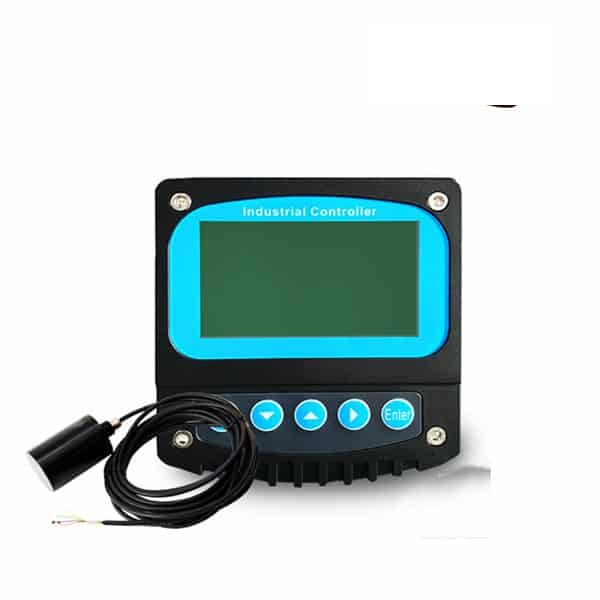
Ultrasonic Sludge Level Meter and Blanket Detector
A split-type ultrasonic meter that tracks the sludge blanket, the boundary between settled sludge and clarified water in a clarifier or thickener. A submerged probe finds the interface and the meter switches relays to run the desludge pumps, with nothing mechanical in the sludge.
- Measures: sludge blanket / interface depth
- Range: 5 to 70 m (probe dependent)
- Control: programmable relays for desludge pumps and alarm
- Output: 4-20 mA and RS485 / RS232
- Probe: IP68 submerged, cable to 100 m
Overview
An ultrasonic sludge level meter measures the sludge blanket, the line where settled sludge meets the clarified water above it in a clarifier, thickener or settling tank. A submerged probe sends an ultrasonic pulse and reads the strong echo off that density interface, so the meter reports how high the blanket has risen and how much clear water is left above it.
Knowing the blanket depth is what runs the process. The meter switches programmable relays to start the desludge or recirculation pumps when the blanket climbs and to stop them when it drops, while the 4-20 mA and RS485 outputs trend the blanket to SCADA. It is a split design, with the probe on up to 100 m of cable and the display and relays in a dry panel, and nothing mechanical sits in the sludge to clog.
Features
Why an ultrasonic blanket meter suits a clarifier:
Tracks the blanket
Reads the sludge-water interface, not just the surface, so you see how high the blanket is.
Desludge relays
Programmable relays start and stop the desludge pumps and raise a high-blanket alarm.
Submerged IP68 probe
A sealed probe on up to 100 m of cable, with nothing mechanical in the sludge to clog.
4-20 mA and RS485
Trends the blanket to a PLC or SCADA over 4-20 mA, with RS485 or RS232 Modbus.
Split design
Display and relays in a dry panel, probe out over the basin, joined by a long cable.
Cuts solids carryover
Holding the blanket at target avoids carryover into the overflow and over-pumping thin sludge.
Working principle
Settled sludge is far denser than the water above it, and that sharp change in density reflects ultrasound strongly. The submerged probe sends a pulse and times the echo from the sludge-water interface; the travel time gives the depth of the blanket. As the blanket rises and falls with the inflow and the desludge rate, the meter tracks the interface and reports its level continuously.
Unlike a surface level sensor, the meter is tuned to the in-water density step, not the air-liquid surface, so it sees the blanket inside the basin. A very thin or diffuse interface, heavy gassing or scum can blur the echo, so the meter applies signal processing and a settable threshold to lock onto the true blanket.
Technical specifications
| Parameter | Specification |
|---|---|
| Type | Split-type ultrasonic sludge / blanket level meter |
| Measuring range | 5, 10, 15, 20, 30, 40, 50, 60, 70 m (by probe) |
| Accuracy / resolution | 1% to 2%; resolution 5 mm or 0.5% |
| Analog output | 4-20 mA, 750 ohm load |
| Relay output | Two groups, AC 250 V / 8 A or DC 30 V / 5 A, status programmable |
| Communication | RS485 / RS232 (optional) |
| Power supply | 220 V AC 50 Hz standard; 24 V DC or battery optional |
| Ambient temperature | Transmitter −20 to 60 °C; probe −20 to 80 °C |
| Probe cable | Up to 100 m |
| Protection | Probe IP68; transmitter IP65 |
Selecting a sludge meter
Match the probe to the basin depth, 5 to 70 m, and the cable run to the panel. Mount the probe so it looks across the band where the blanket moves, clear of the rake arm and the inflow. For a clarifier or thickener that needs the blanket controlled, the relays run the desludge pumps directly; if you only need a 4-20 mA blanket signal to a PLC, the same meter gives that too. For a clean liquid surface rather than a sludge interface, a standard ultrasonic level meter is the right tool, and we will say so.
Installation
Place the probe in the basin so its beam covers the working range of the blanket, away from the rake mechanism, the feed well and the launder. Run the probe cable back to the panel, up to 100 m, and wire the relays to the desludge pumps and the alarm. Set the range, the blanket threshold and the relay setpoints, then watch a desludge cycle to confirm the pumps start and stop at the right blanket levels.
Applications
- Wastewater primary and secondary clarifiers
- Sludge thickeners and gravity settlers
- Water-treatment sedimentation basins
- Mining and mineral thickeners and tailings
- Dissolved-air flotation and desludge control
Challenge: A water-treatment plant needed to hold the sludge blanket in its clarifiers at a target depth, since a rising blanket carried solids into the overflow and over-pumping wasted thin sludge.
Solution: Ultrasonic sludge level meters with submerged probes tracked the blanket and switched the desludge pumps from the meter relays, with the depth trended to the control room.
Result: The blanket held at target, with cleaner overflow and desludging matched to the actual blanket rather than a timer.
Related products
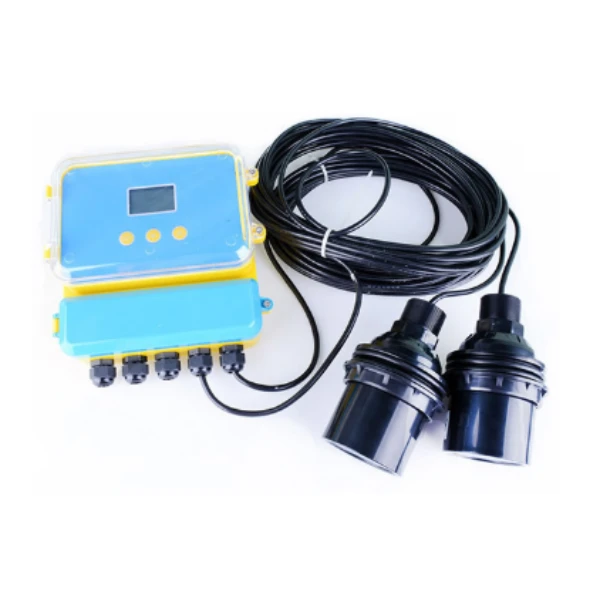 Ultrasonic Level Detector
Split detector (ULT-200) with control relays for liquid level and pump control.
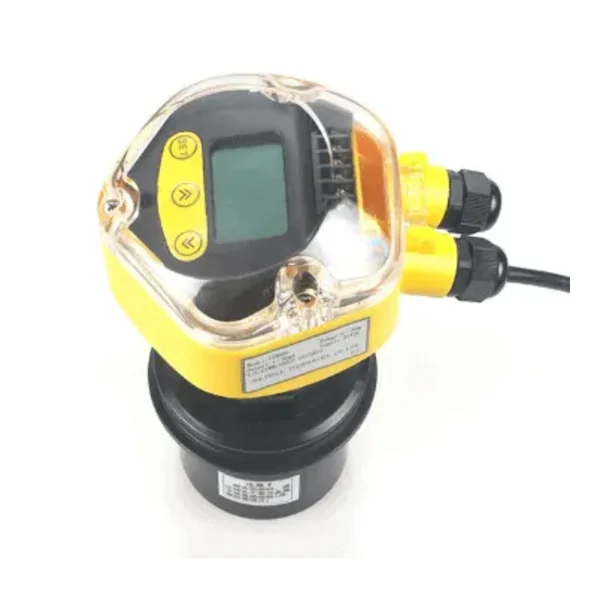 Ultrasonic Level Transmitter
Integral ultrasonic transmitter for a continuous 4-20 mA liquid level signal.
Browse all ultrasonic level sensors →
FAQ
What is the sludge blanket level?
It is the depth of the interface between settled sludge and the clarified water above it in a clarifier or thickener. Holding it at target keeps solids out of the overflow and matches desludging to how much sludge has actually settled.
How does an ultrasonic sludge level meter work?
A submerged probe sends an ultrasonic pulse and reads the strong echo off the sludge-water density interface; the travel time gives the depth of the blanket. The meter tracks the interface as it rises and falls and switches relays to control the desludge pumps.
How do you measure sludge level in a clarifier?
With an ultrasonic blanket meter: place the probe so its beam covers the band where the blanket moves, set the blanket threshold, and read the depth on 4-20 mA or RS485 while the relays run the desludge pumps at the levels you set.
What can disturb a sludge blanket reading?
A very thin or diffuse interface, heavy gassing, scum or a rake arm passing through the beam can blur the echo. Siting the probe in a clear path and setting the threshold handle most cases; severe gassing may need the probe repositioned.
Request a quote
Tell us the basin depth, the blanket range and what the relays must switch, and we configure one sludge meter for the clarifier, not a shelf part.