Home › Products › Level Instruments › Radar Level Sensors › Sanitary Radar Level Sensor
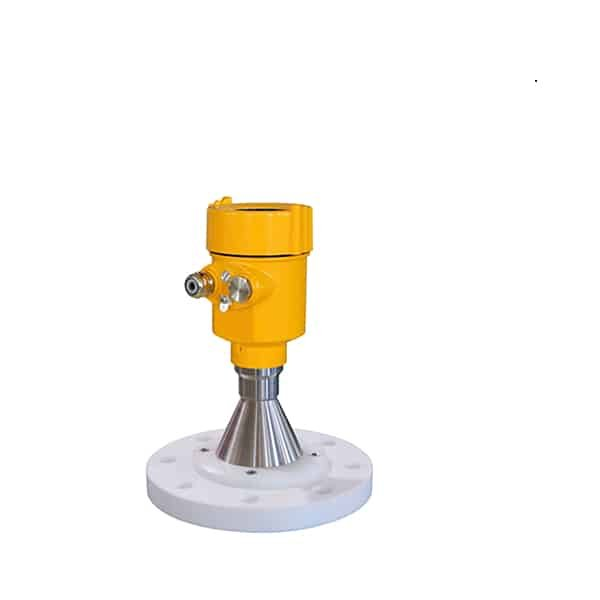
Sanitary Radar Level Sensor (SIRD-906)
A 26 GHz non-contact radar for hygienic tanks. A stainless or PTFE antenna and a flush, cleanable connection let it measure food, dairy, beverage and pharmaceutical liquids to plus or minus 3 mm, with nothing in the tank to harbour product and full tolerance of CIP and SIP cleaning.
- Service: hygienic food, dairy, beverage and pharma; also corrosive
- Range / frequency: to 20 m; 26 GHz
- Accuracy: plus or minus 3 mm
- Wetted antenna: stainless steel or PTFE; IP67
- Output: 4-20 mA / HART / RS485; Ex option
Overview
Hygienic tanks have two demands that an ordinary level sensor cannot meet: the wetted parts must be cleanable to a food or pharmaceutical standard, and the measurement should not put anything in the product. A sanitary radar level sensor answers both. It measures without contact, and its wetted antenna is stainless steel or PTFE with a flush, crevice-free face that withstands clean-in-place and steam-in-place cycles.
The SIRD-906 uses a 26 GHz signal, whose tight beam and short wavelength give a precise reading from the clean, often low surfaces of a hygienic tank, holding plus or minus 3 mm over a 20 m range. It outputs 4-20 mA, HART or RS485, carries an IP67 housing and an explosion-proof option, and the same build also suits strongly corrosive liquids thanks to the PTFE antenna.
Features
Why a 26 GHz sanitary radar suits hygienic tanks:
Hygienic wetted parts
Stainless or PTFE antenna with a flush, crevice-free face that cleans down and resists product buildup.
CIP and SIP ready
Tolerates clean-in-place and steam-in-place cycles to 130 °C, with a 200 °C high-temperature build.
Precise 26 GHz
A tight beam and plus or minus 3 mm accuracy for the clean, low surfaces of a process or batch tank.
Non-contact
Only the antenna faces the tank, so the product is never touched by a probe or float.
Also for corrosives
The PTFE antenna build handles strongly corrosive liquids as well as hygienic media.
4-20 mA / HART / RS485
Loop-powered with HART or RS485 Modbus, plus a local LCD and an IP67 housing.
Working principle
The sensor emits a 26 GHz pulse from the antenna and times the echo from the surface; level is the tank height minus the measured distance. The higher frequency makes a tight beam that aims past the agitator or wall and reads a clean liquid surface accurately, which is why it holds plus or minus 3 mm. Because the measurement is non-contact, only the antenna meets the product, and a stainless or PTFE face with no crevices keeps the wetted side hygienic.
A flush antenna mounted on a sanitary flange or a tri-clamp sits level with the tank top so cleaning solution reaches every surface. Echo software maps fixed structures so they are ignored and tracks the true surface, and the IP67 housing stands up to wash-down outside the tank.
Technical specifications
| Parameter | Specification |
|---|---|
| Model | SIRD-906 sanitary radar level sensor |
| Service | Hygienic food, dairy, beverage and pharmaceutical liquids; strongly corrosive liquids |
| Measuring range | 20 m |
| Frequency | 26 GHz |
| Accuracy | Plus or minus 3 mm |
| Process temperature | −40 to 130 °C standard; −40 to 200 °C high-temperature |
| Process pressure | −0.1 to 4.0 MPa |
| Wetted antenna | Stainless steel or PTFE |
| Output / display | 4-20 mA / HART / RS485 Modbus; four-digit LCD |
| Power supply | Two-wire DC 24 V; four-wire DC 24 V or AC 220 V |
| Protection / Ex | IP67; Exia IIC T6 Ga / Exd IIC T6 Gb option |
| Connection | Sanitary flange or tri-clamp; aluminum, plastic or stainless housing |
Selecting a sanitary radar
For a hygienic tank, the wetted antenna and the connection decide it. A stainless or PTFE flush antenna on a tri-clamp or a sanitary flange cleans down and meets food and pharmaceutical practice; a standard radar with an exposed horn does not. Pick the PTFE build where the liquid is also corrosive. Where the product foams heavily during filling or CIP, mount over a calmer zone and use the echo mapping; for a very low, broken surface a guided wave radar may read more steadily, and we will say so.
Installation
Mount the sensor on a sanitary flange or tri-clamp with the flush antenna level with the tank top so cleaning solution wets the whole face. Aim the beam straight down, away from the fill stream, the agitator and the wall. Map fixed reflectors with the echo software, keep the blanking distance below the antenna clear and site the sensor above the highest working level. Confirm the connection and gasket match the tank fitting and the cleaning regime.
Applications
- Milk, cream and dairy process and storage tanks
- Beer, wine, juice and soft-drink batch and bright tanks
- Pharmaceutical and biotech vessels and WFI tanks
- Sauce, syrup and food-ingredient tanks
- Corrosive chemical tanks needing a PTFE wetted antenna
In food, dairy, beverage and pharmaceutical service the wetted parts must clean down and the connection must be sanitary. A 26 GHz radar with a stainless or PTFE flush antenna on a tri-clamp or sanitary flange reads level without contact, leaves nothing in the tank to harbour product, and withstands the CIP and SIP cleaning the tank sees between batches.
Related products
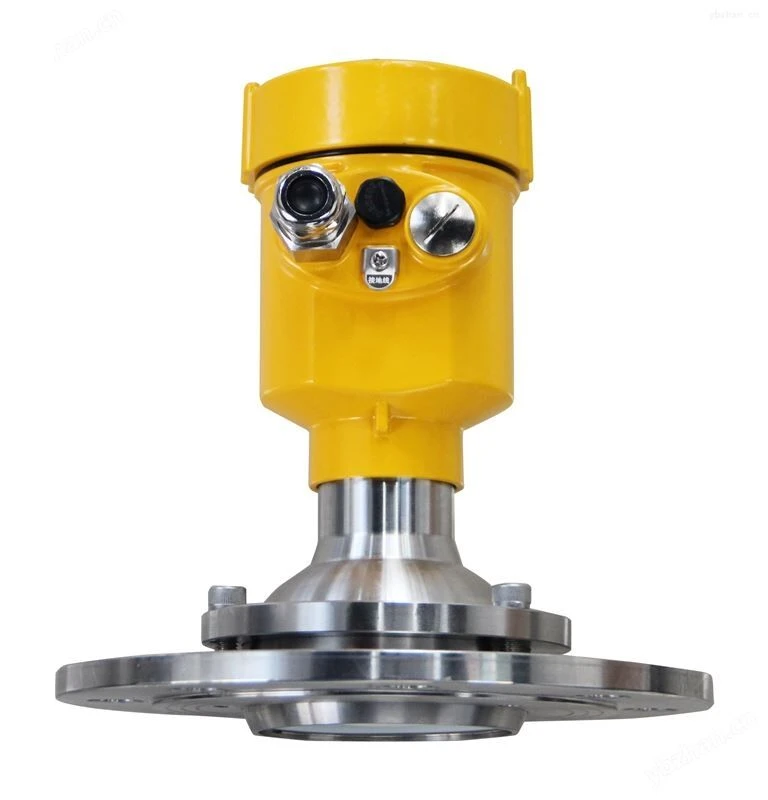 Radar Level Transmitter
26 GHz non-contact radar for general liquids, water and storage tanks.
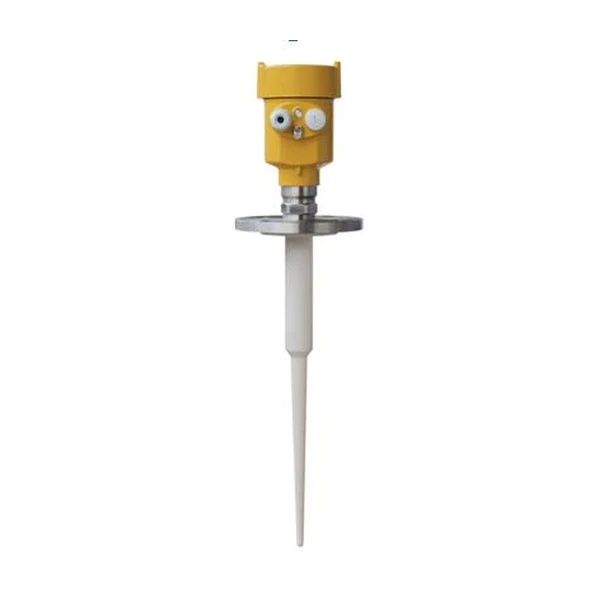 Radar for Corrosive Liquids
6 GHz PTFE rod-antenna radar (SIRD-802) for acids and aggressive media.
Browse all radar level sensors →
FAQ
How does a radar level sensor work?
It sends a microwave pulse from the antenna to the surface and times the echo back; level is the tank height minus the measured distance. A 26 GHz signal makes a tight beam that reads a clean hygienic surface to plus or minus 3 mm without touching it.
Is radar suitable for food and pharmaceutical tanks?
Yes, when the wetted parts are sanitary. The SIRD-906 uses a stainless or PTFE flush antenna on a tri-clamp or sanitary flange, with no crevices to harbour product, and tolerates CIP and SIP cleaning, which is what food, dairy and pharmaceutical tanks require.
How accurate is a sanitary radar level sensor?
The SIRD-906 holds plus or minus 3 mm over its 20 m range. The 26 GHz frequency gives a tight beam and a clean echo from a still liquid surface; foam during filling or CIP is handled by siting and echo mapping.
What are the disadvantages of radar level sensors?
Heavy foam, strong fixed reflectors near the beam or a very low, broken surface can weaken the echo. Mounting over a calm zone and using the echo mapping handle most cases; where they cannot, a guided wave radar or another technology is the better choice.
Request a quote
Tell us the medium, the tank height, the temperature and the connection and cleaning regime, and we configure one sanitary radar for the application, not a shelf part.