Home › Products › Level Instruments › Radar Level Sensors › Radar Level Sensor for Slurry
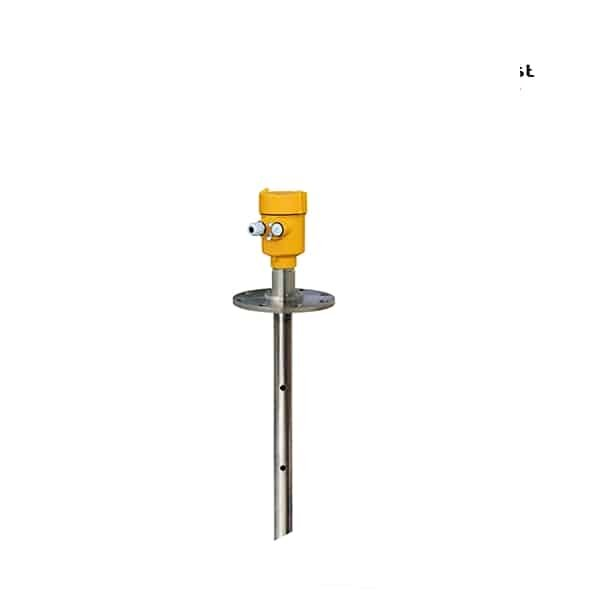
Radar Level Sensor for Slurry (SIRD-805)
A 6 GHz horn-antenna radar built for slurries, viscous liquids and agitated tanks. The lower frequency and large horn return a usable echo from low-dielectric and stirred surfaces that defeat higher-frequency radar, with no contact, so wall coating and buildup do not foul the sensor.
- Medium: slurry, viscous and low-dielectric liquids, agitated tanks
- Range / frequency: to 20 m; 6 GHz; horn antenna
- Process temperature: −40 to 130 °C (250 °C high-temp build)
- Accuracy: plus or minus 10 mm; repeatability 1 mm
- Output: 4-20 mA / HART; Ex option
Overview
Slurries, pulps and viscous liquids are hard to measure. Their dielectric constant is low, so they reflect little of a radar pulse, and a stirrer or a coating on the wall scatters what does come back. A radar level sensor for slurry answers this with a 6 GHz signal and a large horn antenna: the longer wavelength penetrates foam and vapor and tolerates a poor reflector, and because the sensor is non-contact, the viscous medium never touches it.
The SIRD-805 reaches 20 m, holds plus or minus 10 mm and outputs 4-20 mA or HART, with an explosion-proof build for solvent and chemical service. It suits paper pulp chests, surfactant and paste tanks, mixing and reaction vessels, and any low-dielectric liquid where contact sensors clog.
Features
Why a 6 GHz horn radar suits slurry and viscous service:
Reads low dielectric
6 GHz returns a usable echo from slurries and viscous liquids that reflect a higher-frequency pulse poorly.
Non-contact
The sensor never touches the medium, so a sticky or coating slurry cannot foul it.
Tolerates stirring
Echo processing handles the moving, broken surface of an agitated or mixed tank.
High-temperature build
Standard to 130 °C; a high-temperature version reaches 250 °C for hot process tanks.
Explosion-proof option
Exia IIC T6 and Exd IIC T6 builds for solvent, chemical and hazardous areas.
Two-wire 4-20 mA / HART
A loop-powered transmitter with HART, plus a four-wire option, and a local LCD for setup.
Working principle
The sensor emits a short 6 GHz microwave pulse from the horn and times the echo from the surface; level is the tank height minus the measured distance. A lower frequency than 26 or 80 GHz radar spreads the beam a little more but carries better through vapor, foam and dust and returns more energy from a weak reflector, which is exactly the case with a low-dielectric slurry.
The horn antenna concentrates the beam and resists buildup at the mouth. Echo software maps fixed reflectors such as an agitator or a nozzle so they are ignored, and tracks the true surface through the noise a moving slurry creates. Where a slurry coats or the surface is very broken, mounting over a calm zone away from the stirrer improves the reading.
Technical specifications
| Parameter | Specification |
|---|---|
| Model | SIRD-805 pulse radar level sensor |
| Applicable medium | Slurry, viscous and low-dielectric liquids, agitated tanks |
| Measuring range | 20 m |
| Frequency / antenna | 6 GHz; horn antenna |
| Accuracy / repeatability | Plus or minus 10 mm; repeatability 1 mm |
| Process temperature | −40 to 130 °C standard; −40 to 250 °C high-temperature |
| Process pressure | −0.1 to 4 MPa |
| Output / display | 4-20 mA / HART; four-digit programmable LCD |
| Power supply | Two-wire DC 24 V; four-wire DC 24 V or AC 220 V |
| Explosion-proof | Exia IIC T6 Ga / Exd IIC T6 Gb |
| Housing / connection | Aluminum single or double cavity, plastic or stainless single cavity; flange |
Selecting a radar for slurry
Match the frequency to the medium. For clean liquids and tall narrow tanks an 80 GHz radar gives the tightest beam; for slurries, pulps and viscous, low-dielectric or agitated media a 6 GHz horn like the SIRD-805 returns a stronger echo and is the better choice. Where the slurry is also strongly corrosive, a PTFE rod-antenna radar protects the wetted antenna. If the surface coats heavily or the dielectric is extremely low, a guided wave radar or a hydrostatic sensor may be more dependable, and we will say so.
Installation
Mount the sensor on a flange over a calm part of the surface, away from the fill stream and the agitator, and keep the horn clear of the tank wall and internal structures. Aim the beam straight down at the surface. Use the echo mapping to mask fixed reflectors such as the stirrer shaft, baffles or a heating coil. Allow the blanking distance below the antenna and site the sensor above the highest working level.
Applications
- Paper and pulp chests and stock tanks
- Surfactant, detergent and paste tanks that coat the wall
- Mixing, reaction and crystallizer vessels with agitators
- Mineral and ceramic slurries and tailings
- Low-dielectric chemical and food liquids where contact sensors clog
Challenge: A surfactant maker needed level on a viscous paste tank where the product coated the walls and fouled any contact sensor.
Solution: A non-contact 6 GHz horn radar mounted over a calm zone, with the echo mapping set to ignore the tank internals.
Result: A steady level reading with nothing in contact with the paste, so wall coating no longer disturbed the measurement.
Related products
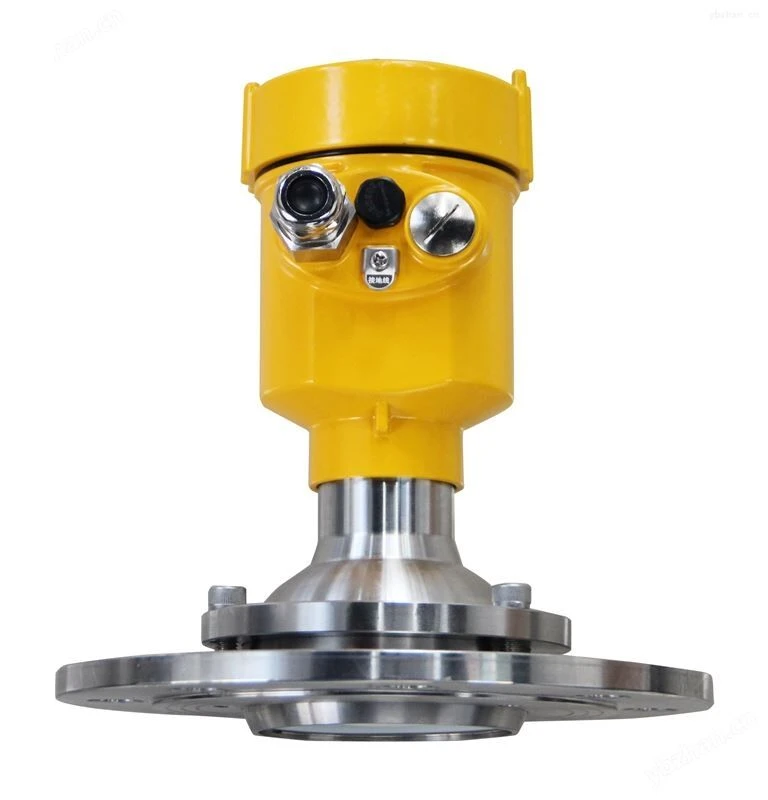 Radar Level Transmitter
26 GHz non-contact radar for general liquids, water and storage tanks.
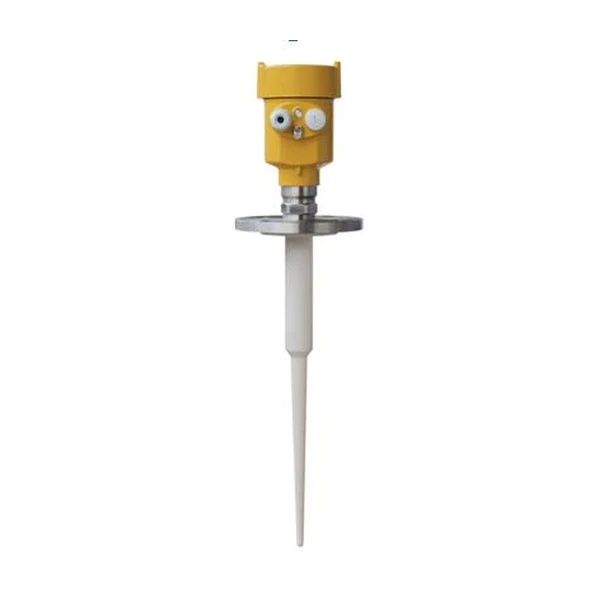 Radar for Corrosive Liquids
6 GHz PTFE rod-antenna radar (SIRD-802) for acids and aggressive media.
Browse all radar level sensors →
FAQ
How does a radar level sensor work?
It sends a microwave pulse from the antenna to the surface and times the echo back; level is the tank height minus the measured distance. A 6 GHz signal returns more energy from a weak reflector than higher-frequency radar, which is why it suits slurries and viscous liquids.
Can radar measure slurry and low-dielectric liquids?
Yes. A low frequency and a large horn antenna return a usable echo from slurries, pulps and viscous, low-dielectric liquids that defeat an 80 GHz radar. For an extremely low dielectric or a heavily coating surface, a guided wave radar or a hydrostatic sensor may be more reliable.
How accurate is a radar level sensor?
The SIRD-805 holds plus or minus 10 mm with 1 mm repeatability over its 20 m range. Accuracy depends on a clean echo, so siting the sensor away from the agitator and mapping fixed reflectors matters as much as the rated figure.
What are the disadvantages of radar level sensors?
Heavy buildup on the antenna, a very low dielectric, or strong fixed reflectors close to the beam can weaken or confuse the echo. Mounting over a calm zone, keeping the horn clear and using the echo mapping handle most of these; where they cannot, a contact technology is the better choice.
Request a quote
Tell us the medium and its dielectric, the tank height, the temperature and pressure and whether the tank is agitated, and we configure one radar for the application, not a shelf part.