Home › Products › Level Instruments › Float Level Sensors & Switches
Float level devices use a buoyant magnetic float and sealed reed switches to detect liquid level. They are simple, rugged and need no power in the wetted path, which makes them a first choice for level switching and basic level reading on water, oil, fuel and chemical tanks. Choose a continuous sensor, a multipoint switch or a cable float switch by what the tank has to do.
Float level sensors and switches
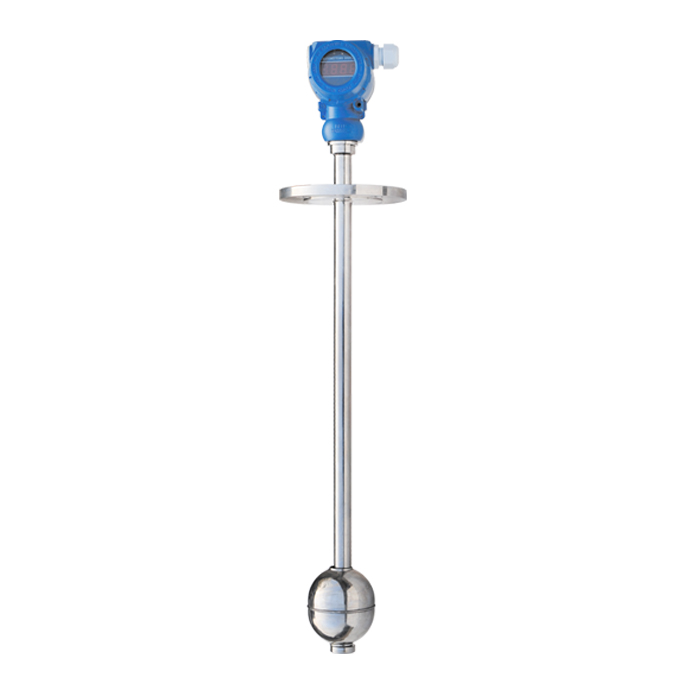 Float Level Sensor
Single, multipoint or continuous 4-20 mA magnetic float level sensor; insert to 6 m, PN to 320.
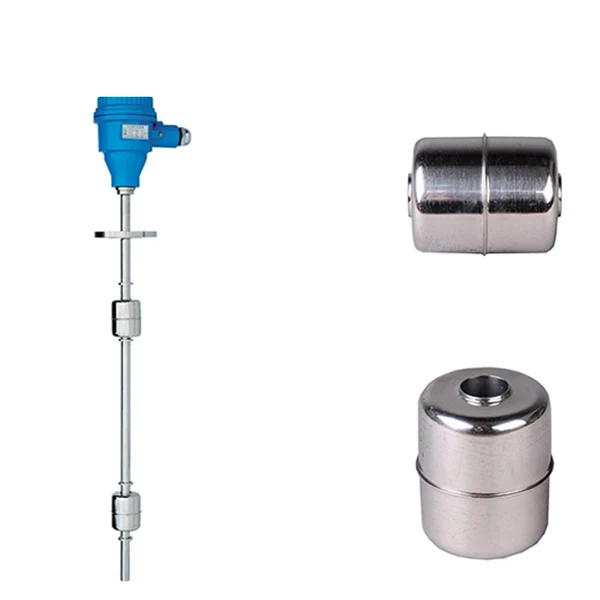 Multipoint Float Switch
Several reed set points on one stem; 304/316L, PP or PTFE/PVC builds for corrosive media.
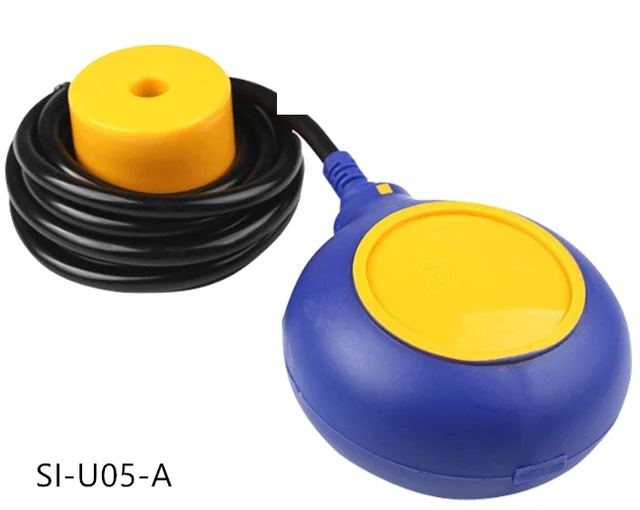 Float Level Switch
Cable-suspended float switch (SI-U05) for pump start/stop in open tanks and sumps.
Choosing a float level device
| What you need | Choose |
|---|---|
| A live level reading (4-20 mA) or single to multipoint points on an insertion | Float Level Sensor |
| Several on/off points in one tank, with a material to match the medium | Multipoint Float Switch |
| Pump start/stop in an open tank, sump or reservoir | Float Level Switch (cable) |
Stirred tanks push floats sideways and the reading wanders; a stilling well holds the float in a calm column.
To compare floats with radar, hydrostatic and the other continuous technologies, read our level transmitter types guide.
Cooling tower basins are one of the most common float applications; see the cooling tower water level control guide for setpoints and makeup sizing.
FAQ
What is a float level sensor?
A float level sensor detects liquid level with a buoyant magnetic float and reed switches. The float rides on the surface along a stem; each reed closes at its height to give a switch point, or a reed-resistor chain gives a continuous 4-20 mA reading.
How does a float switch work?
A magnet in the float closes a sealed reed switch when the float reaches it. One float gives a single point; several floats give several points. The medium density must be above 0.5 g/cm³ for the float to stay buoyant.
Request a quote
Tell us the tank height, the medium and its density and temperature, and whether you need a reading, switch points or pump control, and we configure one unit for the application, not a shelf part.