Home › Products › Level Instruments › Multipoint Float Switch
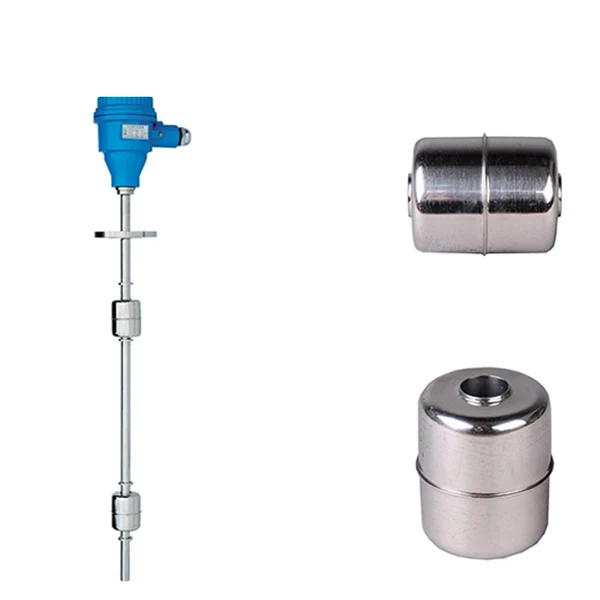
Multipoint Float Switch
A multipoint float switch puts several magnetic floats on one vertical stem, each closing a sealed reed at its set height. One stem gives several independent on/off switch points for high, low and alarm levels or pump control. Stainless steel, PP and PTFE/PVC builds suit water, oil and corrosive chemicals.
- Switch points: 1 to several on one stem (each a reed contact)
- Materials: 304 / 316L stainless, PP, or PTFE / PVC
- Temperature / pressure: to 160 °C; to 2.5 MPa by build
- Medium density: greater than 0.5 g/cm³
- Mounting: top-down through a flange or thread
Overview
A multipoint float switch is the simple, reliable way to switch on several levels in one tank. Each magnetic float rides on the liquid surface around a fixed stem, and a reed switch sealed inside the stem closes when its float reaches it. Put two, three or more floats at chosen heights and you get that many independent on/off points on a single insertion, with no electronics in the wetted path.
It differs from a continuous gauge: a float switch reports discrete points (high, low, alarm) rather than a live reading. If you need an actual level value, use the float level sensor with its 4-20 mA build instead. For corrosive media the stem and floats come in PP or PTFE/PVC as well as stainless steel.
Features
Why engineers pick a multipoint float switch:
Several points, one stem
Two, three or more floats give that many independent switch points on a single insertion.
Material choice
304 / 316L stainless, polypropylene or PTFE / PVC to match water, oil or aggressive chemicals.
Sealed reed switching
Reed switches are sealed inside the stem, so no contacts are exposed to the liquid.
No power for the switch
The float action is mechanical, so each point switches without supply power in the tank.
Wide media range
Water, oil, acids and alkalis are all covered by the right material build.
Easy mounting
Mounts top-down through a flange or thread and needs little maintenance.
Working principle
Each float carries a ring magnet and slides on a sealed stem. Inside the stem, a reed switch is fixed at the height you want to monitor. When the rising or falling liquid brings a float level with its reed, the magnet closes the contact; as the float moves away, the contact opens. Each float and reed pair is therefore an independent level switch at a known height.
Because the floats work by buoyancy, the medium density must be above 0.5 g/cm³ and the float size is matched to the pressure and the liquid. The points are wired out through the head, so a controller or PLC sees a set of clean on/off contacts for high, low, alarm or pump duties.
Technical specifications
| Build | Wetted material | Temperature | Pressure |
|---|---|---|---|
| Standard | 304, 316L or 1Cr18Ni9Ti stainless steel | −30 to 120 °C | to 2.5 MPa |
| Anti-corrosive | Polypropylene (PP) | −30 to 80 °C | to 0.4 MPa |
| Corrosion-resistant | PTFE / PVC | −30 to 160 °C | to 1.0 MPa |
| Parameter | Specification |
|---|---|
| Switch points | 1 to several floats on one stem; each an independent reed contact |
| Output | Reed switch contacts (SPST); contact rating per model |
| Medium density | Greater than 0.5 g/cm³ |
| Mounting | Top-down through flange or thread, vertical within plus or minus 25 degrees |
| Wiring | Points wired out at the head for controller or PLC |
Materials and selection
Match the wetted material to the medium. Stainless steel (304, 316L) is the standard for water, oil and most process liquids and takes the widest pressure and temperature. Polypropylene suits dilute acids and alkalis at lower pressure and temperature. PTFE or PVC handles aggressive chemicals such as strong acids, with PTFE giving the broadest chemical resistance and the highest temperature of the three. For each build the float size is set by the pressure and the liquid density so the float stays buoyant.
Applications
- High, low and alarm switching on water, oil and process tanks
- Pump start/stop and lead-lag control with two or more points
- Corrosive chemical tanks with PP or PTFE/PVC floats and stem
- Day tanks and reservoirs needing several monitored levels
- Simple on/off control where a continuous reading is not required
Challenge: A chemical plant needed a high-level switch on a sulfuric-acid storage tank, where stainless steel would not survive the acid.
Solution: A float switch with PTFE-covered float and wetted parts, set as a high-level alarm point, mounted on the tank top.
Result: Reliable high-level switching with PTFE wetted parts suited to the acid, on a simple switch with no electronics exposed to the medium.
Related products
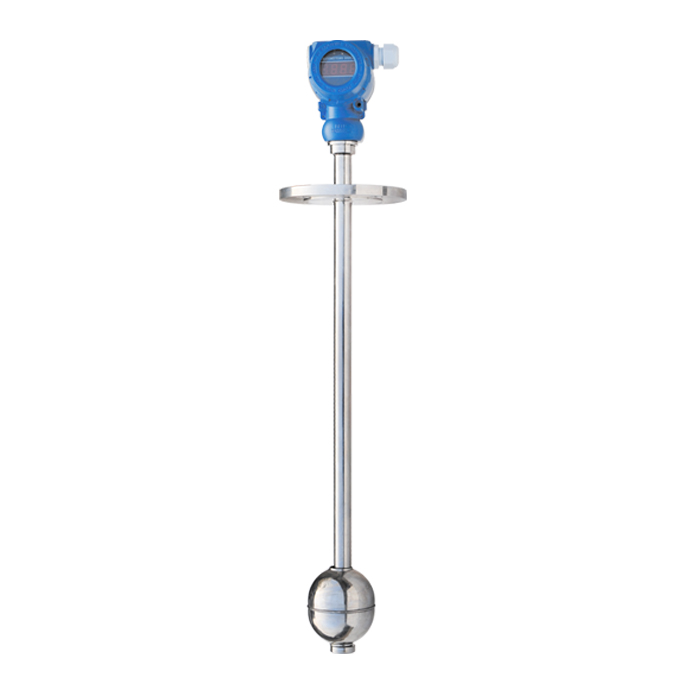 Float Level Sensor
Single, multipoint or continuous 4-20 mA magnetic float level sensor.
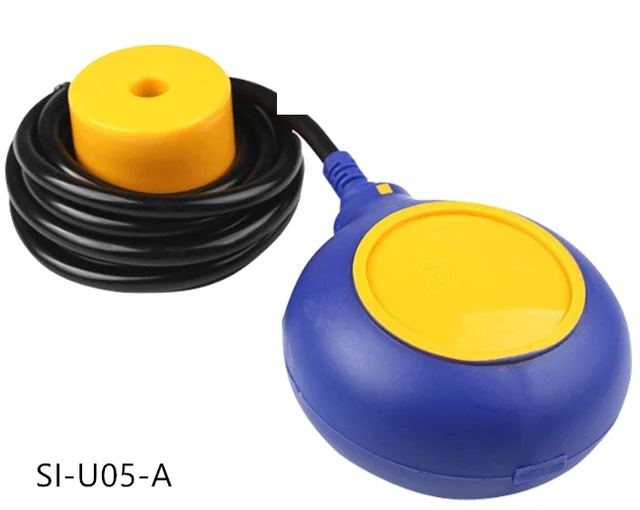 Float Level Switch
Cable-suspended float switch (SI-U05) for pump control in tanks and sumps.
Browse all level instruments →
FAQ
What is a multipoint float switch?
A multipoint float switch is a level switch with several magnetic floats on one stem, each closing a sealed reed at its set height. It gives several independent on/off points (high, low, alarm) on a single insertion, rather than one switch point or a continuous reading.
How do you wire a float switch?
Each point is a dry reed contact wired out at the head to a controller, relay or PLC input. A point can be used normally open or normally closed depending on whether you switch on rising or falling level. Keep the switching current within the contact rating; for higher loads switch through a relay.
What are the common problems with float switches?
The usual issues are a float stuck by debris or buildup, a float wrong for the liquid density so it sinks, or a light fluid below 0.5 g/cm³. Choosing the right material and float size, mounting within 25 degrees of vertical and keeping the floats clean prevents most of them.
Request a quote
Tell us the tank height, the medium and its density and temperature, the number of switch points and their heights, and the material you need, and we configure one unit for the application, not a shelf part.