Home › Products › Level Instruments › Float Level Sensor
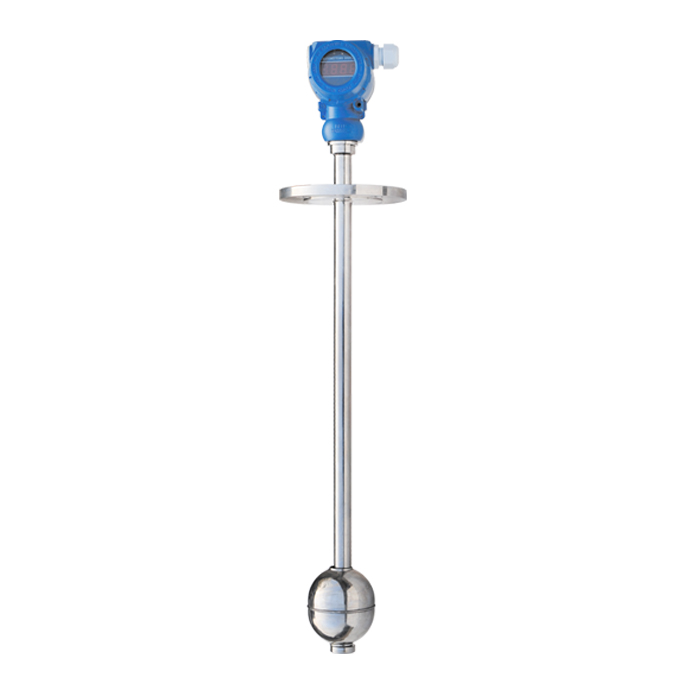
Float Level Sensor (Single and Multipoint)
A magnetic float level sensor uses a buoyant float and sealed reed switches to detect liquid level. One reed gives a single switch point; several reeds set at chosen heights give a multipoint sensor, and a reed-resistor chain gives a continuous 4-20 mA output. It suits water, oil, fuel and chemical tanks.
- Set points: 1 (single) to several (multipoint); 4-20 mA continuous option
- Insert depth: to 6 m (longer on request)
- Pressure / temperature: PN to 320; −40 to 150 °C (250 °C custom)
- Switch rating: reed contacts to 250 VAC, 5 A
- Wetted parts: 304 / 316L stem and float; PTFE option
Overview
A float level sensor is one of the simplest and most reliable ways to detect liquid level. A magnetic float rises and falls with the surface and slides along a fixed stem. Reed switches sealed inside the stem close as the float magnet passes, so each reed reports the level at a fixed height. The design has no power-hungry electronics in the wetted path and works the same on clean water, fuel, oil and many chemicals.
The same hardware covers three jobs. A single reed gives a one-point high or low switch. Several reeds at set heights give a multipoint switch for alarms and pump control. A reed-and-resistor chain turns the float position into a continuous 4-20 mA signal. Tell us the tank height and the points you need and we build the stem to suit.
Features
Why engineers choose a magnetic float level sensor:
Single to multipoint
One reed for a single point, or several reeds at set heights for multipoint alarms and pump control.
Continuous 4-20 mA option
A reed-resistor chain turns float position into a continuous signal for indication or control.
Sealed reed switching
Reed switches are sealed inside the stem, with no exposed contacts to corrode or foul.
High pressure and temperature
Nominal pressure to PN320 and −40 to 150 °C, with 250 °C builds on request.
Material choice
304 or 316L stem and float as standard; PTFE-covered floats for aggressive chemicals.
Hazardous-area option
Explosion-proof Exd IICT6 and IP65 housing for fuel, solvent and chemical service.
Working principle
The float carries a ring magnet and rides on the liquid surface around a sealed stem. Inside the stem, reed switches are fixed at the heights you want to monitor. As the float reaches a reed, its magnetic field closes the contact; as it moves away, the contact opens. Each reed is therefore a level switch at a known height, independent of the others.
For a continuous reading, the reeds are wired through a resistor chain. The float closes successive reeds as it rises, changing the chain resistance in steps, and a built-in transmitter converts that into a 4-20 mA output. Because the float needs buoyancy to work, the medium density must be above 0.5 g/cm³, and the float diameter is chosen for the pressure and density of the liquid.
Technical specifications
| Parameter | Specification |
|---|---|
| Type | Magnetic float level sensor / switch (SI-U01), single or multipoint |
| Max insert depth | L = 6 m (longer customized) |
| Control range | Max L − 120 mm; min 50 mm (less than 50 mm customized) |
| Medium density | Greater than 0.5 g/cm³ |
| Working pressure | PN2.5 to PN160 (max PN320) |
| Working temperature | −40 to 80 / 120 / 150 °C (250 °C customized) |
| Accuracy | Plus or minus 10 mm |
| Float diameter | D28 to D120 (by pressure and density) |
| Output | Reed contacts (single / multipoint) or 4-20 mA continuous |
| Switch rating | Max 250 VAC, 5 A; supply 220 / 380 VAC |
| Connection | Flange DN40 to DN150 (HG/T20592-2009) or G2 thread; wiring box M20 x 1.5 |
| Mounting angle | Within plus or minus 25 degrees of vertical |
| Protection / Ex | IP65; explosion-proof Exd IICT6 Gb option |
Single vs multipoint
Choose the number of switch points by what the tank has to do. A single point is enough for one high or low alarm or a simple pump start/stop. Multipoint adds points for high-high and low-low alarms, pump lead/lag or batch steps on one stem. If you need an actual level reading rather than set points, pick the continuous 4-20 mA build instead.
| Build | Use it for |
|---|---|
| Single point | One high or low alarm; simple pump start or stop |
| Multipoint | High-high / low-low alarms, pump lead-lag, batch steps on one stem |
| Continuous 4-20 mA | A live level reading for indication, trending or control |
Materials and mounting
The stem and float are 304 or 316L stainless as standard. For acids, alkalis and other aggressive media a PTFE-covered float and wetted parts are available. Floats run from D28 to D120; a denser liquid or higher pressure needs a larger float for the same buoyancy, so we size the float to the medium. The sensor mounts top-down through a DN40 to DN150 flange or a G2 thread and should sit within 25 degrees of vertical so the float slides freely.
Applications
- High, low and alarm switching on water, fuel and oil storage tanks
- Pump start/stop and lead-lag control in sumps and reservoirs
- Chemical and solvent tanks with PTFE floats for corrosion resistance
- Boiler and condensate level alarms
- Multipoint level monitoring on process and day tanks
Challenge: An edible-oil processor needed reliable high and low level switching on a sunflower-oil storage tank running near 150 °C, where the hot oil ruled out plastic floats.
Solution: A multipoint magnetic float level sensor with a 316L stem and stainless float, reeds set for high and low alarms, rated for the tank temperature and mounted on a top flange.
Result: Stable high and low switching at the set heights with stainless wetted parts suited to the hot oil, on a simple sensor with no electronics in the tank.
Related products
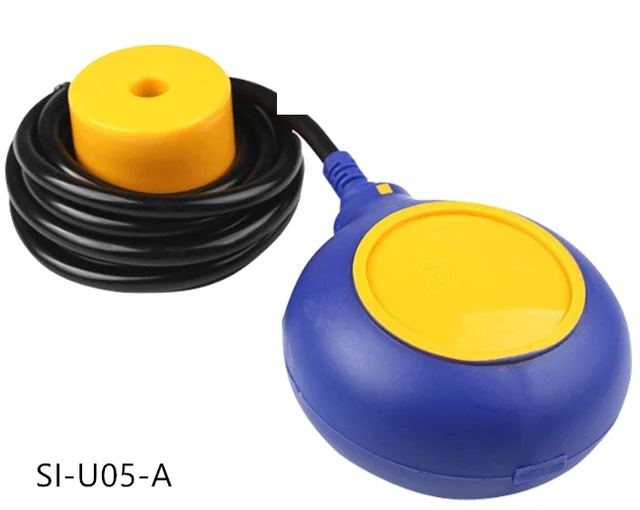 Float Level Switch
Cable-suspended float switch (SI-U05) for pump control in tanks and sumps.
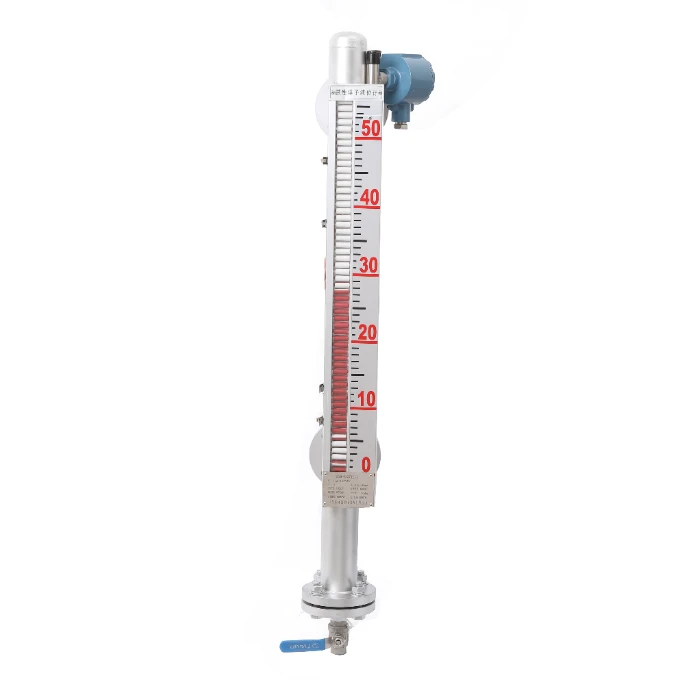 Magnetic Level Gauge
Bypass magnetic level gauge for local indication with switch and transmitter options.
Browse all level instruments →
Related switch: for a point switch that also handles powders, granular solids and hot media with no moving parts, see the tuning fork level switch.
Float sensing also covers transformer conservators and oil-filled equipment; our transformer oil level indicator guide explains how the dial gauge and a continuous float sensor work together.
FAQ
How does a float sensor work?
A magnet in the float closes a sealed reed switch as the float passes it. One reed gives a single switch point; several reeds give a multipoint sensor. The float needs the liquid density to be above 0.5 g/cm³ to stay buoyant, and the float size is matched to the pressure and density.
How accurate are float sensors?
Switch repeatability is about plus or minus 10 mm at each point, set by the reed spacing. Float sensors are valued more for rugged, repeatable switching than for fine resolution; for a precise continuous level use the 4-20 mA build or a magnetostrictive or radar sensor.
How do you test a float level sensor?
Raise and lower the float by hand or by filling the tank and check that each reed switches at its set height with a meter across the contacts. Confirm the float moves freely on the stem, the sensor sits within 25 degrees of vertical, and the medium density is above 0.5 g/cm³.
Request a quote
Tell us the tank height, the medium and its density and temperature, the switch points or continuous output you need, and the mounting, and we configure one unit for the application, not a shelf part.