Products › Torque Sensors › Rotary Torque Sensors › Dynamic Torque Sensor (WTQ2050)
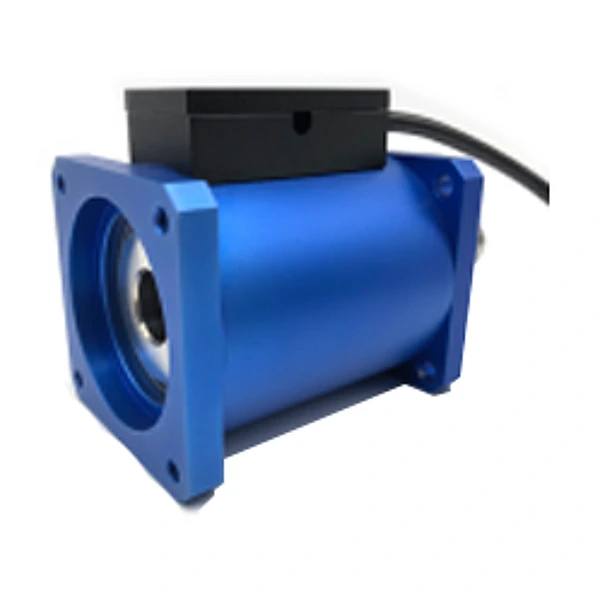
WTQ-1055 Dynamic Torque Sensor (3-100 Nm)
A micro torque sensor measures very small rotational torque, from 0.1 N·m up to about 10 N·m, on a turning shaft. A strain-gauge bridge on a stainless-steel shaft section reads the twist, and the signal is taken off through brushes. It suits micro-motors, viscometers and small gear or actuator tests where a full-size rotary sensor is too coarse.
- Model: WTQ-1055
- Range: 3 N·m to 100 N·m
- Type: keyed-shaft dynamic (contact)
- Shaft: keyed both ends, bidirectional
- Accuracy: ±0.1 to ±0.3% FS
- Output: 1.5 mV/V bridge; 4-20 mA or 0-5/10 VDC optional
Overview
The WTQ-1055 is a keyed-shaft dynamic torque sensor for rotating torque from 3 to 100 N·m. Both ends carry a keyway, so it couples to a shaft line through keys and reads torque in both directions.
It is the keyed-shaft member of the WTQ-1050 line. The signal leaves the shaft through a brush contact, which keeps the cost down for bench and intermittent use. For continuous high-speed running with no wear, see the non-contact torque sensor; for the full range and options, see the rotary torque sensor.
Features
What sets this micro torque sensor apart:
Keyed shaft both ends
A keyway on each end couples it into a shaft line through keys.
3 to 100 N·m
Small to mid-range dynamic torque for drives and bench tests.
Bidirectional
Reads torque in both clockwise and counter-clockwise directions.
Contact (brush)
A brush carries the signal off the shaft, which keeps the cost down.
Many outputs
1.5 mV/V bridge, with 4-20 mA or 0-5/10 VDC available.
Overload protected
Safe to 150% and ultimate to 200% of full scale.
Working principle
Torque enters through the keyed shaft and strains a metal-foil bridge inside. A brush contact carries the bridge signal off the rotating shaft. The keyways on both ends let the sensor sit in a keyed shaft line, so it reads the torque the drive passes through it, in both directions. The bridge gives a 1.5 mV/V signal, and an amplifier can convert it to 4-20 mA or 0-5/10 VDC.
Technical specifications
| Parameter | Specification |
|---|---|
| Measuring principle | Keyed-shaft dynamic strain-gauge, brush signal transfer |
| Measuring range | 3 to 100 N·m (3 / 5 / 10 / 20 / 30 / 50 / 100 N·m) |
| Shaft | Keyed both ends, bidirectional |
| Sensitivity | 1.5 mV/V (±10%) |
| Non-linearity | ±0.1 / ±0.3% FS |
| Zero output | ±1% FS |
| Hysteresis | ≤±0.05% FS |
| Repeatability | ≤±0.05% FS |
| Response | about 100 microseconds |
| Insulation resistance | ≥5000 MΩ / 100 VDC |
| Compensated temperature | -10 to 60 °C |
| Operating temperature | -20 to 65 °C |
| Excitation | 10-15 VDC |
| Safe overload | 150% FS |
| Ultimate overload | 200% FS |
| Output options | 1.5 mV/V bridge; 4-20 mA or 0-5/10 VDC optional |
| Material | Aluminum, stainless steel or alloy steel |
Models and ranges
Standard rated torques, keyed shaft:
| Rated torque | Shaft |
|---|---|
| 3 N·m | Keyed both ends |
| 10 N·m | Keyed both ends |
| 20 N·m | Keyed both ends |
| 30 N·m | Keyed both ends |
| 50 N·m | Keyed both ends |
| 100 N·m | Keyed both ends |
Keyed shaft or non-contact
Pick by how it couples and how it runs:
| Type | Coupling | Choose when |
|---|---|---|
| WTQ-1055 keyed shaft | Keyway both ends (brush) | Keyed drive line, bench and intermittent use |
| Non-contact shaft | In-line shaft, no slip rings | Continuous high-speed running with no wear |
| Square drive (WTQ-1010) | Square hole and shaft | Socket or torque-wrench drive |
See the non-contact torque sensor or the square-drive torque sensor.
Applications
- Motor and gearbox bench tests, 3 to 100 N·m
- Small drive and actuator torque measurement
- Bidirectional torque checks through a keyed shaft
- Bench and intermittent torque auditing
- Laboratory and production torque rigs
Challenge: A small gearbox rig drove the input through a keyed shaft and needed bidirectional torque from a few to a hundred newton-meters on a simple bench.
Solution: A keyed-shaft WTQ-1055 dropped into the existing keyed line, read torque in both directions to 100 N·m, and sent a voltage signal to the bench readout.
Result: The keyways let the sensor couple without a new fixture, and one unit covered the rig range for routine bench testing.
Related products
FAQ
What is the WTQ-1055 torque range?
From 3 to 100 N·m: 3, 5, 10, 20, 30, 50 and 100 N·m.
How does it couple to the shaft?
Both ends carry a keyway, so it sits in a keyed shaft line and reads the torque passing through it.
What outputs does it have?
A 1.5 mV/V bridge signal, with 4-20 mA or 0-5/10 VDC available through an amplifier.
Request a quote
Tell us the torque range and shaft speed, and we configure one micro torque sensor for your drive, not a shelf part. Send the details and our engineers reply with a specification and quote.