Home › Products › Level Instruments › Ultrasonic Level Sensors › Ultrasonic CO2 Level Indicator
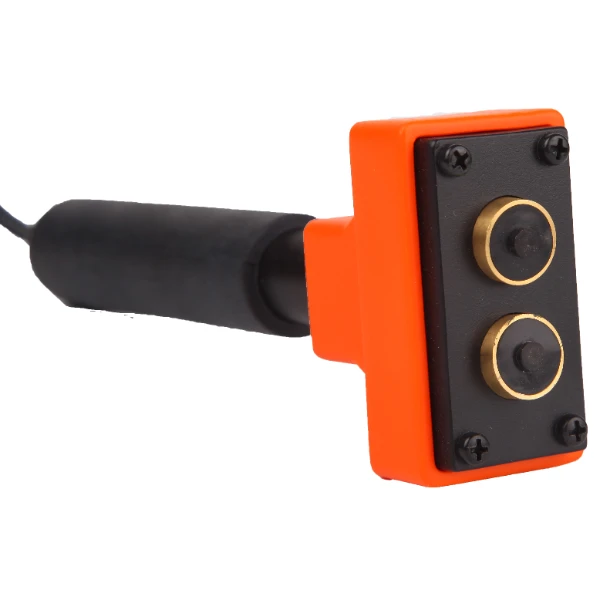
Ultrasonic CO2 Level Indicator (SI-ML)
A handheld ultrasonic tool that finds the liquid level inside a sealed CO2 cylinder from the outside. Pressed to the wall and slid up and down, it shows liquid or gas, so you mark the level and check the charge without opening, weighing or moving the cylinder.
- Type: portable, non-invasive, external probe
- Reads through: seamless steel or aluminum cylinder wall
- Indicates: liquid or gas, to mark the level line
- Use: NFPA 12, SOLAS and routine cylinder checks
- Agents: CO2, Halon, FM-200, Novec 1230
Overview
An ultrasonic CO2 level indicator is a handheld tool that locates the liquid level inside a pressurised cylinder from the outside. CO2 and clean agents are stored as a liquid under their own vapor pressure, so the cylinder holds liquid in the bottom and gas above it. With a little couplant on the probe and the unit held to the wall, the indicator reads whether liquid or gas sits behind that spot, and sliding it down the cylinder finds the line where one becomes the other.
That line is the charge. Marking it lets an inspector judge the contents against the full mark without opening the valve, weighing the cylinder or taking it out of service. It is the in-place check behind a fire-suppression cylinder bank under NFPA 12, a marine CO2 system under SOLAS, and routine checks on beverage and bulk CO2, and the same physics reads Halon, FM-200 and Novec 1230 cylinders.
Features
Why an ultrasonic indicator suits cylinder inspection:
No weighing
Check the charge in place without lifting the cylinder onto a scale or taking it offline.
Non-invasive
The probe reads through the wall, so the valve stays shut and the agent stays sealed.
Handheld and portable
A battery unit carried along a cylinder bank, checking each one in seconds.
Clear liquid or gas read
The display shows liquid or gas, so the interface and the level line are easy to mark.
Many agents
CO2, Halon, FM-200 and Novec 1230: any liquefied agent with a liquid-gas interface.
Steel or aluminum
Reads through a seamless steel or aluminum wall on cylinders from small to bulk.
Working principle
Ultrasound passes very differently through liquid and through gas. With the probe coupled to the outside of the cylinder, a pulse sent into the wall returns a strong, ringing echo where liquid is in contact behind the wall, and a weak or dead echo where only gas sits behind it. The indicator reads that difference and shows liquid or gas for the spot under the probe.
Sliding the probe down the cylinder, the read flips from gas to liquid at the surface. That crossover is the liquid level, and its height against the cylinder is a direct measure of how much agent remains. No pulse enters the agent and nothing is opened, so the check is entirely from the outside.
Cylinders and use cases
| Cylinder or vessel | Wall | Use case |
|---|---|---|
| Fire-suppression CO2 cylinders, 5 to 100 kg | Seamless steel, 6 to 12 mm | NFPA 12 inspection |
| Beverage and brewery CO2, 6.8 to 22.7 kg (15 to 50 lb) | Aluminum or steel | Replace-when-empty signal |
| Marine CO2 hold-flooding cylinders | Steel, 8 to 15 mm | SOLAS / class annual check |
| Bulk CO2 receivers, up to 1000 kg | Steel, 10 to 25 mm | Spot check during operation |
| Halon, FM-200 and Novec 1230 cylinders | Steel, 8 to 15 mm | Same physics applies |
Specifications
| Parameter | Specification |
|---|---|
| Measurement accuracy | Less than 5 mm |
| Measurable wall thickness | 3 to 30 mm |
| Tank material | Steel, stainless steel, glass, unfoamed plastics |
| Measurable medium | Pure, milky or suspension liquid (no crystals or particulate) |
| Ambient temperature | −20 to 60 °C |
| Ambient humidity | 15% to 85% RH |
| Power supply | Two lithium batteries (user-supplied); about 100 mAh average |
| Display | High-contrast color OLED, readable in strong outdoor light |
| CO2 cylinder diameters | 210-230, 265-285, 340-360, 390-410 mm (other tanks: common type) |
How to use it
Apply a little couplant to the probe and hold it flat against the cylinder near the expected level. Read whether the spot shows liquid or gas, then slide the probe up or down until the read flips: that crossover is the liquid surface. Mark it and compare against the full-charge mark for the cylinder. For NFPA 12, a CO2 cylinder that has lost more than the allowed share of its charge is taken out for recharge. Keep the wall clean under the probe and avoid welds, seams and the base ring, where the echo is unreliable.
Applications
- Fire-suppression CO2 cylinder banks under NFPA 12
- Marine CO2 hold-flooding systems under SOLAS
- Halon, FM-200 and Novec 1230 clean-agent cylinders
- Beverage, brewery and bulk CO2 cylinders
- Routine in-place inspection without weighing or downtime
A fire-suppression room holds a bank of CO2 cylinders that must be checked for charge. Rather than disconnect and weigh each one, an inspector runs the handheld ultrasonic indicator down each cylinder, marks the liquid level and compares it against the full mark, flagging any that have lost charge for recharge, with every cylinder kept connected and in service throughout.
Related products
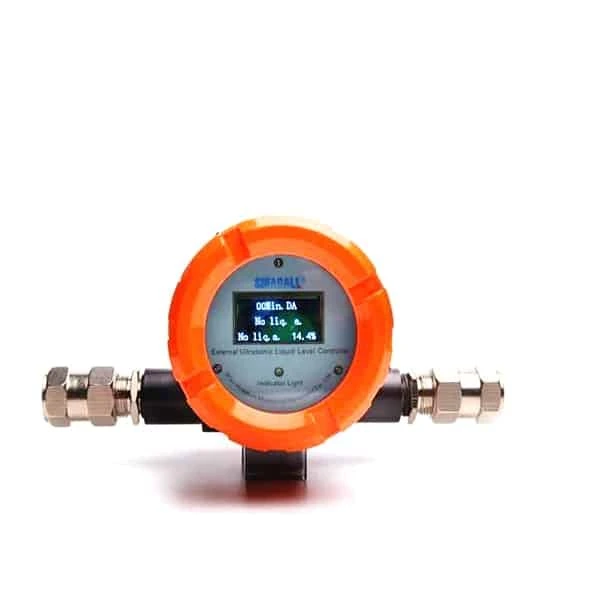 Ultrasonic Level Switch
External, non-contact point switch (HS-ULC) for a fixed high or low level alarm.
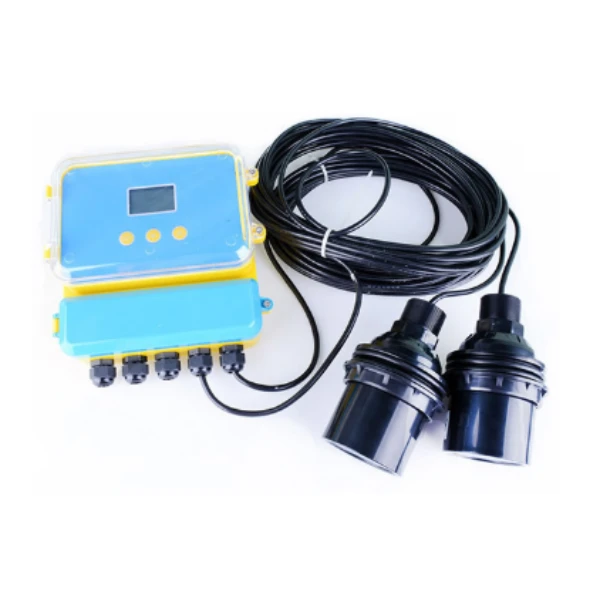 Ultrasonic Level Detector
Fixed split detector (ULT-200) with control relays for continuous tank level.
Browse all ultrasonic level sensors →
FAQ
How does an ultrasonic CO2 level indicator work?
It reads ultrasound through the cylinder wall. The echo is strong where liquid is in contact behind the wall and weak where only gas is, so the unit shows liquid or gas for the spot under the probe. Sliding it down the cylinder finds the liquid surface, which is the level.
How do you check the liquid level in a CO2 cylinder?
Apply couplant, hold the probe to the wall and slide it until the read flips between liquid and gas. That crossover is the level. Mark it and compare against the full-charge mark, with no need to open the valve or weigh the cylinder.
Does NFPA 12 require weighing CO2 cylinders?
NFPA 12 calls for CO2 cylinders to be checked for content and recharged when the loss is more than the allowed share of the charge. Weighing is the traditional method; an ultrasonic indicator gives an in-place check without removing the cylinder, and a low reading is confirmed by weighing.
Can the indicator check Halon, FM-200 and Novec 1230 cylinders?
Yes. Any liquefied agent stored under its own pressure has a liquid-gas interface, so the same ultrasonic method finds the level in Halon, FM-200 and Novec 1230 cylinders as it does in CO2.
Request a quote
Tell us the cylinder type, the wall material and thickness and the agent, and we configure one indicator for your inspection program, not a shelf part.