Products › Pressure instruments › Steam Pressure Transmitter
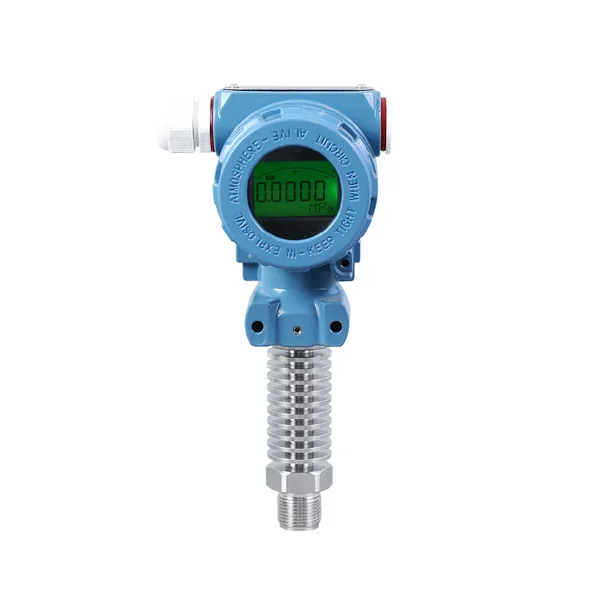
Steam Pressure Transmitter
Measuring steam pressure is less about an exotic transmitter and more about the right setup. Steam is hot and prone to water hammer; a cooling siphon and a little impact protection let a standard transmitter read it reliably for years.
- Steam temperature: typically 100 to 300 C
- Key to it: cooling siphon (pigtail) to drop temperature
- Output: 4-20 mA, HART
- Protection: damper / baffle against water hammer
- Wetted parts: 316L / 304 stainless steel
Overview
Steam lines run from a little over 100 C to two or three hundred degrees, and the valves that feed them slam pressure up and down. Both of those wreck a pressure transmitter mounted straight onto the pipe: the heat cooks the cell, and water hammer dents or bursts the diaphragm. The fix is rarely an expensive transmitter. It is a cooling siphon that brings the tapping point back toward ambient, plus a damper or baffle that blunts the shock, with a high-temperature or diaphragm-seal build kept in reserve for the hardest cases.
This page covers how to pick and install a transmitter for steam. For the hot-tap and remote-mount hardware it points to, see the high-temperature pressure transmitter and the diaphragm seal pressure transmitter; for remote diagnostics on a steam header, the HART pressure transmitter.
Why steam is hard on a transmitter
Two failure modes do the damage. The first is heat: a piezoresistive or capacitive cell drifts and then fails if it sits at steam temperature, so the process heat has to be dropped before it reaches the cell. The second is water hammer: when a valve opens or closes quickly, the pressure in the line spikes far above the working value and the pipe shakes. That spike reaches the transmitter and can dent the diaphragm or burst the cell. A steam install has to handle both, and the cheapest way to handle the heat is to let the steam condense and cool on its way to the transmitter.
Choosing the transmitter for steam
There are three routes, cheapest first. Pick by how hot the tapping point stays after a siphon and how aggressive the water hammer is.
| Approach | When to use it |
|---|---|
| Standard transmitter + cooling siphon | Most steam lines. The pigtail or coil condenses steam and cools the tapping point to near ambient, so an ordinary 4-20 mA transmitter works |
| High-temperature transmitter | Where a siphon is impractical and the tap stays hot; the cell is held off the process heat by design |
| Diaphragm-seal (remote) transmitter | Dirty, sticky or the very worst thermal cases; a filled capillary separates the cell from the line |
Add HART to any of them where the plant commissions and diagnoses points from the control room.
Installing a transmitter on a steam line
The siphon does the heavy lifting. A pigtail or coil installed at the tapping point fills with condensate; the steam gives up its heat there, so the transmitter downstream of the loop sits at roughly room temperature even though the line is hot. Insulate the run and the cooling is steadier. Then a few rules keep the cell alive:
- Tap the side of the line for liquid/condensate and the top for gas, so condensate and slag do not collect at the cell.
- Blunt water hammer: a damper (a small 4 mm restrictor) or a baffle plate in front of the cell stops the medium hitting the diaphragm directly; open and close valves slowly and fit a safety valve or accumulator.
- Keep the transmitter and impulse line where the temperature is steady; insulate, and protect outdoor installs from freezing.
Performance
| Parameter | Specification |
|---|---|
| Media | Steam, oil, water and pastes compatible with 316L / 304 stainless steel |
| Field performance | ±0.15% (total loop) |
| Stability | ±0.15% over 5 years |
| Output | 4-20 mA; HART option |
| Zero and span | Local and remote adjustable |
| Wetted material | 316L / 304 stainless steel |
| Range and exact build | Per the chosen variant; confirm per datasheet |
Representative figures. The exact range, accuracy and approvals follow the transmitter you choose; confirm per datasheet.
Models and ordering
Quote checklist: send these five points and we configure one unit, not a shelf part.
- Steam pressure range and line temperature
- Whether you can fit a cooling siphon, or need a high-temperature or diaphragm-seal build
- How severe the water hammer is (so we add a damper or baffle)
- Output: 4-20 mA or 4-20 mA with HART
- Process connection and any local display
Ordering example: steam pressure transmitter, 0 to 1.6 MPa, 4-20 mA with a pigtail siphon and a damper, 1/2 NPT, for a saturated-steam header.
Applications
- Boiler and steam-header pressure
- Power-plant high- and low-pressure steam systems
- District heating
- Food, beverage and pharma sterilization and autoclaves
- Process heating and steam tracing
Application example
Dry steam, small line. A customer needed steam pressure on a 12 mm line and wanted to mount a flush transmitter straight onto it. The pipe was too small and too hot to do that safely. The fix was the steam rule in miniature: add a tee with a short condensate leg (or enlarge the tap to a standard thread) so the steam cools and the cell sees a settled pressure, rather than bolting the diaphragm into live dry steam.
Related products
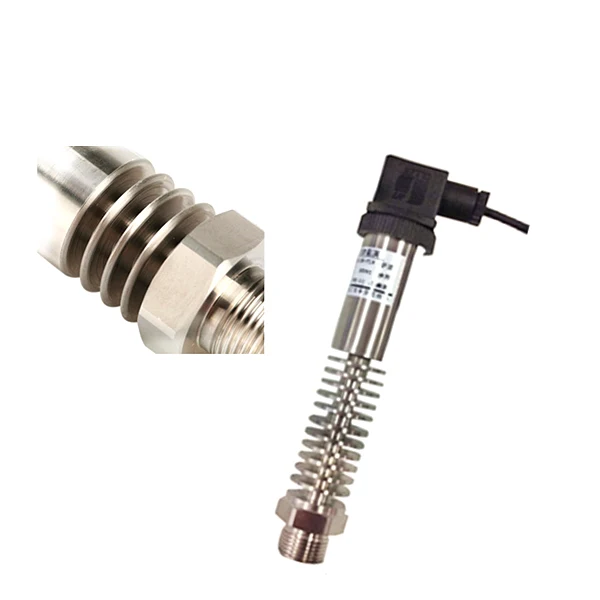 High-Temperature Pressure Transmitter
For hot taps where a siphon is impractical.
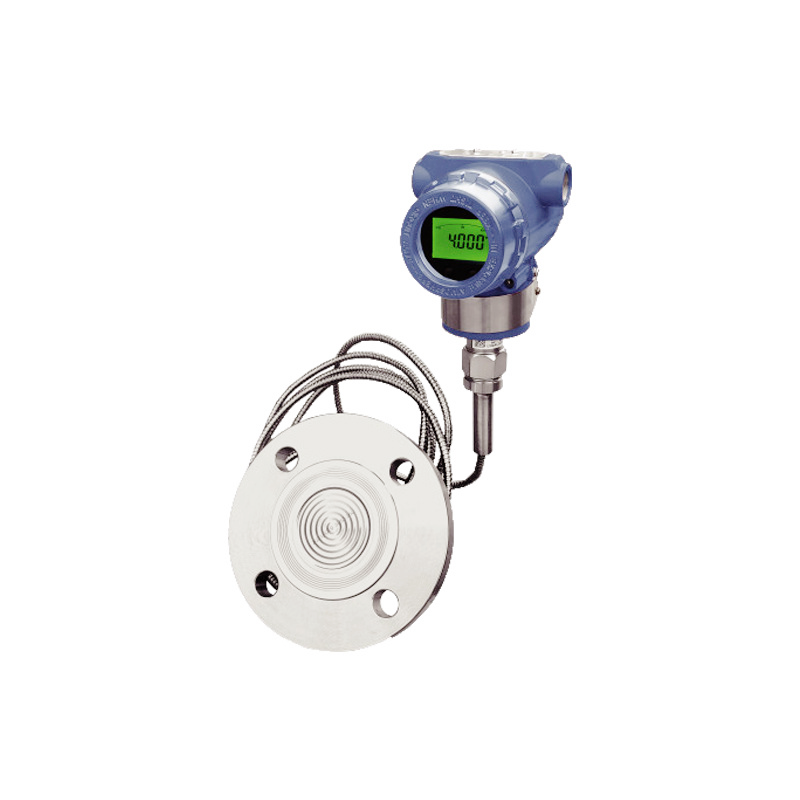 Diaphragm Seal Pressure Transmitter
Filled capillary keeps the cell off the steam line.
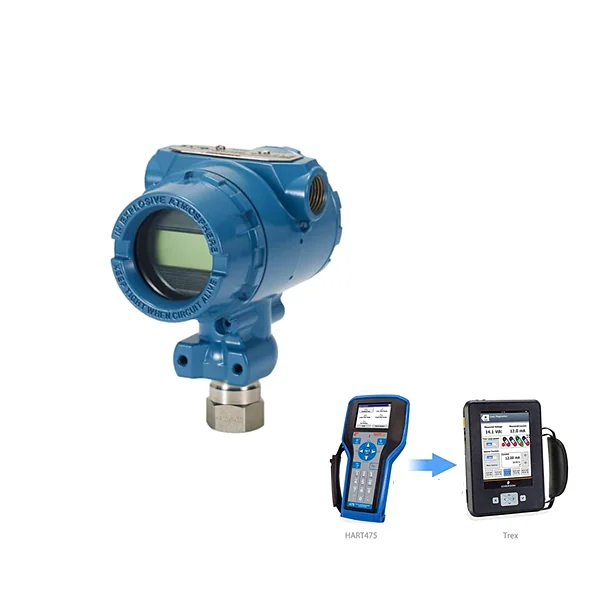 HART Pressure Transmitter
Add HART for remote config and diagnostics.
Browse all pressure instruments →
For the tap position, siphon fill, and the commissioning checks around a steam installation, see the full pressure transmitter installation guide.
The local dial beside a transmitter answers to the boiler code as well, with its own range and siphon rules; see the boiler pressure gauge guide.
FAQ
How to install a pressure transmitter in a steam line?
You never pipe live steam straight onto the cell. Fit the transmitter below the tapping point through a siphon (a pigtail or coil) that fills with condensate, so a cool water leg sits between the steam and the diaphragm. Slope the impulse line so condensate drains toward the instrument, add an isolating valve and a small blowdown valve, and fill the siphon with water before commissioning. This holds the temperature at the cell far below steam temperature and absorbs water hammer.
What are the four types of pressure transmitters?
By measurement type you usually see four: gauge transmitters (referenced to atmosphere), absolute transmitters (referenced to vacuum), differential transmitters (across two ports, used for flow and level), and sealed or remote-diaphragm transmitters. For steam a gauge or absolute transmitter on a siphon is the common choice, while differential units appear on steam flow. Pick the type by what you are measuring, not by the medium alone.
What should the psi be on a steam boiler?
It depends on the boiler. Low-pressure heating boilers run below 15 psi, industrial and process steam boilers commonly run from roughly 75 psi up to 250 psi or more, and power boilers run far higher. Choose the transmitter range for the actual working pressure of your boiler, leaving headroom above the safety-valve setting, rather than a generic figure.
What is a steam transducer?
A steam transducer is a pressure transducer or transmitter rated and plumbed for steam service. The sensing technology is the same as any pressure transmitter; what changes is the installation, a siphon plus stainless or alloy wetted parts that tolerate the high temperature and condensate. It turns steam pressure into a 4-20 mA or digital signal for the control system.
Request a quote
Send the five points in the checklist above and our application engineers will configure a steam pressure transmitter and the right siphon and protection for your line. Tell us the application and we configure one unit, not a shelf part. Reach our application engineers.