Home › Temperature Instruments
Temperature instruments measure how hot a process is and turn it into a reading or a signal. A complete point usually combines a few parts: a sensing element, a transmitter that conditions its signal, a thermowell that protects it, and sometimes a local dial. Instranova builds the full range, grouped below by type. Pick the type first, then open its page to compare the models.
Temperature instruments by type
The four building blocks of a temperature measurement point: the transmitter, the sensor element, the local thermometer and the thermowell.
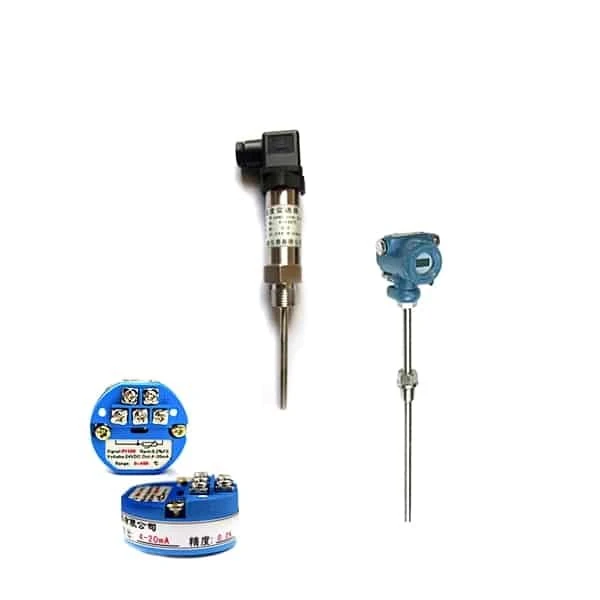 Temperature Transmitters
Head and field-mount, converting RTD or thermocouple to 4-20 mA / HART.
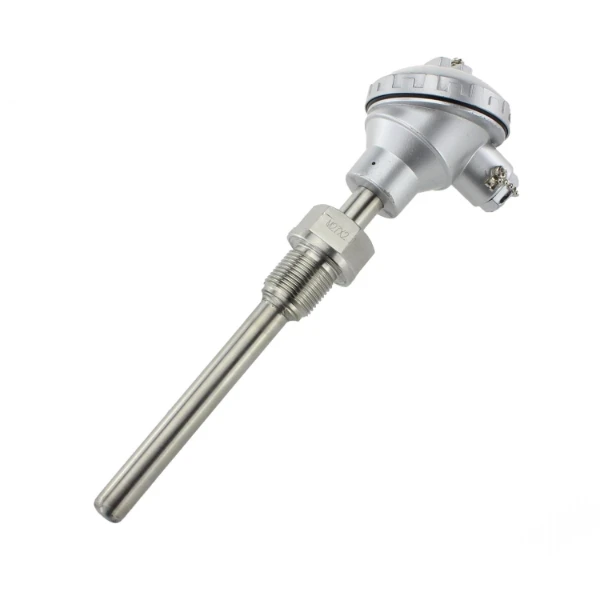 Temperature Sensors
RTD (Pt100) and thermocouple sensing elements.
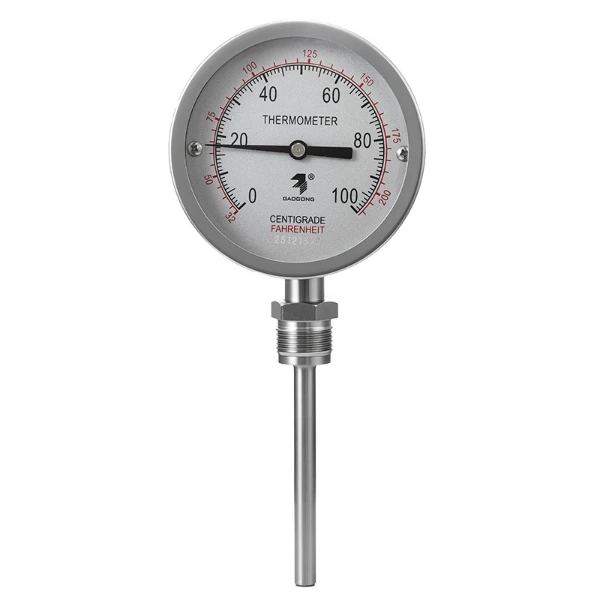 Industrial Thermometers
Bimetal, digital and sanitary dials for local reading.
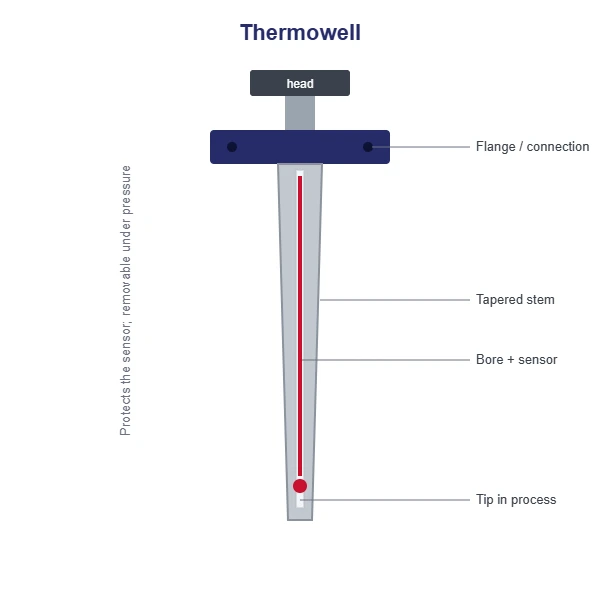 Thermowells
Threaded, flanged and weld-in protection for the sensor.
Choosing a temperature instrument
Decide which part of the measurement point you need; most installs use the transmitter, sensor and thermowell together.
| What you need | Type |
|---|---|
| A 4-20 mA / HART signal to the control system | Temperature Transmitter |
| The sensing element: RTD for accuracy, TC for high heat | Temperature Sensors |
| A local dial or digital reading at the equipment | Industrial Thermometers |
| To isolate and protect the sensor from the process | Thermowells |
FAQ
What is the difference between an RTD and a thermocouple?
An RTD measures temperature from the resistance of a platinum element, which rises predictably with temperature; a thermocouple measures the small voltage between two dissimilar metals. The RTD is more accurate and stable up to about 600 C, while the thermocouple reaches far higher temperatures, responds faster and costs less.
Request a quote
Quote checklist, send these five points: the part you need (transmitter, sensor, thermometer or thermowell); the temperature range; RTD or thermocouple and the accuracy class; the insertion length and process connection; and any hazardous-area requirement. Tell us the application and we point you to the right type and model.
Written and technically reviewed by the Instranova engineering team, last reviewed 2026-06-21. Based on the Instranova temperature instrument range and IEC 60751 / IEC 60584, plus field experience across process and high-temperature service. Questions? Reach our application engineers.