Products › Pressure instruments › Silicon Pressure Sensor
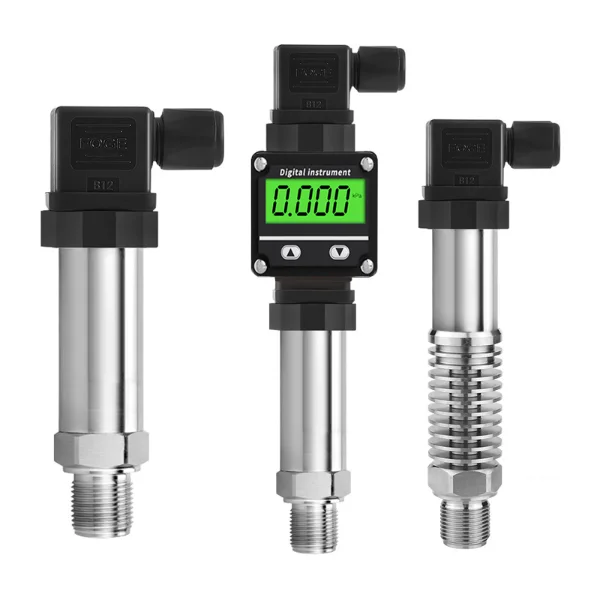
Silicon Pressure Sensor
A diffused-silicon piezoresistive pressure sensor: the low-cost, high-signal core that sits behind most general industrial pressure measurement. A silicon cell carries a Wheatstone bridge that turns pressure into a large, clean output, with double temperature compensation for stable readings.
- Range: 0-0.5 kPa to 0-60 MPa (and negative)
- Accuracy: ±0.5% FS
- Output: 4-20 mA with HART; voltage option
- Overload: 200% FS
- Wetted parts: 316L stainless steel
Overview
Diffused silicon is the workhorse of pressure sensing. The cell is cheap to make, gives a large output signal, and reads accurately across a wide range, which is why it sits inside most general-purpose pressure transmitters. This sensor uses that cell directly: pressure on a stainless-steel diaphragm reaches a silicon chip carrying a Wheatstone bridge, and the bridge output is amplified and temperature-compensated into a standard signal.
It measures gauge, absolute or negative pressure from as low as 0-0.5 kPa up to 0-60 MPa, at 0.5% FS, with a 4-20 mA (HART) or voltage output and 316L wetted parts. For a corrosion-resistant cell that touches the media directly, compare the ceramic pressure sensor; for a fully packaged OEM build, see the industrial pressure transducer.
Working principle
A silicon diaphragm is doped to form four resistors wired as a Wheatstone bridge. Two sit where pressure puts the silicon in tension, two where it is in compression. When pressure flexes the diaphragm the resistors change value and the bridge goes out of balance, producing a millivolt signal proportional to pressure. Silicon’s piezoresistive effect is far stronger than the strain effect in metal gauges, so the signal is large and the cell stays small. The signal then passes through a conditioning chip that adds zero and span compensation across temperature before it leaves as 4-20 mA, HART or a voltage.
Silicon vs ceramic: which cell to pick
Silicon and ceramic are the two common low-cost cells, and they split on media and cost. Diffused silicon gives the larger signal and the lowest cost, and behind a 316L diaphragm it suits clean gases, oils and water. A ceramic cell touches the media directly with no fill fluid, so it takes corrosive and abrasive media that would attack a steel diaphragm. Pick silicon for general industrial pressure where cost and signal matter; pick ceramic when the media is aggressive. If your control system wants a digital bus instead of an analog loop, the digital pressure sensor outputs RS485 Modbus.
Technical specifications
| Parameter | Specification |
|---|---|
| Sensing element | Diffused-silicon piezoresistive (Wheatstone bridge) |
| Pressure type | Gauge, absolute or negative |
| Range | 0-0.5 kPa up to 0-60 MPa; negative to -100 kPa |
| Accuracy | ±0.5% FS (at 25 C) |
| Overpressure | 200% FS |
| Long-term stability | <0.25% FS per year |
| Response time | <100 ms |
| Output | 4-20 mA with HART (2-wire); voltage 3-wire option |
| Operating temperature | -30 to 160 C; higher on special build |
| Process connection | G1/2 (or as specified) |
| Electrical connection | M20 x 1.5 waterproof connector |
| Wetted material | 316L stainless steel |
| Protection | IP65 |
Representative specifications, at room temperature and rated supply unless stated. Values typical; confirm the exact build and temperature limits per datasheet.
Models and ordering
Quote checklist: send these five points and we configure one unit, not a shelf part.
- Pressure range and reference (gauge, absolute or negative)
- Output: 4-20 mA / HART or a voltage output
- Media and temperature (so we set the diaphragm and any cooling)
- Process connection: G1/2 or your thread
- Electrical connection and any approval your site needs
Ordering example: silicon pressure sensor, 0 to 1 MPa gauge, 4-20 mA, G1/2, M20 connector, for a clean-water booster line.
Applications
- General machine and plant pressure
- Water, HVAC and pumping systems
- Hydraulics and pneumatics
- OEM equipment that needs a low-cost pressure input
- Compressed air and gas lines
Application example
Distributor, general industrial. A regional instrument distributor restocking pressure and differential-pressure transmitters wanted a cost-effective general-purpose sensor with enough overload margin for everyday plant lines, backed by ISO 9001. The diffused-silicon sensor fit: low unit cost, 200% overload headroom, and a 4-20 mA output the existing panels already accept, so it dropped into their catalog without a redesign.
Related products
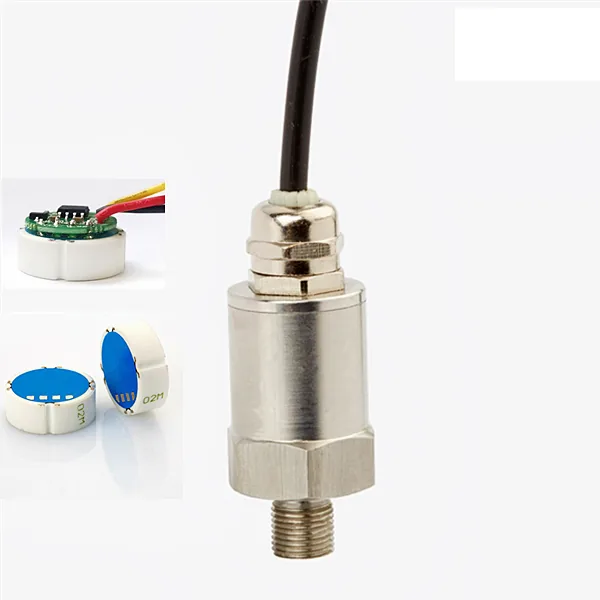 Ceramic Pressure Sensor
Fill-free ceramic cell for corrosive and abrasive media.
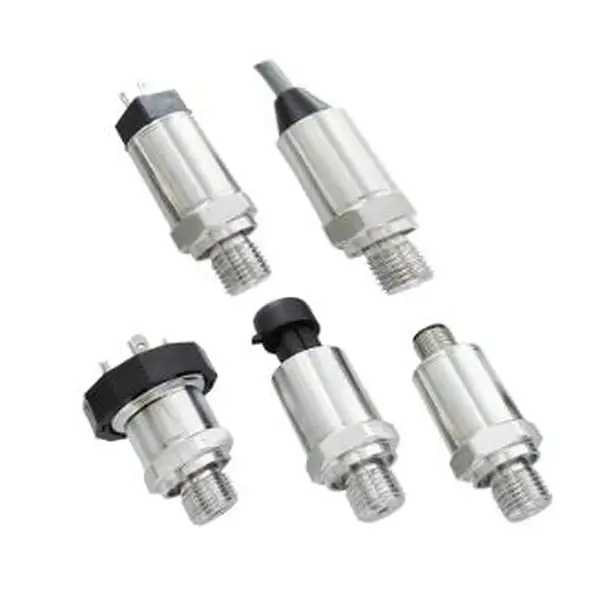 Industrial Pressure Transducer
Fully packaged OEM build with adjustable zero and span.
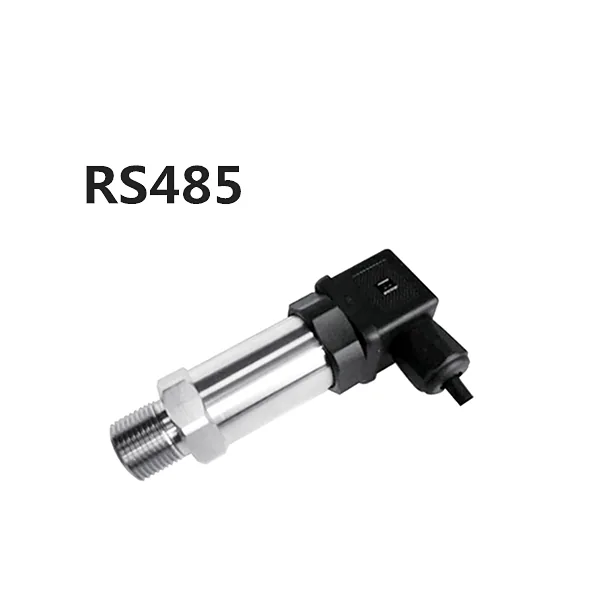 Digital Pressure Sensor
RS485 Modbus output for wired digital control systems.
Browse all pressure instruments →
FAQ
How does a silicon pressure sensor work?
It uses the piezoresistive effect in a silicon diaphragm: pressure strains the diaphragm, which changes the resistance of diffused resistors arranged in a Wheatstone bridge, producing a millivolt output that the electronics scale to 4–20 mA. Diffused silicon is sensitive and cost-effective.
What is a silicon sensor?
A sensor whose sensing element is made from silicon, using the material piezoresistive property to turn mechanical strain into an electrical change. A silicon pressure sensor is the most common low-to-medium-pressure type.
What are the two types of pressure sensors?
Broadly, contact types whose element meets the medium (piezoresistive silicon, ceramic) and non-contact methods; by reference, the two most common are gauge and absolute. The silicon type is a contact, usually gauge, sensor.
Request a quote
Send the five points in the checklist above and our application engineers will configure a silicon pressure sensor for your range, media and output. Tell us the application and we configure one unit, not a shelf part. Reach our application engineers.