Home › Products › Density Meters › Alcohol Density Meter
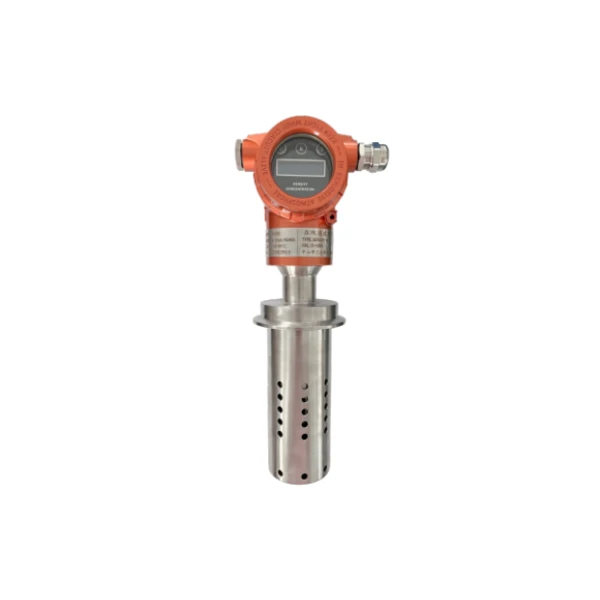
Alcohol Density Meter (Inline Concentration / Proof)
An alcohol density meter, also called an alcohol concentration meter, reads the ethanol concentration of a liquid inline from its density. A vibrating element is excited at its resonant frequency; the frequency tracks the density of the liquid, and the meter converts that density to the standard alcohol percent at 20 °C using the ethanol-water relationship, with automatic temperature compensation. It is built for distillery and brewery service: sanitary wetted parts and a live ABV reading on the still, the blending tank, and the filling line.
- Reads: ethanol concentration, standard alcohol % at 20 °C, density, temperature
- Accuracy: ±0.001 g/cm³ (±0.25%); repeatability ±0.0001 g/cm³
- Output: 4–20 mA + RS–485 Modbus RTU; 24 VDC
- Wetted parts: 316 stainless; 2″ / 3″ sanitary tri-clamp
- Principle: vibrating element (no moving parts); Ex d IIB T6
Overview
The alcohol density meter turns a density reading into the number a distillery actually controls: alcohol percent, or proof, at the 20 °C reference. Because ethanol and water mix to a known density at each concentration, an accurate inline density measurement plus temperature compensation gives a live concentration without drawing samples to a bench hydrometer. The sensor has no moving part in the wetted path and uses sanitary connections, so it sits directly in a spirit line or on a tank wall.
It is the alcohol-specific member of the density family. For density or concentration of general process liquids, a tuning fork density meter uses the same vibrating-element principle, and an optical density meter reads concentration of clear liquids by light transmission. This page is the build configured and calibrated for ethanol concentration and standard alcohol percent.
Features
Displays the temperature-corrected standard alcohol content along with concentration and temperature, the values a distillery controls to.
A vibrating element senses density through its resonant frequency, so nothing in the wetted path moves, fouls, or wears.
316 stainless wetted parts with a 2″ or 3″ sanitary tri-clamp connection for pipeline or tank-wall mounting in food-grade service.
A built-in temperature sensor corrects the reading, holding a process temperature effect near ±0.1% per °C after calibration.
Calibrate against pure water, fine-tune the measured value, and set parameters from the on-instrument menu without special tools.
Active 4–20 mA output or RS–485 Modbus RTU drops the concentration straight into process control; Ex d IIB T6 for spirit areas.
Working principle
A metal vibrating element is driven at its resonant frequency by a sonic signal source. When the liquid surrounds the element, its added mass lowers that frequency, and the frequency therefore tracks the density of the liquid in a precise, repeatable way. A built-in temperature sensor corrects the small effect of temperature on the element, leaving a clean density value.
For alcohol, density alone is not the answer the operator wants, so the meter applies the ethanol-water relationship to convert density at the measured temperature into the standard alcohol percent at 20 °C. That is the same basis a hydrometer and reference tables use, done continuously and corrected automatically. The result is sent out as concentration on 4–20 mA or Modbus and shown on the display.
Technical specifications
| Parameter | Specification |
|---|---|
| Measuring range | 0–2 g/cm³ / 0–100% (calibrated to the working range) |
| Accuracy | ±0.001 g/cm³ (±0.25%), over the 0.8–1.5 g/cm³ calibration range |
| Repeatability | ±0.0001 g/cm³ (±0.1%) |
| Temperature effect | ±0.0001 g/cm³ (±0.1%) per °C, corrected; temperature coefficient 20 ppm/°C |
| Process temperature | -25 °C to +120 °C standard; to +150 °C custom |
| Ambient temperature | -25 °C to +85 °C |
| Working pressure | Within 2.5 MPa standard; to 6.3 MPa custom (limited by the connection) |
| Viscosity limit | Up to 2000 cP |
| Wetted material | 316 stainless steel |
| Process connection | 3″ sanitary tri-clamp (Phi 91) or 2″ sanitary tri-clamp (Phi 64) |
| Output | 4–20 mA (active) or RS–485 Modbus RTU (9600); 4-wire |
| Power supply | 24 VDC |
| Explosion protection | Ex d IIB T6 Gb |
| Readings | Standard alcohol % at 20 °C, concentration %, density, temperature |
Representative specifications; confirm the exact range, accuracy, and connection against the datasheet for your spirit and process.
Readings and calibration
The meter measures density and temperature, then reports the standard alcohol content at 20 °C so the value matches what a reference table or a calibrated hydrometer would give, regardless of the line temperature at the point of measurement. Density, concentration percent, and temperature are available at the same time, which is what lets a still split product by strength.
Calibration is straightforward: zero against pure water, fine-tune the measured value against a known reference, and the built-in temperature compensation holds the reading between checks. Because the accuracy figures apply over the 0.8–1.5 g/cm³ range, confirm the calibration band that covers your product, from low-proof wash through high-proof spirit.
Inline meter vs hydrometer
A glass alcohol hydrometer is the traditional bench tool; an inline alcohol density meter does the same physics continuously and on the line.
| Tool | Best for | Limit |
|---|---|---|
| Inline alcohol density meter (this meter) | Continuous alcohol % at 20 °C for distillation and blending control | Needs a calibrated band; sits in a sanitary line, not a beaker |
| Glass alcohol hydrometer | Low-cost manual spot check | Read by eye; corrected for temperature by hand; not on-line |
| General tuning fork density meter | Density and concentration of general process liquids | Not pre-configured for alcohol % or sanitary spirit service |
Applications
The alcohol density meter is used wherever ethanol concentration is the controlled variable.
- Distilleries: live proof / ABV on the still to split head, heart, and tail fractions by strength
- Blending: bringing spirit to a target alcohol percent before bottling
- Storage tanks: monitoring alcohol content during maturation and transfer
- Filling lines: confirming the alcohol percent at the point of fill
- Breweries: alcohol content checks through production
- Industrial ethanol: concentration control in fermentation and recovery
Challenge. A grain distillery wanted to automate fraction collection at the still, where operators had been judging the cut between head, heart, and tail spirit by experience, which left the heart-cut strength inconsistent from run to run.
Solution. An inline alcohol density meter on the condenser outlet fed the live alcohol percent at 20 °C to the control system, which opened the heart-cut valve while the strength stayed inside the target band and switched to the tail tank below it.
Result. The cut points followed measured strength rather than a stopwatch, giving a more repeatable heart-cut concentration. (Representative distillery application; cut bands are set per the product and process.)
Related products
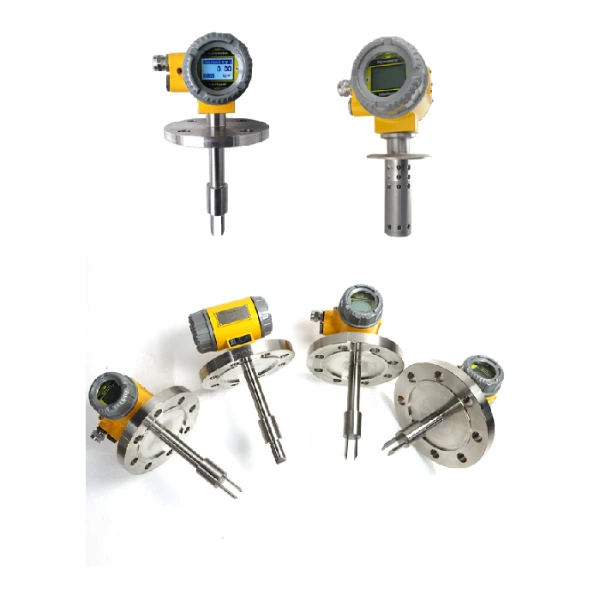 Tuning Fork Density Meter
General-purpose vibrating-fork density and concentration meter for in-line process liquids.
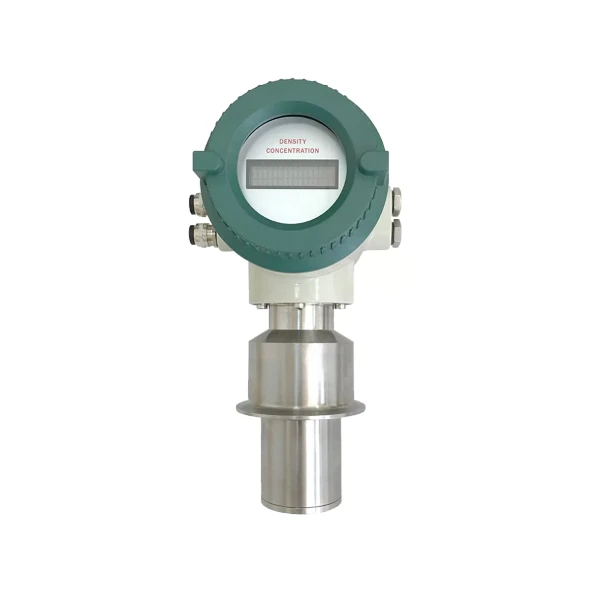 Optical Density Meter
Inline optical concentration meter for clear process liquids by light transmission.
FAQ
How do you measure alcohol density?
Alcohol density is measured with a hydrometer or, for a continuous result, an inline density meter. The inline meter excites a vibrating element whose resonant frequency tracks the density of the liquid, then applies temperature compensation. Because ethanol and water mix to a known density at each concentration, that density converts directly to alcohol percent at the 20 °C reference.
What is the density meter for alcohol content?
It is a density-based concentration meter calibrated for ethanol, often called an alcohol density meter or alcohol concentration meter. It reads density inline and reports the standard alcohol content at 20 °C, so distilleries and breweries can control proof and ABV in the process rather than by lab sampling.
What is the difference between an alcohol meter and a hydrometer?
A glass alcohol hydrometer floats in a sample and is read by eye against a scale, then corrected for temperature by hand. An inline alcohol density meter measures density electronically from a vibrating element, compensates for temperature automatically, and outputs the alcohol percent continuously on 4–20 mA or Modbus, which suits process control rather than spot checks.
How does a density meter determine alcohol concentration?
For an ethanol-water mixture, density is a known function of concentration and temperature. The meter measures density and temperature precisely, then uses that relationship to compute the concentration, reporting it as the standard alcohol percent at 20 °C. Accurate density measurement is the foundation of accurate proof or ABV.
Request a quote
Send your spirit or product, the alcohol percent range you need to control, the process temperature and connection size, and whether you need 4–20 mA or Modbus. Our engineers confirm the calibration band, sanitary connection, and configuration and return a quote.
About this page. Written by the Instranova engineering team. Specifications are representative; confirm the exact configuration and calibration against the datasheet for your application.