Products › Torque Sensors
Torque Sensors
A torque sensor, or torque transducer, turns the twisting force on a shaft or flange into a calibrated electrical signal. There are two families: rotary sensors that measure dynamic torque on a turning shaft, and reaction sensors that measure static torque on a stationary flange. Choose the family first, then the range, accuracy and output.
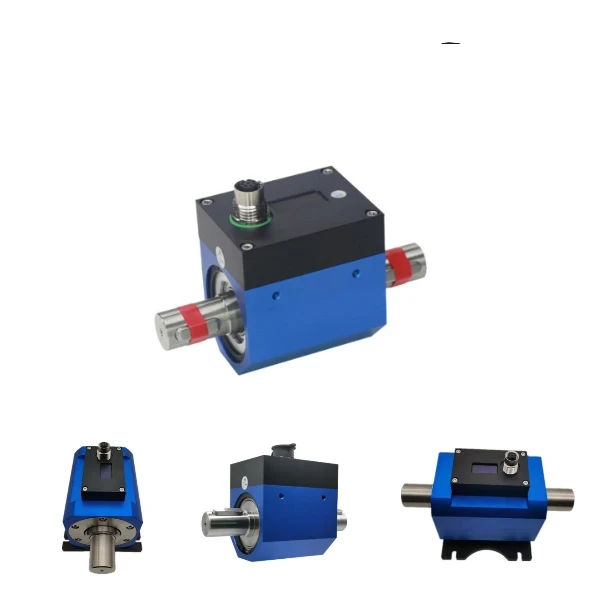 Rotary Torque Sensors
Motion: dynamic, turning shafts
Range: 0.1 N·m to 10 kN·m
Speed: up to 15,000 rpm
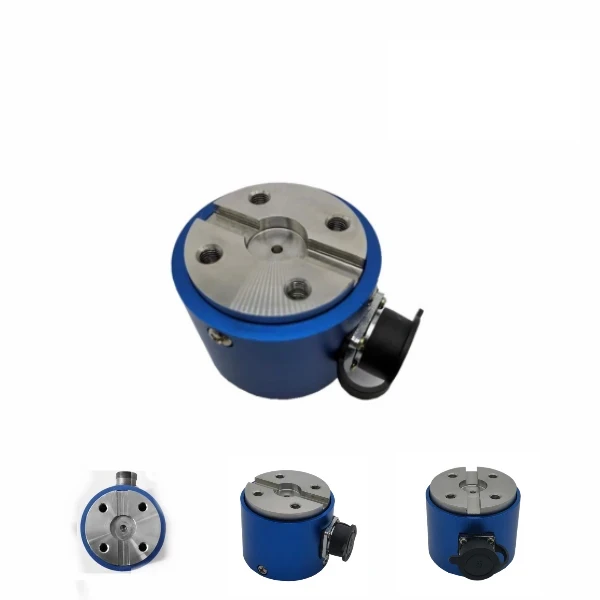 Reaction Torque Sensors
Motion: static, stationary flange
Range: 0.1 N·m to 50 kN·m
Mounting: flange, keyed, square-drive
Rotary vs reaction
The first decision is whether the torque is on a turning shaft or a stationary flange. The two are different instruments.
| Rotary torque sensor | Reaction torque sensor | |
|---|---|---|
| Shaft | Turns in line with the load | Stationary, bolted to the frame |
| Measures | Dynamic torque on a spinning shaft | Static / reaction torque |
| Speed | Up to 15,000 rpm | 0 rpm |
| Typical use | Motor and engine dyno, gearbox, pump | Torque-wrench calibration, screwdriver QC |
| Go to | Rotary torque sensors | Reaction torque sensors |
Not sure which fits? Read the guide on rotary vs reaction torque sensors.
FAQ
What is a torque sensor?
A torque sensor, also called a torque transducer, converts the torque on a shaft or flange into a calibrated electrical signal such as 4-20 mA, a voltage, a frequency or a digital frame. It lets engineers read and log the twisting load on a motor, engine, gearbox or fastener.
How do I choose a torque sensor?
Decide rotary or reaction first, based on whether the shaft turns. Then pick the torque range so your working load sits well inside full scale, and finally the accuracy class and output that suit your data system.
Request a quote
Tell us whether the torque is on a turning shaft or a fixed flange, plus the range and speed, and we recommend the right torque sensor and send a quote.