Home › Products › Flow Meters › Magnetic Flow Meters › Remote Magnetic Sewage Flow Meter
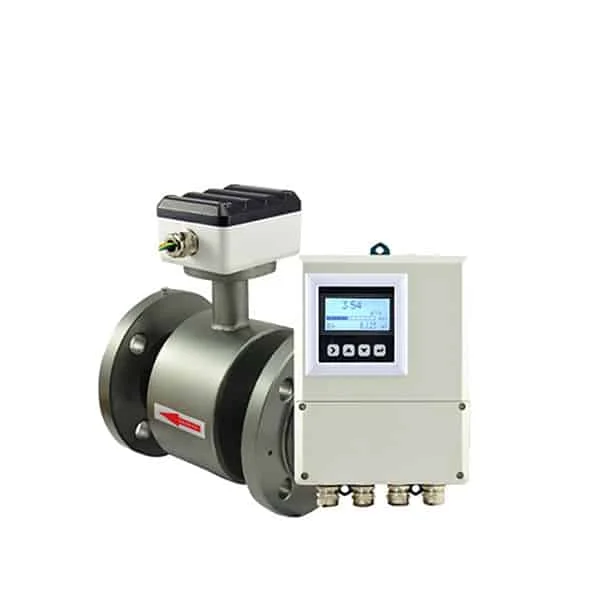
Remote (Split) Magnetic Sewage Flow Meter
A split magnetic flow meter for sewage: the IP68 sensor goes in the pipe down a wet pit or manhole, and the converter mounts remotely where it stays dry and easy to read. A neoprene or polyurethane lining stands up to abrasive, gritty sewage.
- Type: split, IP68 submersible sensor
- Size: DN10 to DN2000
- Accuracy: plus or minus 0.5% / 1.0%
- Lining: neoprene, polyurethane, PTFE, F46
- Output: 4-20 mA, pulse; RS485 Modbus
Overview
A remote magnetic sewage flow meter splits the sensor from the converter so each sits where it works best. The sensor, sealed to IP68, goes in the sewer in a wet pit, a manhole or a flooded chamber, and the converter mounts on a cable away from the water, at grade and dry, where the display is readable and the wiring is easy to reach. It meters conductive sewage and wastewater on DN10 to DN2000 to plus or minus 0.5%.
Sewage is abrasive and dirty, so the meter takes a neoprene or polyurethane lining that resists grit, with PTFE and F46 options for chemical effluent. With no moving parts and nothing in the bore, it does not clog on rag and solids the way a turbine or an orifice would, which is why a split mag is the standard meter for a sewage pumping station or a treatment works.
Features
Why a split mag suits a wet, gritty sewer:
IP68 submersible sensor
The sensor survives a flooded pit or manhole, sealed to IP68 for long-term immersion.
Remote converter
The display and terminals mount away from the water, dry and easy to read and wire.
Does not clog
No moving parts and nothing in the bore, so rag, grit and solids pass through.
Abrasion-resistant lining
Neoprene or polyurethane resists gritty sewage, with PTFE and F46 for chemical effluent.
DN10 to DN2000
From a small pumped rising main to a large gravity sewer, full-bore.
4-20 mA and Modbus
4-20 mA and pulse with RS485 Modbus to the pumping-station controls.
Working principle
A magnetic flow meter works by Faraday’s law: the conductive sewage moving through the magnetic field generates a voltage proportional to its velocity, read by electrodes flush with the lining and scaled to flow. The sensor holds the coils and electrodes; the converter drives the coils, reads the signal and outputs the flow. In a split meter the two are joined by a cable, so the converter can sit far from the sensor.
That matters in a sewer, because the sensor has to be down in the wet, abrasive flow while the converter needs to be dry, powered and readable. The sewage must conduct, above about 5 microsiemens per centimetre, which it does, and a built-in ground electrode keeps the small signal stable in the dirty, electrically noisy environment.
Technical specifications
| Parameter | Specification |
|---|---|
| Caliber | DN10 to DN2000 |
| Structure | Split (remote) or one-piece; built-in ground electrode (DN25 and up) |
| Accuracy / flow rate | Plus or minus 0.5% or 1.0%; up to 10 m/s |
| Medium / conductivity | Conductive sewage and water, above 5 uS/cm |
| Lining | Neoprene, polyurethane, PTFE or F46 |
| Electrode | 316L, Hastelloy, titanium, tantalum or tungsten carbide |
| Temperature / pressure | To 80 °C (lining dependent); 1.0, 1.6 or 4.0 MPa |
| Output / communication | 4-20 mA, pulse, alarms; RS485 Modbus, RS232 option |
| Protection | Sensor IP68 (submersible); converter IP65 |
Remote (split) mounting
Split mounting is the point of this meter. The sensor sits in the pipe wherever the sewer runs, including a flooded pit or a buried chamber, sealed to IP68 so standing water does not harm it. The converter mounts on the supplied cable up at grade or on a nearby wall, dry and reachable, where its display reads out and its terminals wire to power and the controls without anyone going into the wet. Keep the cable within its rated length, route it clear of mains cables, and earth the sensor so the small Faraday signal stays clean in the noisy pit.
Installation
Fit the sensor on a full pipe with the electrodes on the horizontal axis so air and sludge do not sit on them, on a straight run of about five diameters upstream and three downstream, and below the hydraulic grade so it stays full. Mount the converter dry at grade, run and gland the signal cable, and earth the sensor to the pipe both sides. Set the bore and units, confirm the empty-pipe alarm, and check the reading against a known flow.
Applications
- Sewage pumping stations and rising mains
- Wastewater-treatment inlet, process and outfall
- Combined-sewer and stormwater pumped flow
- Industrial effluent and trade-waste metering
- Buried or flooded chambers needing a dry converter
Challenge: A site needed to meter abrasive sewage in a wet chamber, where the meter electronics could not sit in the water and a wetted meter would clog on rag and grit.
Solution: A split magnetic flow meter with the IP68 sensor in the pipe in the chamber and the converter mounted dry at grade, with a neoprene lining for the grit.
Result: Reliable sewage metering with the electronics dry and accessible, no obstruction in the bore and nothing to clog.
Related products
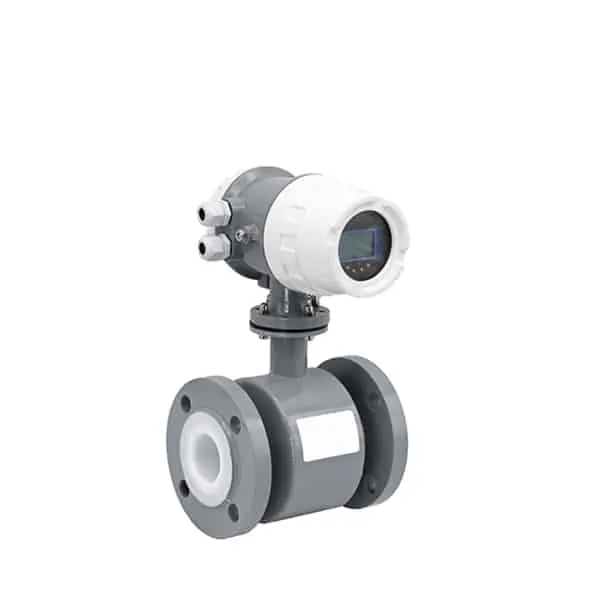 Magnetic Flow Meter
Standard full-bore mag meter for water, slurry and chemicals to plus or minus 0.5%.
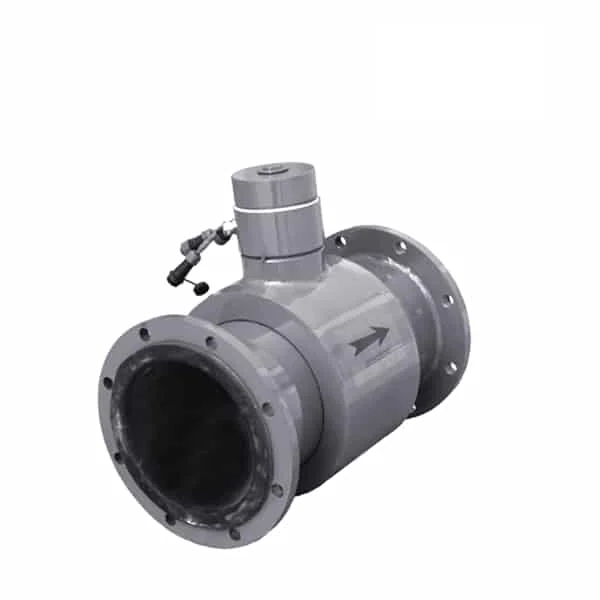 Partially Filled Pipe Flow Meter
Meters a part-full sewer or open channel by level and velocity.
Browse all magnetic flow meters →
FAQ
What is a remote or split magnetic flow meter?
It is a mag meter whose sensor and converter are separate, joined by a cable. The sensor goes in the pipe, here sealed to IP68 for a wet pit, and the converter mounts away from the water where it stays dry and is easy to read and wire.
Why use a split meter for sewage?
Because the sensor has to be in the wet, abrasive sewer while the electronics must stay dry and reachable. Split mounting puts the IP68 sensor in the pipe and the converter at grade, so a flooded chamber does not stop it.
Can a magnetic flow meter handle sewage?
Yes. Sewage conducts, and a mag meter has no moving parts and nothing in the bore, so rag and grit pass through. A neoprene or polyurethane lining resists the abrasion, which is why split mags are standard at pumping stations.
How far can the converter be from the sensor?
Up to the rated length of the supplied signal cable, kept clear of mains cables and with the sensor earthed both sides. Within that, the converter can sit at grade or on a nearby wall while the sensor stays down in the pipe.
Request a quote
Tell us the pipe size, the cable run and the lining the sewage needs, and we configure one split meter for the station, not a shelf part.