Home › Products › Level Instruments › Ultrasonic Level Sensors › Ultrasonic Oil Level Sensor (Truck Fuel Tank)
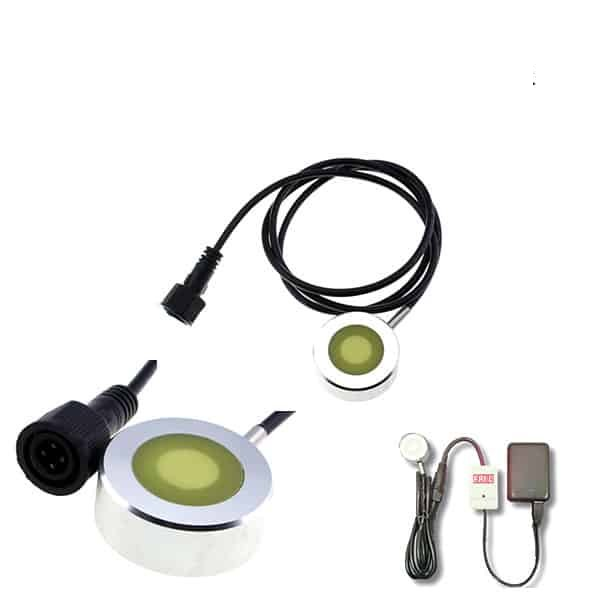
Ultrasonic Oil Level Sensor (External, Truck Fuel Tank)
A small external ultrasonic sensor that pastes onto the outside bottom of a vehicle or truck fuel tank and reads the fuel level through the wall. No hole is cut in the tank, so there is no leak path and no easy way to tamper, and it feeds a GPS or GPRS unit for fleet fuel monitoring.
- Mount: external paste, tank bottom, no hole
- Range: 5 to 150 cm; resolution 0.1 mm
- Power: DC 12 to 48 V, about 25 mA
- Output: RS232 / RS485 / 0-5 V
- Rating: Exia CT6 / Exd CT5, IP67
Overview
An ultrasonic oil level sensor for a fuel tank measures the fuel from the outside. The sensor pastes to the bottom of the tank with a couplant and sends an ultrasonic pulse up through the steel and the fuel to the surface, timing the echo to give the level. Because nothing is drilled, the tank keeps its seal, there is no leak path and there is no float or sender inside to wear or to be bypassed for fuel theft.
It is built for vehicles and small tanks rather than a process plant: a 5 to 150 cm range, 0.1 mm resolution, and a 12 to 48 V supply at about 25 mA. With RS232, RS485 and a 0-5 V output, it wires straight into a GPS or GPRS telematics unit, which is why it is used for fleet fuel monitoring and anti-theft alerts. It is rated intrinsically safe Exia CT6 and flameproof Exd CT5, IP67.
Features
Why an external paste sensor suits a fuel tank:
No hole in the tank
Pastes to the outside, so there is no leak path and nothing inside to tamper with for theft.
Feeds GPS / GPRS
RS232, RS485 and 0-5 V outputs wire into a telematics unit for fleet fuel monitoring.
12 to 48 V, low power
Runs on the vehicle supply at about 25 mA, so it stays on without draining the battery.
Fine 0.1 mm resolution
A 5 to 150 cm range with 0.1 mm resolution catches small drops that flag siphoning.
Exia / Exd, IP67
Intrinsically safe Exia CT6 and flameproof Exd CT5, sealed IP67 for under a vehicle.
Easy retrofit
Bonds to the tank without draining or removing it, so a fleet is fitted quickly.
Working principle
The sensor pastes to the outside bottom of the fuel tank with a couplant, so its ultrasonic pulse passes into the steel and into the fuel above. The pulse travels up to the fuel surface, reflects, and returns; the time of flight through the fuel gives the height of fuel, which is the level. Nothing crosses the tank wall but sound, so the fuel stays sealed inside.
Because the path runs through one body of fuel against a solid wall, the method suits a metal tank up to about 20 mm wall. Sloshing on the move blurs a single reading, so the sensor and the telematics unit average over time to report a steady tank level and to flag the sudden drop that marks a siphon or a leak.
Technical specifications
| Parameter | Specification |
|---|---|
| Type | External paste-mounted ultrasonic oil / fuel level sensor |
| Measuring range | 5 to 150 cm |
| Resolution | 0.1 mm |
| Operating voltage / current | DC 12 to 48 V; about 25 mA |
| Output / interface | RS232 / RS485 / 0-5 V analog; 9600 bit/s |
| Tank wall thickness | Up to 20 mm |
| Operating temperature | −20 to 80 °C (storage −25 to 85 °C) |
| Explosion-proof | Intrinsically safe Exia CT6; flameproof Exd CT5 |
| Protection | IP67, dustproof and waterproof |
Fleet monitoring and anti-theft
Paired with a GPS or GPRS telematics unit, the sensor turns each tank into a live feed. The platform trends fuel use per vehicle, raises an alert on a sudden drop that marks a siphon or a leak, and reconciles refuels against fuel-card purchases. Because the sensor reads through the wall with no hole and no in-tank sender, there is nothing to drain or bypass, so the reading stays tamper-resistant, which is the point for a fleet that has to trust the number.
Installation
Pick a flat spot on the bottom of the fuel tank away from baffles and the sump, and clean it to bare metal. Apply the couplant and bond the sensor, run the cable to the vehicle supply and to the RS232, RS485 or 0-5 V input of the telematics unit. Calibrate the empty and full points against known fuel volumes, set the averaging so road sloshing is smoothed, and confirm a refuel and a draw both show on the platform.
Applications
- Truck, bus and fleet fuel-tank monitoring
- Fuel-theft and siphon detection with GPS / GPRS
- Generator and equipment day-tank fuel level
- Construction and mining vehicle fuel management
- Diesel, petrol and oil tanks where no hole is allowed
A fleet operator needed to watch fuel on its trucks and catch siphoning, without cutting into the fuel tanks. External ultrasonic sensors were pasted to the tank bottoms and wired to the GPS units, so the platform trended each tank and raised an alert on a sudden drop, with no hole in any tank and nothing inside to bypass.
Related products
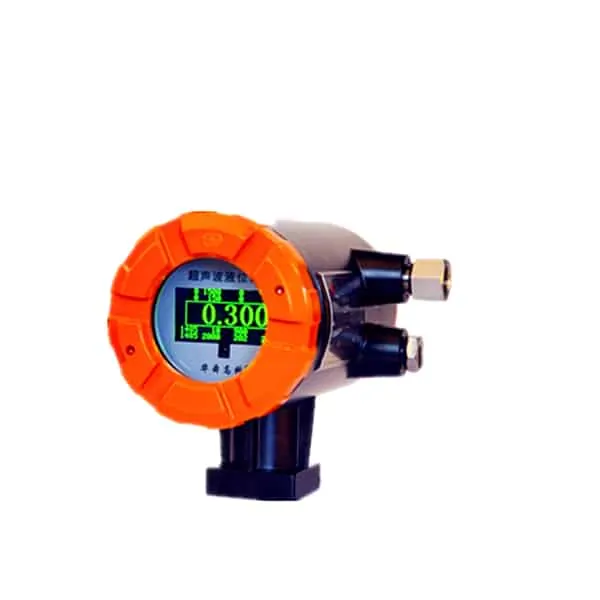 External Ultrasonic Tank Level Sensor
Industrial HS-2000 for sealed process tanks, range to 30 m, Ex d IIC T6.
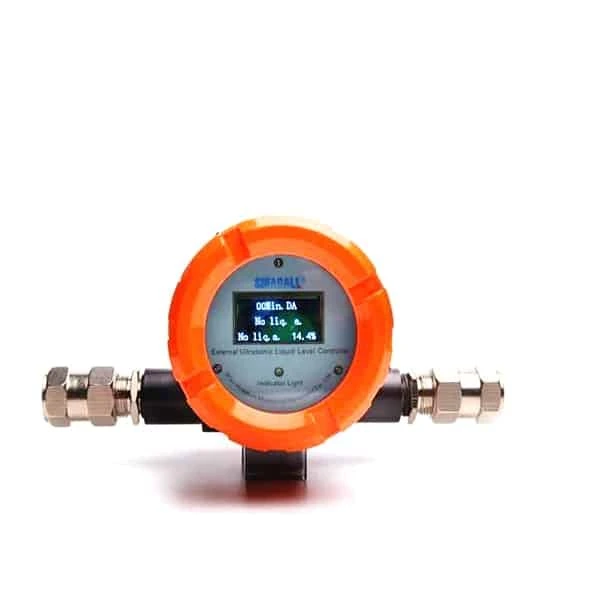 Ultrasonic Level Switch
External, non-contact control with relay output for a high or low level alarm.
Browse all ultrasonic level sensors →
FAQ
How does an ultrasonic fuel level sensor work?
The sensor pastes to the outside bottom of the tank and sends an ultrasonic pulse up through the wall and the fuel to the surface, timing the echo to give the level. Nothing enters the tank, so the fuel stays sealed and there is no sender inside to wear or bypass.
Can you measure fuel level without drilling the tank?
Yes. An external ultrasonic sensor reads through the tank wall, so no hole is cut. That keeps the tank sealed against leaks and removes the in-tank parts that fuel thieves target, which is why it suits fleet and anti-theft monitoring.
How does the sensor connect to a GPS tracker?
It outputs RS232, RS485 and 0-5 V, so it wires straight into the fuel input of a GPS or GPRS telematics unit. The platform then trends each tank and raises an alert on a refuel or a sudden drop.
What is the difference from the industrial HS-2000?
The same external ultrasonic principle, scaled differently. This sensor is built for vehicle fuel tanks, with a 5 to 150 cm range, a 12 to 48 V supply and telematics outputs. The HS-2000 is built for industrial process tanks to 30 m with a 4-20 mA and RS485 output.
Request a quote
Tell us the tank height and wall, the vehicle voltage and the telematics input you use, and we configure one sensor for the fleet, not a shelf part.