Home › Products › Level Instruments › Ultrasonic Level Sensors › Explosion-Proof Ultrasonic Level Transmitter
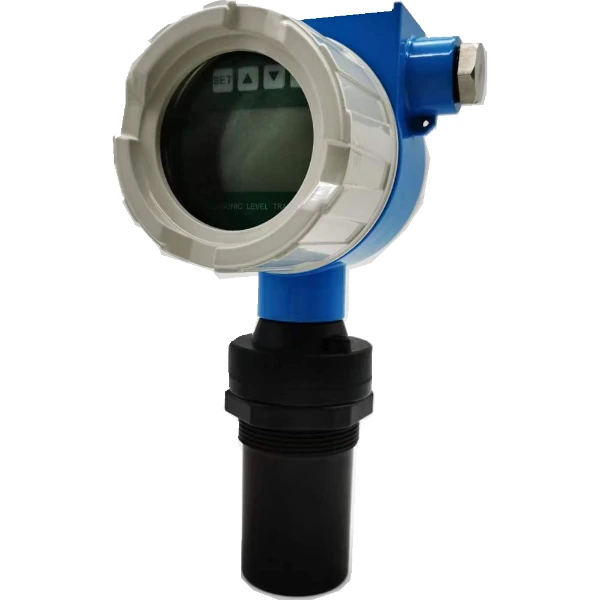
Explosion-Proof Ultrasonic Level Transmitter
A top-mounted, non-contact ultrasonic level transmitter in a flameproof housing for hazardous areas. The horn aims down at the liquid and the Exd enclosure carries the display and the 4-20 mA output, so it measures level in a flammable or classified area without a probe in the product.
- Type: top-mounted, non-contact ultrasonic
- Protection: flameproof Exd IIC T6, IP67
- Output: 4-20 mA / HART; RS-485
- Display: on-board digital display and keypad
- Use: flammable liquids in Zone 1 / Zone 2
Overview
An explosion-proof ultrasonic level transmitter measures level without contact in a hazardous area. Mounted on top of the tank, the transducer sends an ultrasonic pulse down at the liquid and times the echo to give the level; the flameproof Exd housing contains any spark and carries the display, the keypad and the 4-20 mA output. Nothing enters the liquid, so it suits flammable and aggressive media where a wetted sensor is a risk.
It is the hazardous-area version of a standard ultrasonic level transmitter: the same non-contact measurement, in a certified enclosure rated for a flammable atmosphere. It outputs 4-20 mA with HART and RS-485, shows the level on an on-board display, and is sealed to IP67 for an outdoor tank farm or a process unit.
Features
Why a flameproof ultrasonic transmitter suits a hazardous area:
Flameproof Exd housing
An Exd IIC T6 enclosure contains any spark, rated for a Zone 1 or Zone 2 flammable area.
Non-contact
The beam reads the surface from above, so no probe sits in flammable or aggressive liquid.
On-board display
A digital display and keypad in the enclosure set up and read the level at the tank.
4-20 mA, HART, RS-485
Loop output with HART and RS-485 Modbus to a PLC or SCADA in the safe area.
IP67 sealed
A sealed flameproof housing for an outdoor tank farm or a wash-down process area.
No moving parts
Nothing mechanical to wear, and no buildup on a probe, so maintenance stays low.
Working principle
The transducer, on top of the tank, sends a short ultrasonic pulse straight down at the liquid surface and times the echo that returns; level is the mounting height minus the measured distance. The transmitter compensates for the speed of sound with temperature so the reading holds as conditions change, and shows the level on the display while driving the 4-20 mA loop.
What makes it explosion-proof is the enclosure: a flameproof Exd housing that contains any internal spark and keeps the surface temperature within the T6 class, so the transmitter is safe in a flammable atmosphere. Ultrasonic measurement needs an air path and a clear surface, so heavy foam, thick vapor or a sealed pressurised vessel call for a radar transmitter instead.
Technical specifications
| Parameter | Specification |
|---|---|
| Method | Non-contact ultrasonic time-of-flight, top-mounted |
| Measuring range | Model-dependent (liquids to about 15 m) |
| Accuracy / resolution | 0.25% to 0.5% of range; resolution 1 mm |
| Output | 4-20 mA / HART; RS-485 Modbus |
| Display | On-board digital display and keypad |
| Temperature compensation | Built in (speed of sound versus temperature) |
| Process temperature | −20 to 80 °C (transducer) |
| Explosion-proof | Flameproof Exd IIC T6 (intrinsically-safe Exia option) |
| Ingress / housing | IP67; flameproof aluminum enclosure |
| Power supply | 24 V DC (AC option by model) |
A blind zone just below the transducer sets the highest level it can read; allow for it when siting the transmitter.
Selecting for the hazardous area
Two things set the certified version apart: the protection method and the rating. A flameproof Exd housing contains an internal spark and suits Zone 1 and Zone 2; an intrinsically-safe Exia version limits the energy instead and is chosen where that method is specified. The T6 class caps the surface temperature, and gas group IIC covers the most reactive gases. Match the zone, gas group and temperature class on the certificate to the area classification on your drawings, and confirm the cable gland and entry are rated to the same standard.
Installation
Mount the transmitter on a top flange or socket so the beam aims straight down at the liquid, clear of the fill stream, the wall, ladders and the agitator. Keep the highest level below the transducer by at least the blind zone, set the tank height and map any fixed reflectors. Use the flameproof entry and the correct cable gland for the area classification, and wire the 4-20 mA loop back to the safe area.
Applications
- Flammable solvent, fuel and chemical tanks in Zone 1 / Zone 2
- Tank farms and loading areas with a classified atmosphere
- Refinery and petrochemical process vessels (vented)
- Open sumps and basins in a hazardous area
- Water and effluent tanks where an Ex rating is specified
A solvent storage area was a classified zone, so the level instrument had to be certified for a flammable atmosphere and ideally non-contact. A flameproof Exd ultrasonic transmitter on each tank read the level from above, showed it on the local display and sent 4-20 mA to the control room, with no probe in the solvent and the Ex boundary intact.
Related products
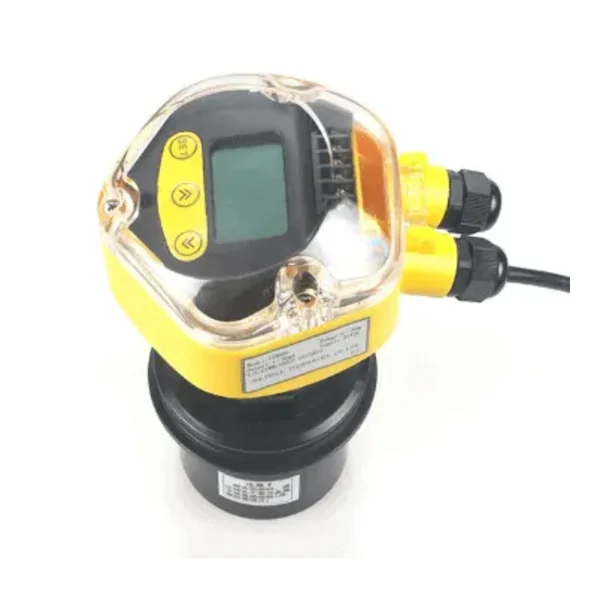 Ultrasonic Level Transmitter
Standard non-contact ultrasonic level transmitter for general-purpose tanks.
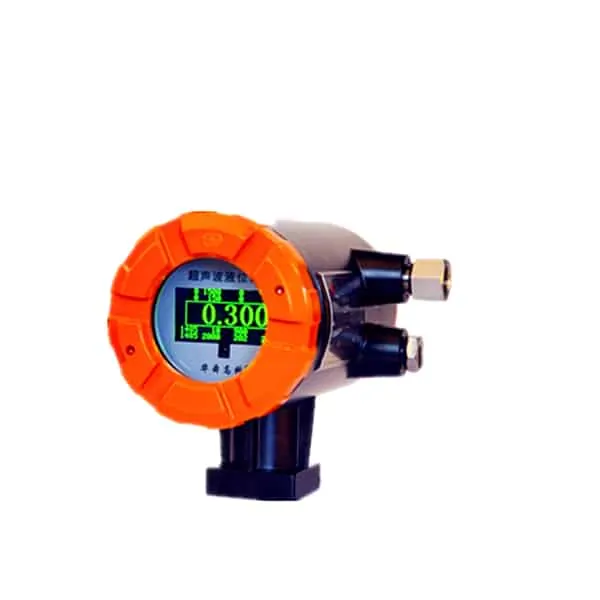 External Ultrasonic Tank Level Sensor
Explosion-proof HS-2000 that reads through the wall of a sealed, pressurised tank.
Browse all ultrasonic level sensors →
If the tank farm drawing speaks in zones and EPLs rather than divisions, the Zone vs Division guide shows how the two rating systems line up.
FAQ
What is an explosion-proof ultrasonic level transmitter?
It is a non-contact ultrasonic level transmitter in a certified flameproof enclosure, so it can be installed in a hazardous area with a flammable atmosphere. The Exd housing contains any spark while the transmitter reads the level from above the liquid.
Is ultrasonic level measurement safe in a hazardous area?
With the right rating, yes. This transmitter is built flameproof to Exd IIC T6, with an intrinsically-safe option, so it is certified for Zone 1 or Zone 2. Because it is non-contact, no sensor sits in the flammable liquid.
What is the difference from a standard ultrasonic transmitter?
The measurement is the same; the enclosure is what differs. A standard transmitter is general-purpose, while this one is certified flameproof for a hazardous area. For a sealed or pressurised tank, the external HS-2000 reads through the wall instead.
When should I use radar instead?
Ultrasonic needs an air path and a clear surface. Heavy foam, thick vapor or a sealed pressurised vessel weaken the echo, so for those a radar level transmitter is the better choice, also available with an Ex rating.
Request a quote
Tell us the tank height, the liquid, the area classification and the output you need, and we configure one transmitter for the application, not a shelf part.