Flow Meters › Positive Displacement Flow Meters › Rotary Gas Meter
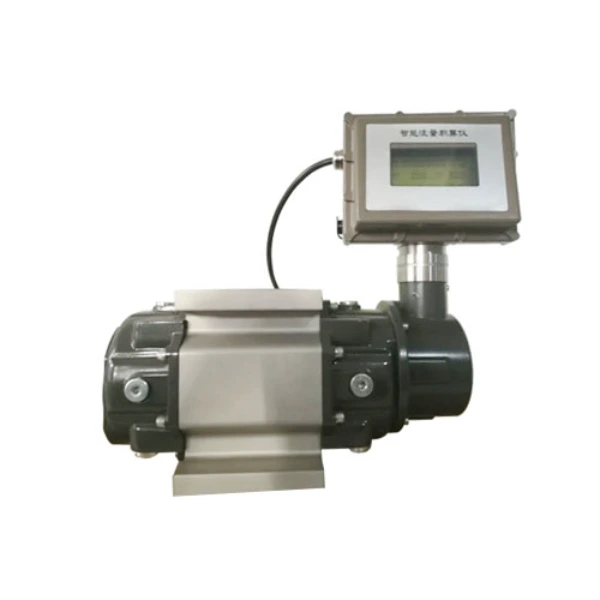
Rotary Gas Meter
A roots-type positive displacement gas meter. Two figure-eight rotors turn as the gas passes and sweep a fixed volume each revolution, so the meter counts gas directly for custody transfer and utility billing, with a built-in corrector that reads it in standard volume.
- Principle: Positive displacement, twin roots rotors
- Rating: G16 to G250 (DN25 to DN80, larger custom)
- Accuracy: class 1.0 or 1.5; range up to 1:300
- Medium: natural gas, town gas, propane vapor, air
- Correction: built-in T and P to standard volume
Overview
A rotary gas meter is a roots-type positive displacement meter for gas. Two figure-eight rotors, the lobe wheels of a roots mechanism, turn inside a sealed chamber as the gas passes, and each revolution carries a fixed volume from inlet to outlet. Counting the revolutions counts the gas directly, with no power needed for the basic measurement and only a few moving parts, which is why the roots gas meter has been the custody-transfer and utility-billing standard for decades.
Because gas volume changes with temperature and pressure, the meter carries a built-in corrector that reads the live temperature and pressure and reports the flow in standard volume, in normal cubic meters. It has a low pressure drop and a wide turndown, up to 1:300, and needs no straight pipe run. For a viscous liquid rather than gas, the roots mechanism is also built as a liquid positive displacement meter; for a different gas technology, a vortex flow meter has no moving parts.
Features
Everything here follows from one idea: count gas by displacement with two roots rotors.
Twin roots rotors
Two figure-eight rotors sweep a fixed volume each revolution, counting gas directly.
Standard volume corrector
Built-in temperature and pressure sensors correct the reading to standard volume in Nm3.
Custody-grade accuracy
Class 1.0 or 1.5 over a wide range, up to 1:300, for fair custody transfer.
No power, low pressure drop
The roots rotors turn on the gas itself, with a low pressure drop and decades of service.
Counter, pulse, and 4-20 mA
A mechanical counter totalizes, with pulse, OC alarm, and 4-20 mA outputs, on battery or 24 V.
No straight pipe run
Displacement metering does not depend on flow profile, so it fits a tight skid with no straight pipe.
Working principle
Two figure-eight roots rotors sit in the measuring chamber and mesh through a pair of timing gears that hold them in step without touching, leaving a tiny working clearance. The pressure difference between inlet and outlet turns them, and as they rotate, each rotor seals off a fixed pocket of gas between itself and the chamber wall and carries it to the outlet; a full pair of revolutions delivers four pockets. A magnetic coupling drives a mechanical counter and a smart corrector. The corrector takes the live temperature and pressure, applies the gas law with a compressibility factor, and converts the actual volume to standard volume, which it shows on the display and sends as a pulse or 4-20 mA.
Technical specifications
| Parameter | Specification |
|---|---|
| Measurement principle | Positive displacement; twin roots (lobe) rotors, fixed volume per revolution |
| Medium | Natural gas, town gas, propane vapor, air, and other non-corrosive gas |
| Rating and size | G16 to G250 (DN25 to DN80; larger on request) |
| Flow range | Qmax 25 to 350 m3/h by rating; range ratio up to 1:300 |
| Accuracy | Class 1.0 (1% upper range, 2% lower) or class 1.5 |
| Correction | Built-in temperature, pressure, and flow sensors; standard volume in Nm3 with compressibility |
| Output | Mechanical counter; pulse (IC-card compatible), OC alarm, 4-20 mA |
| Power | Lithium battery (3.0 V) or 24 V DC; mechanical counter needs no power |
| Connection | Flange, GB/T 9119; nominal pressure by model and flange rating |
| Standards | JJG 663 verification for gas volumetric meters; Ex per GB 3836 |
| Straight pipe | Not required |
Representative specifications; confirm per datasheet for the gas, rating, pressure, and approval you need.
Ordering example. Rotary gas meter, G65 (DN50), natural gas, Qmax 100 m3/h, class 1.5, built-in corrector to standard volume, pulse output, flange connection.
Correction to standard volume
Gas is bought and sold by standard volume, and the corrector is what delivers it:
- Why correct. A gas expands and contracts with temperature and pressure, so the actual volume through the meter is not a fixed quantity of gas. The corrector reports standard volume, in normal cubic meters, which is a true measure of how much gas flowed.
- How it works. Built-in temperature and pressure sensors feed the smart integrator, which applies the gas law with a compressibility factor and computes standard volume in real time. The actual volume, standard volume, flow rate, temperature, and pressure all read on the display.
- Custody and billing. Class 1.0 or 1.5 over a wide range and a verified corrector make the meter suitable for custody transfer and utility billing; confirm the approval required for your market at order.
Applications
Rotary gas meters suit measured gas in distribution and industry:
- Natural gas custody transfer and utility billing
- City gas distribution and pressure-regulation stations
- Industrial gas and burner supply metering
- Propane and LPG vapor metering
- Compressed air and plant gas sub-metering
Application example
City gas billing. A gas utility needed verifiable billing at a regulator station where temperature and pressure swing through the day. A rotary gas meter counted the gas by displacement, corrected it to standard volume from its built-in temperature and pressure sensors, and totalized on the counter with a pulse to the billing system. Confirming the verification approval for the market was the one item to settle before install.
Related products
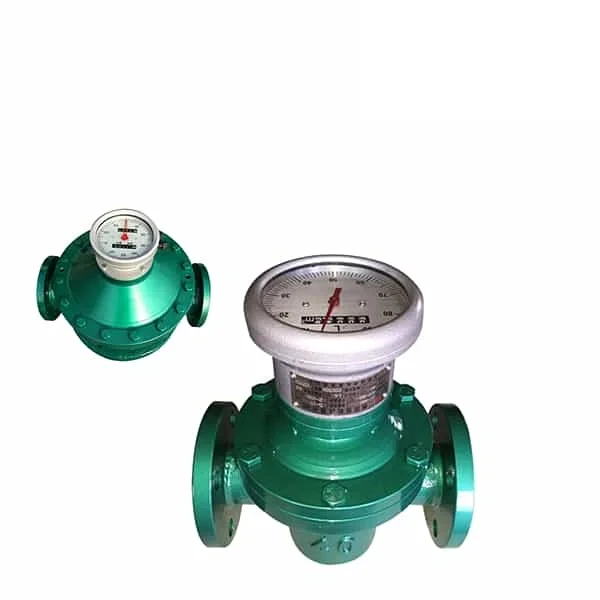 Oval Gear Flow Meter
The positive displacement meter for viscous liquid such as oil.
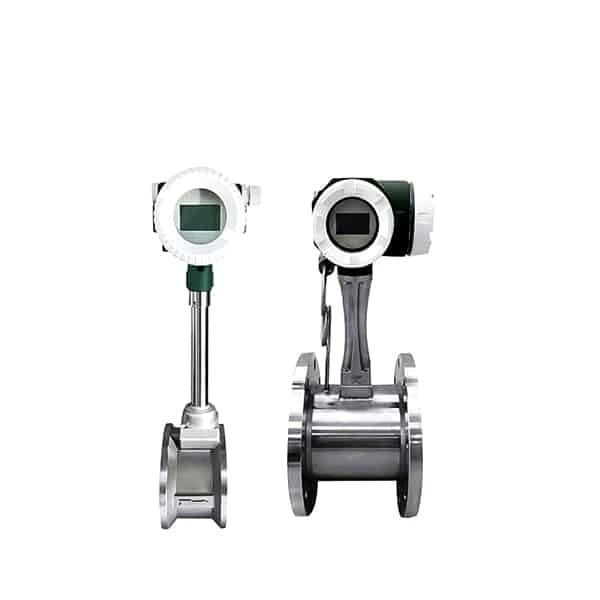 Vortex Flow Meter
A no-moving-parts alternative for gas, steam, and liquid.
Browse all positive displacement flow meters →
FAQ
What is a rotary gas meter?
It is a roots-type positive displacement gas meter. Two figure-eight rotors turn as the gas passes and carry a fixed volume each revolution, so the meter counts gas directly. A built-in corrector reads temperature and pressure and reports the flow in standard volume, for custody transfer and utility billing.
How does a roots gas meter work?
Two lobe rotors mesh through timing gears with a tiny clearance and turn on the pressure difference across the meter. Each revolution moves a known volume from inlet to outlet, and counting revolutions counts the gas. A corrector then converts the actual volume to standard volume using temperature and pressure.
What is the difference between a rotary and a diaphragm gas meter?
Both are positive displacement gas meters. A rotary, or roots, meter uses two rotating lobes and handles higher flow in a compact body with a low pressure drop, which suits commercial and industrial metering; a diaphragm meter uses bellows chambers and is common at residential flow.
How accurate is it for custody transfer?
Accuracy is class 1.0 or 1.5 over a wide range, up to 1:300, and with a verified corrector to standard volume it is used for custody transfer and billing. Confirm the verification approval required for your market at order.
Request a quote
Send us the gas, the rating or flow range, the pressure, and the approval you need, and we set the meter, the corrector, and the output.