Home › Level Instruments › SI-PCM260 Deep Well Water Level Sensor
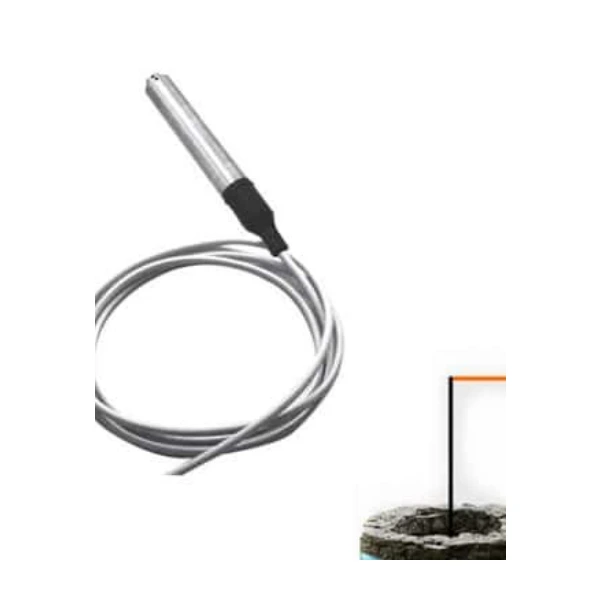
SI-PCM260 Deep Well Water Level Sensor
A slim submersible level probe built for deep wells and boreholes, on a stainless steel suspension cable. It hangs hundreds of meters down next to the pump and reads water level as 4–20 mA, with a four-stage seal because you cannot easily pull it back up.
- Range: deep-well depths, to about 1000 m water column
- Accuracy: 0.2% FS (Class A) or 0.5% FS (Class B)
- Output: 4–20 mA
- Wetted parts: stainless steel / 316 stainless
- Suspension: stainless steel cable, four-stage seal
- Protection: IP68
When the sensor sits 500 m down a borehole next to a submersible pump, a service call means pulling the whole string. So a deep-well level sensor lives or dies on its seal and its cable. The SI-PCM260 is built for exactly that: a narrow stainless probe, a stainless steel suspension cable rated to carry its own weight at depth, and a four-stage seal that keeps water out for years between pulls.
Overview
The SI-PCM260 is a hydrostatic submersible level sensor scaled up for deep wells and boreholes, with ranges reaching deep-well depths up to about 1000 m of water. It reads the head of water above the probe and sends it as a 4–20 mA signal, working alongside a submersible pump to track drawdown and recovery. The probe and wetted parts are stainless steel, with 316 available for more aggressive groundwater.
For shallower wells, sumps, and tanks under about 300 m, the SI-PCM261 submersible pressure transducer on a vented cable is the lighter, lower-cost choice. Step up to the SI-PCM260 when the install depth and the difficulty of retrieval call for a stainless suspension cable and a heavier seal.
Working principle
Level comes from hydrostatic pressure: the water column above the probe presses on an isolated diffused-silicon sensing element, whose piezoresistive bridge turns that pressure into a small electrical signal. The electronics apply temperature compensation and linear correction, then output a standard 4–20 mA current proportional to depth. Because depth is read from pressure, the same probe reads true level only when it is scaled for the water density at the site.
Technical specifications
Representative specifications, at room temperature and rated supply unless stated. Values typical; confirm the exact build per datasheet.
| Parameter | Specification |
|---|---|
| Measuring range | Deep-well depths, various ranges to about 1000 m water column |
| Accuracy class | Class A 0.2% FS; Class B 0.5% FS |
| Non-linearity | ± 0.2% FS |
| Hysteresis and repeatability | ± 0.1% FS |
| Output signal | 4–20 mA |
| Supply voltage | 24 VDC (12–32 VDC) |
| Load resistance | Current output ≤ 500 ohm; voltage output ≥ 3 kohm |
| Long-term stability | ± 0.1% FS per year |
| Thermal zero drift | ± 0.03% FS per °C |
| Response time | ≤ 50 ms |
| Maximum working pressure | 2 times the range |
| Medium temperature | -20 to +70 °C |
| Protection | IP68 |
| Wetted material | Stainless steel / 316 stainless; medium oil, water, and media compatible with 316 |
| Suspension | Stainless steel cable connection; four-stage seal |
Output and wiring
The SI-PCM260 is a 2-wire 4–20 mA loop, which is the right choice for the long cable runs a deep well forces on you. A current loop ignores cable resistance and electrical noise, so the reading does not drift over a few hundred meters of suspension cable, as long as the loop load stays at or below 500 ohm. A 4–20 mA live-zero also flags a broken or flooded cable as a fault rather than a dry-well reading. Run it into a pump controller or an RTU to track drawdown and protect the pump from running on against a dropping water table.
Selecting the range
Two numbers set the order: the range and the cable length. Size the range to the deepest head of water the probe will ever see, then add margin; the probe tolerates up to twice its range as a working pressure, but you want resolution where the water actually sits. The cable length is set by how far down the probe hangs, not by the range, so give us both.
Level is derived from pressure by the hydrostatic relation, pressure = density x g x height, so the unit reads true depth only when it is scaled for the water at your site. Fresh water gives about 9.8 kPa per meter; saline or mineral-heavy groundwater is denser and reads a little high unless corrected. For wells and tanks shallower than about 300 m, the SI-151 hydrostatic level transmitter covers the same math at lower cost.
Applications
The SI-PCM260 is built for level measurement that is deep and hard to reach:
- Deep water wells and boreholes with submersible pumps
- Groundwater and aquifer monitoring wells
- Drawdown and recovery testing during well commissioning
- Mine and construction dewatering shafts
- Reservoir and deep-tank level where the sensor must hang far below the top
Application example
Water utility, pump-station monitoring. A water utility was rolling out an IIoT platform to monitor its pump stations and needed level sensors it could leave in service for years with minimal maintenance. For the well and borehole sites, a probe on a stainless suspension cable with a heavy seal is exactly the part that survives an unattended deep install. We supplied deep-well level sensors into that program as part of a longer-term supply relationship covering the level, pressure, and flow instruments the platform needed.
The arithmetic behind the reading, drawdown diagnostics and the manual cross-checks are worked through in our well water level measurement guide.
FAQ
How can I monitor the water level in a well?
Lower a submersible level transmitter into the well. It senses the hydrostatic pressure of the water column above it and outputs a continuous 4–20 mA (or digital) reading you can wire to a controller, PLC, or telemetry. The SI-PCM260 is built for deep wells, with a sealed probe and a vented cable for an atmospheric reference.
What is the most accurate water level sensor?
For a deep, narrow borehole, a submersible hydrostatic transmitter gives the most practical, repeatable reading; the accuracy class of the sensor and a correct density and venting set the result. Non-contact ultrasonic or radar are hard to use down a well, so the submersible probe is usually the best choice there.
Is there a way to know how much water is in a well?
Yes. A submersible level transmitter reads the depth of water continuously; combined with the well and casing geometry it gives the column height and its trend over time, which is how operators track drawdown and recovery.
How can I tell if a well water level is low?
Set a low-level alarm on the transmitter output: when the measured head falls below your threshold, the control system flags it. Because the reading is continuous, you also see the drawdown trend and can act before the well runs dry.
Related products
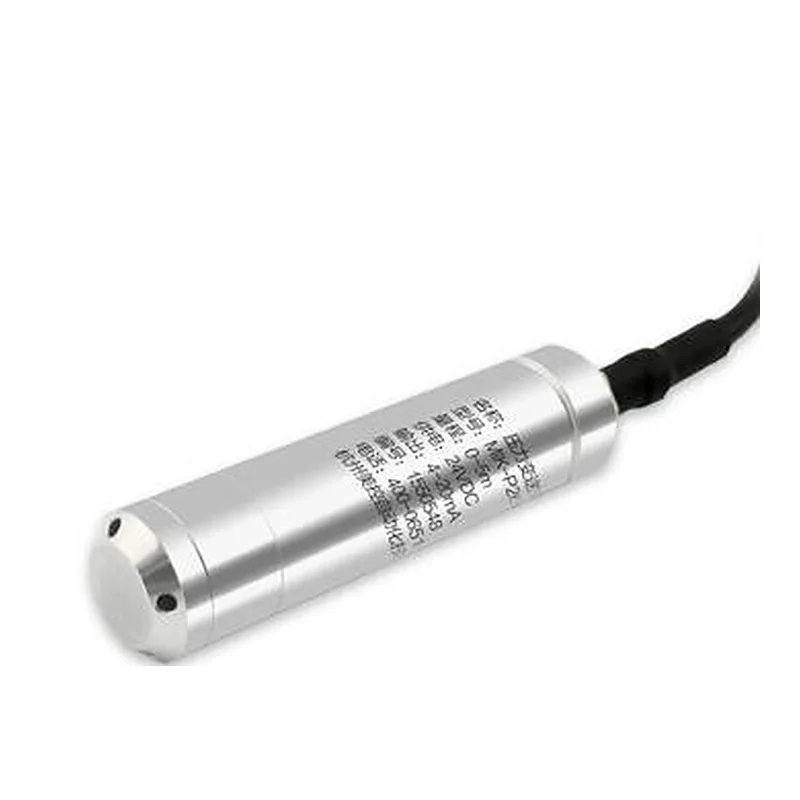 Submersible Pressure Transducers
The SI-PCM261 probe for wells and sumps to about 300 m, on a vented cable.
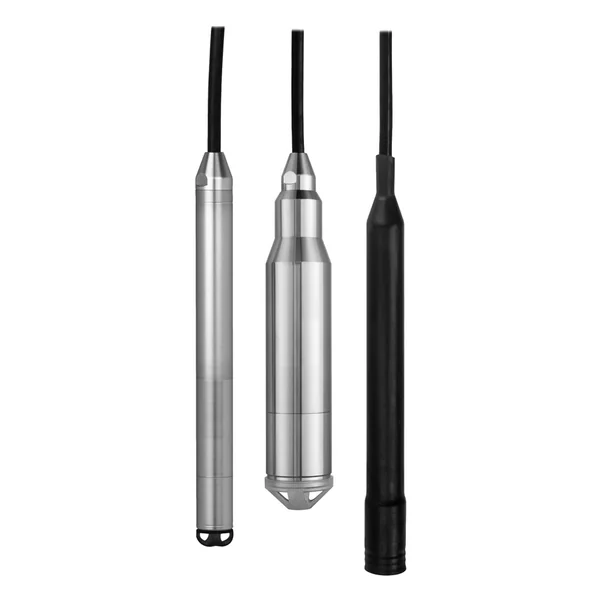 Hydrostatic Level Transmitter
The SI-151 for clean water tanks, reservoirs, and shallower wells.
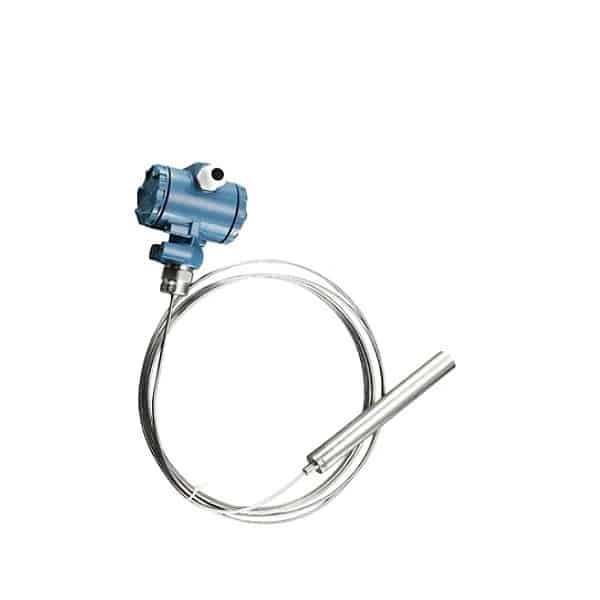 Stainless Steel Submersible Level Transmitter
Gas-conducted build for hot, corrosive, and sewage liquids that attack a probe.
Browse all level instruments →
Request a quote
Tell us five things and we configure one unit, not a shelf part:
- Maximum water level / range and the deepest the probe will hang
- Cable length needed (install depth) and any cable termination
- Water type (fresh, mineralized, or mildly corrosive) and its density
- Accuracy (Class A 0.2% or Class B 0.5% FS)
- Where it reports (pump controller, RTU, or IIoT gateway)
Ordering example: SI-PCM260 deep well water level sensor, range 0–200 m, Class A 0.2% FS, 4–20 mA, 316 stainless probe, 180 m stainless suspension cable.
Tell us the application and we configure one unit, not a shelf part. Have a well we have not listed? Reach our application engineers.