Home › Level Instruments › Float Level Switch
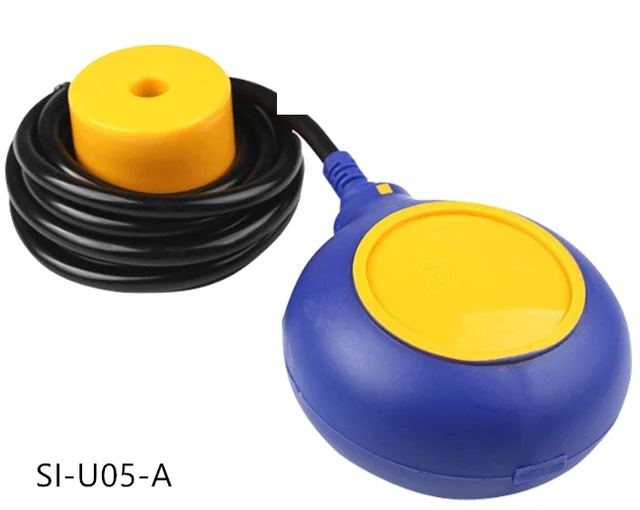
Float Level Switch (Cable-Suspended, SI-U05)
A cable-suspended float level switch that turns a contact on or off as the liquid surface lifts or drops the float. It works on gravity and buoyancy alone, needs no power to sense, and drives a pump or alarm directly. The SI-U05 comes with a PP or a stainless steel float to suit water, sewage, oils, and mild acid-base liquids.
- Type: cable (tilt) float switch, point level
- Float: PP or SUS304 stainless steel
- Contact: 10 A / 250 VAC (PP); SPDT 2 A / 250 VAC (SUS304)
- Cable: rubber, PVC, or silicone (to 170 °C); 2–10 m
- Control: direct pump on/off or high/low alarm at 220 VAC
A float level switch is the simplest way to control a pump or raise an alarm at a set level. There is no transmitter, no calibration, and no power needed to sense: the liquid lifts a float, and at a set angle the float flips a contact. The SI-U05 is a cable-suspended version, the float hangs on its own cable inside the tank or sump and tilts as the surface rises and falls, which makes it easy to install and maintenance free.
Overview
The SI-U05 is a cable float switch built for level control rather than continuous measurement. It is widely used to start and stop liquid pumps, to protect a submersible pump motor against running dry, and to set high or low level alarms in water supply, drainage, and storage tanks. The float is offered in polypropylene (PP) for water, sewage, and mild chemicals, or in SUS304 stainless steel for oils, hot liquids, and food-grade service. The contact carries up to 10 A at 250 VAC, so for many small pumps it switches the load directly at 220 V without a separate relay. For a continuous reading across the full range rather than a point trip, pair it with a hydrostatic level transmitter or an ultrasonic level transmitter.
Working principle
The cable float switch works on gravity and buoyancy. The float hangs from its cable at a fixed length. While the liquid is below the float, gravity holds it hanging down and a small steel ball inside rests against one contact. As the liquid rises and lifts the float past a certain tilt angle, the ball rolls to the other side and flips the internal micro, reed, or proximity switch, sending an ON or OFF signal. When the level falls, the float tilts back down and the contact returns. The switching point is set by the cable length and the tether position, and the built-in tilt angle gives a natural deadband that stops the contact chattering near the set level.
Technical specifications
| Parameter | Specification |
|---|---|
| Float material | PP or SUS304 stainless steel |
| Contact capacity | 10 A / 250 VAC (PP); 2 A / 250 VAC (SUS304) |
| Contact type | 1A, 1B, or 1AB (PP); SPDT changeover (SUS304) |
| Cable | Rubber or PVC (PP); silicone 0.75 mm² x 3-core (SUS304) |
| Cable temperature | Rubber -10 to 80 °C; PVC 0 to 60 °C; silicone 0 to 170 °C |
| Minimum liquid density | 0.6 g/cm³ (PP); 0.5 g/cm³ (SUS304) |
| Cable length | 2, 3, 4, 5, or 10 m; custom lengths available |
| Suitable medium | Clean water, sewage, oils, and acid-base liquids of low to medium concentration |
| Operating voltage | 220 VAC, direct pump control |
Float options: PP or stainless steel
The two floats cover most level-control jobs. Pick by the liquid and its temperature, then by the contact rating you need.
| Feature | PP float | SUS304 float |
|---|---|---|
| Best for | Water, sewage, mild chemicals | Oils, hot liquids, food-grade tanks |
| Contact rating | 10 A / 250 VAC | 2 A / 250 VAC (SPDT) |
| Cable | Rubber or PVC | Silicone, to 170 °C |
| Minimum density | 0.6 g/cm³ | 0.5 g/cm³ |
Output and wiring
The float switch wires straight into the circuit it controls. The PP float gives a single make-or-break contact, ordered as 1A (normally open), 1B (normally closed), or 1AB, on a two-core rubber or PVC cable rated to 10 A. The stainless float gives a changeover (SPDT) contact on a three-core silicone cable, so one switch provides both a normally open and a normally closed terminal. At 220 VAC the PP version can drive a small pump directly; for larger motors, switch a contactor rather than the motor itself. Hanging the float one way makes the contact close on rising level (to fill or to trip a high alarm); flipping it makes the contact open on rising level (to empty or for a low-level cut-out).
Applications
The SI-U05 suits any job that needs a simple, reliable level trip rather than a continuous reading: pump start/stop control, submersible pump dry-run protection, high and low level alarms, water supply and drainage, sumps and sewage pits, irrigation and storage tanks, and oil or mild acid-base tanks. The stainless float with a silicone cable extends that to hot and food-grade liquids.
Challenge: A sunflower-oil producer needed level control on a hot oil tank running near 150 °C, where a standard float and a PVC cable would not survive.
Solution: The stainless steel SI-U05 with a silicone cable rated to 170 °C, switching the fill pump directly at 220 VAC.
Result: Dependable level control on a high-temperature edible-oil tank, with no powered transmitter and nothing in the circuit but the float.
Related products
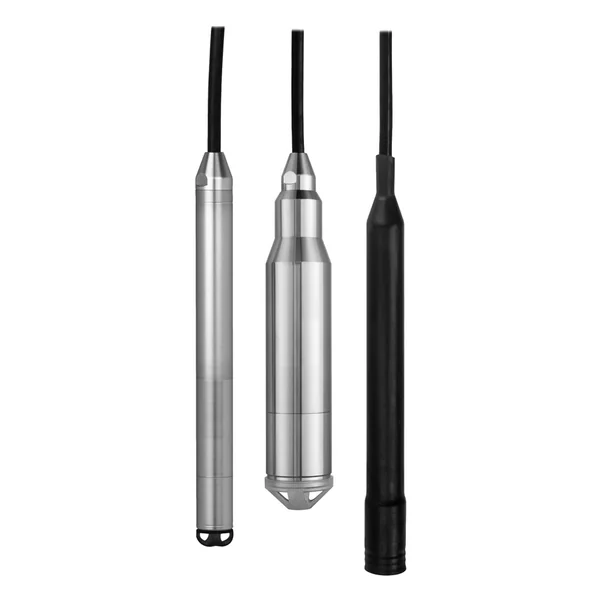 Hydrostatic Level Transmitter
Continuous level from the head of liquid.
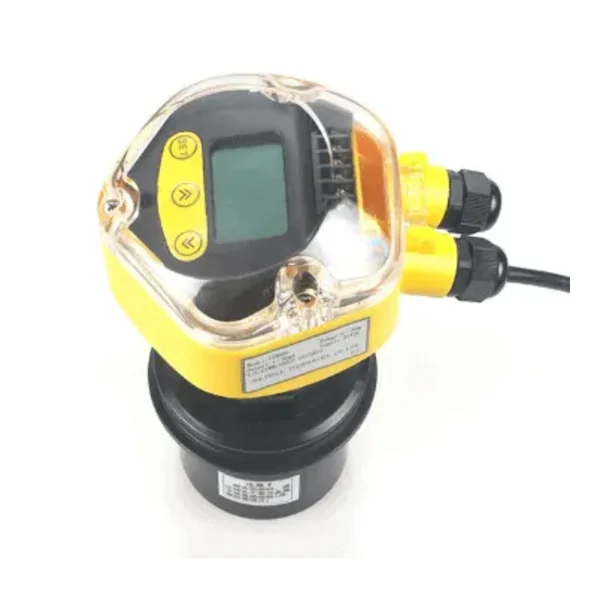 Ultrasonic Level Transmitter
Non-contact continuous level for tanks.
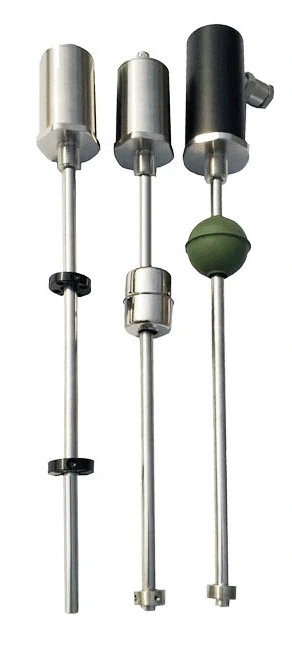 Magnetostrictive Level Transmitter
Millimetre-accurate float-based level.
Browse all level instruments →
For the control logic around a tower basin, including makeup and low-water cutoff, read our guide to cooling tower water level control.
FAQ
How should a float switch be wired?
A cable float switch wires in series with the pump contactor or alarm coil it controls, since it simply makes or breaks that circuit. The PP version carries up to 10 A at 250 VAC, enough to switch many small pumps directly at 220 V; for larger motors you switch a contactor instead of the motor. Match the wire to the contact: the PP float uses a two-core rubber or PVC cable for one make-or-break contact, while the stainless float uses a three-core silicone cable for a changeover (SPDT) contact. Always stay within the rated contact current.
How do you tell if a float switch is normally open or closed?
With a cable float you set it by how you hang and tether the float, not by a fixed label. Mounted one way the contact closes as the liquid rises, which you use to fill or to trip a high alarm; flipped over it opens as the liquid rises, which you use to empty or for a low-level cut-out. The single-contact PP types are ordered as 1A (normally open), 1B (normally closed), or 1AB, while the stainless SPDT version gives both a normally open and a normally closed contact in one switch, so you choose in the wiring.
Why does a float switch have three wires?
Three wires mean the switch is a changeover, or SPDT, contact: one common, one normally open, and one normally closed terminal, so the same float can start one circuit and stop another as it tilts. The stainless SI-U05 uses a three-core 0.75 mm² silicone cable for exactly this. The simpler PP version has a single make-or-break contact, so it needs only two cores.
Request a quote
Tell us the tank or sump, the liquid and its temperature, and whether you need to fill, empty, or alarm. We configure the float material, cable type, and length to match, not a shelf part. Typical lead time and pricing follow by return email.