Home › Pressure Instruments › Shield Machine Pressure Sensor
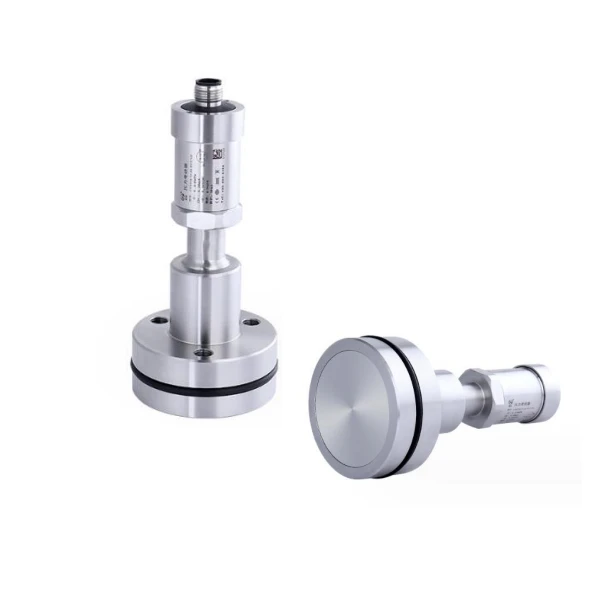
Shield Machine Pressure Sensor
A rugged earth-pressure sensor for tunnel boring and shield machines. A thick, flush stainless diaphragm takes the slurry head directly, so the sand and rock in the mud press on the diaphragm without ever reaching the sensing element.
- Range: 0–0.6 MPa standard (10 to 100 bar on request)
- Accuracy: 0.5% FS
- Output: 4–20 mA (2-wire); 0–5 / 1–5 / 0–10 VDC (3-wire)
- Diaphragm: thick, flush stainless steel, isolation type
- Medium: mud, wet soil, abrasive slurry
- Protection: IP65
Put an ordinary pressure transmitter on a shield machine chamber and the slurry kills it: grit packs the port, and hard sand and small rock fragments hammer a thin diaphragm until it fails. This sensor is built the other way around. The wetted face is a thick, flush stainless diaphragm with no cavity to clog, and the pressure is carried mechanically through that isolation diaphragm so the abrasive solids never touch the sensing element inside.
Overview
The shield machine pressure sensor measures the earth and slurry pressure inside tunnel boring machines, shield machines, and the lines that feed them. It uses a specially treated thick metal diaphragm and mechanical transmission, so hard sand and rock in mud or wet soil press on the diaphragm without damaging the internal components. The body is compact and corrosion-resistant, with wide-range temperature compensation and built-in protection against vibration and repeated high-pressure impact.
It is a purpose-built relative of our flush diaphragm pressure sensors, hardened for the grit and shock of tunneling. Where a process flush sensor handles viscous or coating media, this one is sized for the abrasion and impact of an excavation face.
Working principle
The slurry presses on a thick, flush stainless diaphragm at the wetted face. That diaphragm carries the pressure mechanically to the sensing element behind it, so the sand and rock load the metal face but never reach the cell. The element converts the pressure to a small electrical signal, and the integrated electronics output a 4–20 mA or voltage signal with temperature compensation across a wide range. Because the diaphragm is flush and thick, there is no recess to pack with grit and nothing thin to puncture.
Technical specifications
Representative specifications, at room temperature and rated supply unless stated. Values typical; confirm the exact build per datasheet.
| Parameter | Specification |
|---|---|
| Measuring medium | Mud, wet soil, and slurry compatible with the wetted parts |
| Pressure range | 0–0.6 MPa standard; 10, 16, 25, 40, 60, 100 bar on request (1 bar is about 14.5 psi) |
| Pressure type | Gauge |
| Accuracy | 0.5% FS |
| Output signal | 4–20 mA (2-wire); 0–5 / 1–5 / 0–10 VDC (3-wire) |
| Supply voltage | 24 VDC (10–30 VDC) |
| Response time | 20 ms |
| Resolution | Analog 0.01% FS; digital 0.05% FS |
| Long-term stability | ± 0.1% FS per year |
| Medium temperature | -40 to +85 °C |
| Temperature compensation | -10 to +70 °C; drift ± 0.01% FS per °C in range |
| Durability | 1 x 10^6 pressure cycles (range low to high) |
| Protection | IP65 |
| Weight | About 850 g |
Output and wiring
A tunnel machine is an electrically noisy place, with big drives and long cable runs back to the control cab. Run the 4–20 mA loop: a 2-wire current signal shrugs off cable resistance and electrical noise, so the earth-pressure reading stays true from the cutterhead to the operator. The voltage versions (0–5, 1–5, 0–10 V) suit short runs into a local PLC. The sensor includes current-limiting, voltage-limiting, and reverse-connection protection, plus a cut-off-frequency design and lightning protection to ride out the surges and vibration of an excavation drive.
Selecting the range
Pick the range from the maximum chamber or grouting pressure you expect, with margin for the spikes a face throws. The standard build covers 0–0.6 MPa, which is about 0–87 psi, and suits earth-pressure-balance chamber and many grouting lines. For higher-pressure slurry shields and dense grout, the range is built to order at 10, 16, 25, 40, 60, or 100 bar, where 100 bar is 10 MPa or about 1450 psi.
Tell us the working pressure, the medium, and the process connection on the machine. For very high-pressure jacking or grouting work beyond this range, our high pressure transducers reach much further with the same rugged build.
Applications
The sensor is built for the grit and shock of underground excavation:
- Earth-pressure-balance (EPB) and slurry shield chamber pressure
- Tunnel boring machine (TBM) and pipe-jacking pressure monitoring
- Grouting and backfill injection lines
- Earth compactors and ground-improvement rigs
- Dredging and mud-handling slurry lines
Application example
EPB shield, chamber pressure. A representative application for this sensor is the excavation chamber of an earth-pressure-balance shield, where the muck is a paste of soil, water, and abrasive grit held at a controlled pressure to support the face. A standard transmitter clogs or wears through in that service. The thick flush diaphragm takes the chamber pressure directly and carries it mechanically to a protected cell, so the sand and rock load the steel face instead of the sensing element. Specifications shown are representative; the build is configured to the machine and pressure.
FAQ
What is a pressure sensor used for?
A pressure sensor turns the pressure of a fluid or a medium into an electrical signal for monitoring and control. On a tunnel boring or shield machine it is used at several points: the excavation chamber to hold face pressure, the screw conveyor, the grouting lines behind the segments, and the thrust-jack hydraulics. Each reading helps the operator balance the machine against the ground and keep the tunnel face stable.
What is earth pressure?
Earth pressure is the force the surrounding soil and groundwater exert on a structure or on the face of an excavation. On a shield machine the cutterhead chamber is held under a controlled counter-pressure to balance that earth and water pressure, so the face neither collapses nor heaves. A shield machine pressure sensor measures that chamber pressure directly, which is why it has to survive abrasive slurry, vibration, and electrical surges that a standard transmitter would not.
What are the 7 types of pressure sensors?
Listed by sensing method you will see strain-gauge, capacitive, piezoresistive, piezoelectric, optical, resonant, and electromagnetic types. For a shield machine the priority is ruggedness rather than the exact principle: a sealed, flush-diaphragm piezoresistive or strain-gauge cell that tolerates abrasion, shock, and surge is the practical choice, and that is how this sensor is built.
Request a quote
Tell us five things and we configure one unit, not a shelf part:
- Where on the machine (EPB chamber, slurry line, grouting, jacking)
- Working pressure and the worst-case spike
- Medium (soil paste, slurry, grout) and any abrasiveness or chemistry
- Process connection and diaphragm size on the machine
- Output and supply (4–20 mA or voltage; 24 VDC)
Ordering example: Shield machine pressure sensor, range 0–0.6 MPa gauge, 0.5% FS, 4–20 mA 2-wire, flush flanged stainless diaphragm, M12 connector.
Tell us the application and we configure one unit, not a shelf part. Working a machine we have not listed? Reach our application engineers.