Home › Level Instruments › 80 GHz Radar Level Transmitter
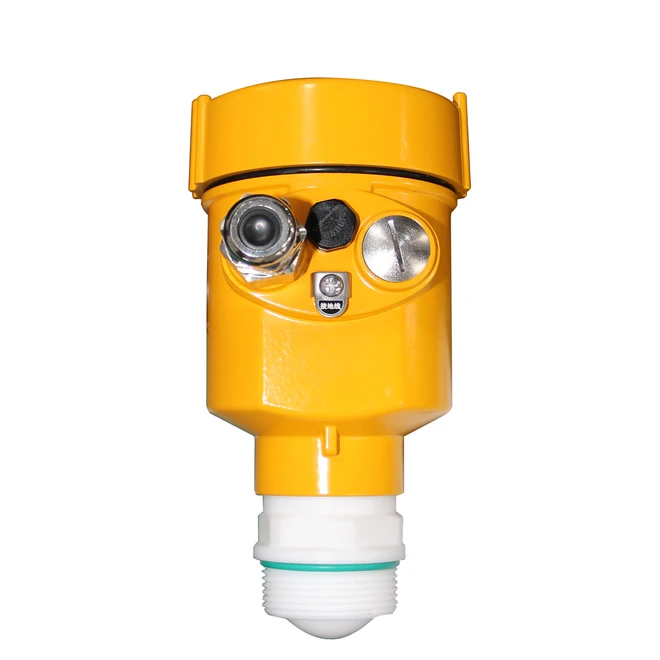
80 GHz Radar Level Transmitter (FMW Series)
A non-contact 80 GHz FMCW radar level transmitter for liquids and solids. The millimetre-wave band gives a narrow beam and a small blind zone, so it measures cleanly in tall, cluttered, or vapor-filled vessels without touching the medium. The FMW series spans short-range compact units to 150 m long-range models, with PTFE or PEEK lens antennas for high temperature and pressure.
- Band: 80 GHz FMCW, non-contact
- Range: up to 150 m; blind zone from 0.05 m
- Accuracy: ±1 mm (typical); resolution 1 mm
- Process: to 260 °C, to 2.5 MPa (by model)
- Output: 4–20 mA / HART, or RS485 / Modbus; IP67
Radar is the most capable non-contact level technology, and 80 GHz is its mainstream industrial band. The high frequency focuses the beam tightly and shortens the blind zone, so an 80 GHz radar reaches further, ignores agitators and tank walls, and still reads close to the antenna. Because the reading comes from a frequency shift rather than an echo strength, it is unaffected by dust, vapor, foam, temperature, or pressure, with nothing touching the medium.
Overview
The FMW series is an 80 GHz frequency-modulated continuous-wave (FMCW) radar for level. It covers ranges up to 150 m with a blind zone as small as 0.05 m and a typical accuracy of 1 mm. PTFE lens antennas resist adhesion and condensation, and a PEEK lens on the high-temperature model extends process service to 260 °C and 2.5 MPa. The output is 4–20 mA with HART, or RS485 with Modbus, and the housing is rated IP67. For the higher-resolution 120 GHz band with an even smaller antenna, see the 120 GHz radar level transmitter; where the medium has a very low dielectric constant in an agitated or foaming tank, a guided wave radar contact probe is the better choice.
Features
What sets the 80 GHz FMW series apart, with the real specification behind each point:
Reading independent of the processThe level comes from a frequency shift, not an echo amplitude, so it holds about ±1 mm whatever the density, temperature, evaporation, or dust.
Sees low-reflectivity mediaA wide dynamic signal range picks up the small echoes from low-dielectric media, including light powders and granules a 26 GHz radar would lose.
Works through coating and condensationA PTFE lens antenna, or PEEK on the high-temperature model, keeps the face clear and measuring under adhesion and condensation.
Narrow, focused beamAt 80 GHz the lens antennas give emission angles as tight as 3 degrees, ignoring walls, agitators, and internal fittings.
Compact antenna, long reachA small lens fits tight nozzles, while the 76 mm models reach up to 150 m, with a 0.05 m blind zone to measure close to the antenna.
Wide process envelopeVariants extend to 260 °C and 2.5 MPa with PTFE or PEEK lenses, covering ambient tanks, hot reactors, and pressurised vessels.
Working principle
The radar sends a continuous 80 GHz wave whose frequency is swept up and down. The wave reflects off the liquid or solid surface and returns to the antenna a moment later, by which time the transmitter is emitting a slightly different frequency. The difference between the sent and received frequency is proportional to the round-trip distance to the surface: R = C x Df / (2 x K), where C is the speed of light and K the sweep rate. Subtracting that distance from the known tank height gives the level. Because the result is set only by distance, it does not drift with density, temperature, evaporation, or foam.
Technical specifications
| Parameter | Specification |
|---|---|
| Frequency | 80 GHz, FMCW (frequency-modulated continuous wave) |
| Measuring range | 0.1 m to 150 m (by model) |
| Blind zone | From 0.05 m |
| Accuracy / resolution | ±1 mm typical (±2 mm / ±5 mm on solids models); resolution 1 mm |
| Beam angle | About 3° (76 mm lens) to 8° (32 mm lens) |
| Process temperature | -40 to +260 °C (by model) |
| Process pressure | -0.1 to 2.5 MPa (by model) |
| Antenna | PTFE lens (PEEK on high-temperature model), 21 / 32 / 44 / 76 mm |
| Process connection | Thread (G or NPT) or flange, DN25 to DN200 |
| Output | 4–20 mA / HART, or RS485 / Modbus |
| Response time | 200 ms |
| Power supply | DC 24 V, DC 12–24 V, or AC 220 V |
| Protection | IP67 |
Models
The FMW series scales the antenna and materials to the range, temperature, and pressure. Smaller lens antennas suit short ranges and tight nozzles; the 76 mm lens reaches the full 150 m and narrows the beam to about 3 degrees. The G models add high-temperature and high-pressure construction, and the 21 series is tuned for solids.
| Unit | Model | Range | Antenna | Connection | Max temp | Max pressure | Accuracy |
|---|---|---|---|---|---|---|---|
 |
FMW-11S | 0.1–10 m | 21 mm PTFE | Thread or DN25 | 100 °C | 1.6 MPa | ±2 mm |
|
FMW-11 | 0.1–30 m | 32 mm PTFE | Thread or DN40 | 100 °C | 0.3 MPa | ±1 mm |
|
FMW-12 | 0.1–30 m | 32 mm PTFE | Thread or DN40 | 120 °C | 1.6 MPa | ±1 mm |
 |
FMW-12G | 0.1–30 m | 32 mm PTFE | Thread or DN40 | 200 °C | 2.5 MPa | ±1 mm |
 |
FMW-13 | 0.3–150 m | 76 mm PTFE | DN80 or thread | 150 °C | 1.0 MPa | ±1 mm |
|
FMW-13G | 0.3–150 m | 76 mm PEEK | DN80 | 260 °C | 2.5 MPa | ±1 mm |
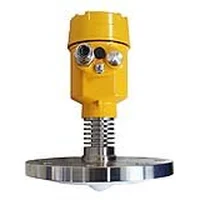 |
FMW-14G | 0.1–30 m | 44 mm PTFE | Thread or DN50 | 200 °C | 2.5 MPa | ±1 mm |
|
FMW-15 | 0.3–150 m | 76 mm PTFE | DN80 | 180 °C | 2.5 MPa | ±1 mm |
|
FMW-21 (solids) | 0.3–150 m | 76 mm PTFE | DN80 | 150 °C | 0.3 MPa | ±2 mm |
Further variants (13S, 14, 15G, 21S, 21G) cover intermediate ranges, pressures, and solids service. Ask us to match a model to your vessel.
80 GHz vs 26 GHz radar
Both bands work the same way, but the higher 80 GHz frequency focuses the beam much more tightly. That narrow beam clears agitators, ladders, and tank walls, shrinks the blind zone, and lets the radar read low-dielectric media that a 26 GHz unit would miss.
| Compared | 26 GHz radar | 80 GHz radar (FMW) |
|---|---|---|
| Beam angle | About 10° | As narrow as 3° |
| Blind zone | About 0.3 m | From 0.05 m |
| Resolution | About 1 cm | 1 mm |
| Low-dielectric media | Harder below about 3 | Reaches lower dielectric media |
| Antenna size | Larger for the same beam | Compact, fits more nozzles |
Applications
The FMW series suits nearly all level measurement: process and storage tanks, reactors with agitators, tall silos and clinker or cement bins, water and wastewater, and vessels with vapor, dust, or foam. The narrow beam and small blind zone make it a strong fit where ultrasonic loses the echo, and the long-range 76 mm models reach silos and towers up to 150 m. The solids model handles powders and granules with low reflectivity.
Challenge: A semiconductor and pure-water plant needed level on several vessels, with long-range tanks (20 to 30 m) and clean, low-reflectivity water where a single technology struggled.
Solution: 80 GHz FMW radar on the tall tanks for its narrow beam and long reach, paired with ultrasonic on the short, simple vessels.
Result: One supplier covered the full plant, and the account has reordered across several projects.
Related products
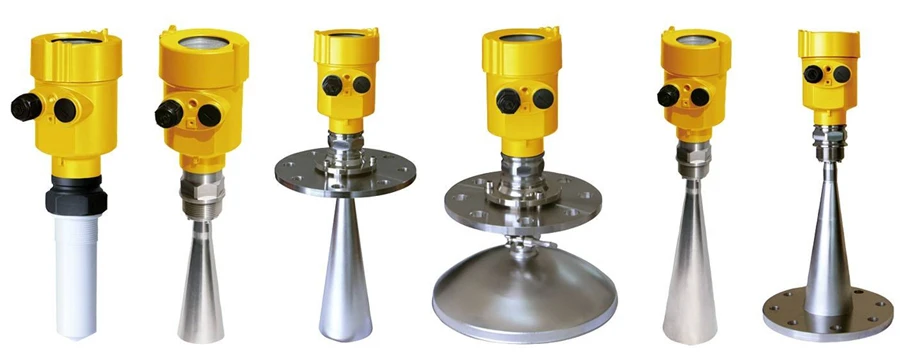 120 GHz Radar Level Transmitter
Higher resolution, even smaller antenna.
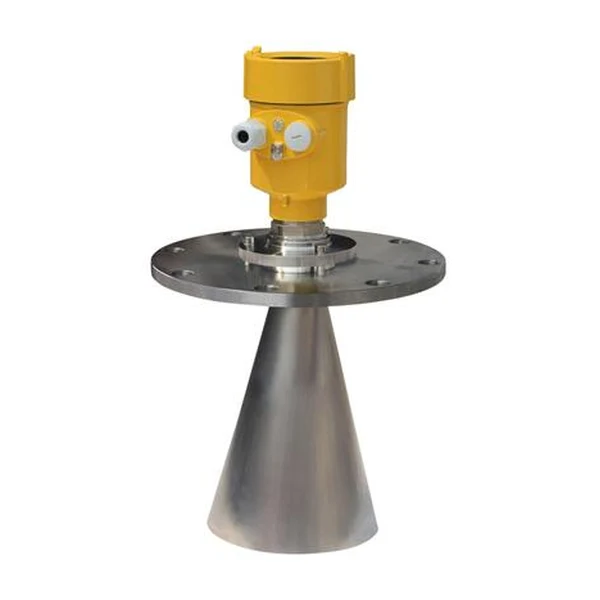 Radar Level Sensor for Solids
SIRD-804 6 GHz radar for coarse blocks and granules like coal and aggregate.
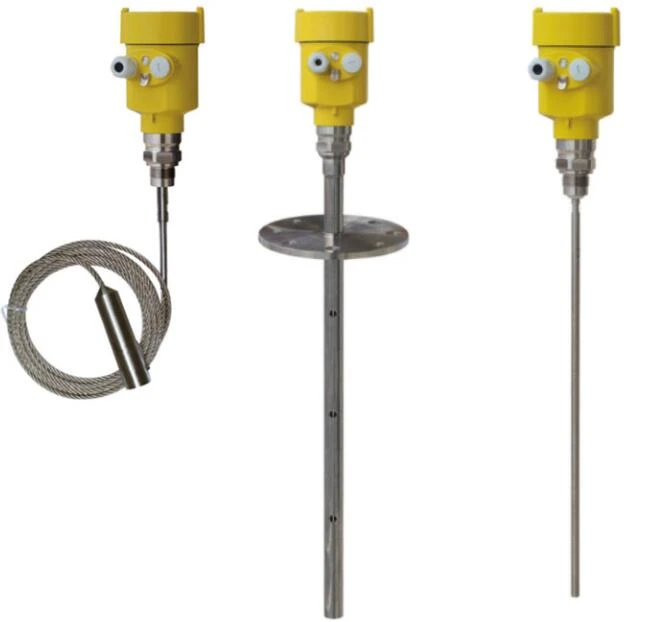 Guided Wave Radar
Contact probe for low-dielectric, agitated media.
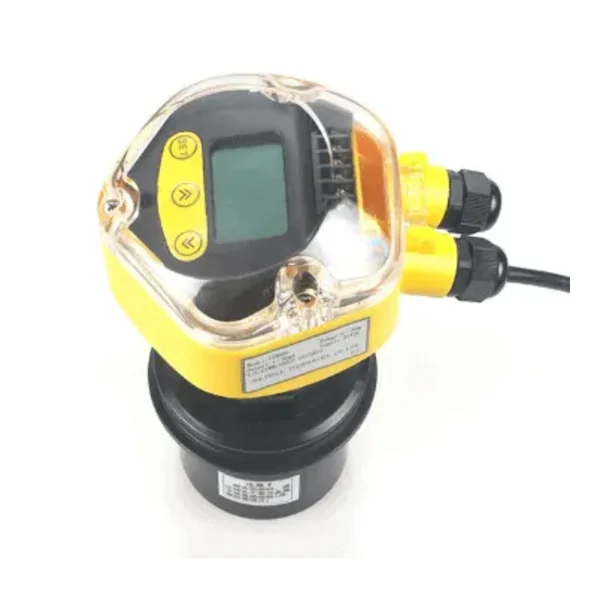 Ultrasonic Level Transmitter
Lower-cost non-contact for simple tanks.
Browse all level instruments →
Ironworks stockline service is a common assignment for this frequency band; the engineering behind it is covered in the blast furnace level measurement guide.
FAQ
What is radar level measurement?
Radar level measurement reads the level of a liquid or solid by timing a microwave signal sent from the top of the vessel. An 80 GHz FMCW radar sweeps the frequency of that signal; the echo returns at a slightly different frequency, and the difference is proportional to the distance to the surface. The transmitter subtracts that distance from the tank height to give level. Nothing touches the medium, and the reading is not affected by dust, vapor, temperature, or pressure.
What are the disadvantages of a radar level transmitter?
Radar costs more than a float or a simple ultrasonic sensor, and very low-dielectric media or heavy foam can weaken the echo. The 80 GHz band reduces both problems, since its narrow beam and wide dynamic range pick up smaller echoes, but for the most difficult low-dielectric liquids in an agitated tank a guided wave radar contact probe is still the safer choice. Mounting also matters: the antenna needs a clear view of the surface, away from the fill stream and close tank fittings.
What are three advantages of non-contact level control?
First, nothing touches the medium, so there is no corrosion, coating, or wear and no need to break into the process to service the sensor. Second, it handles aggressive, hot, sticky, or changing media that would damage a contact device. Third, it is largely maintenance free and unaffected by density, temperature, or pressure changes, which keeps the reading stable over time. An 80 GHz radar adds a narrow beam that ignores tank structure and a small blind zone that lets it measure close to the antenna.
Request a quote
Tell us the medium (liquid or solid), the vessel height and any agitator or internal fittings, the process temperature and pressure, and the nozzle or flange size. We match the FMW model, antenna, and output to the application, not a shelf part. Pricing and lead time follow by return email.